

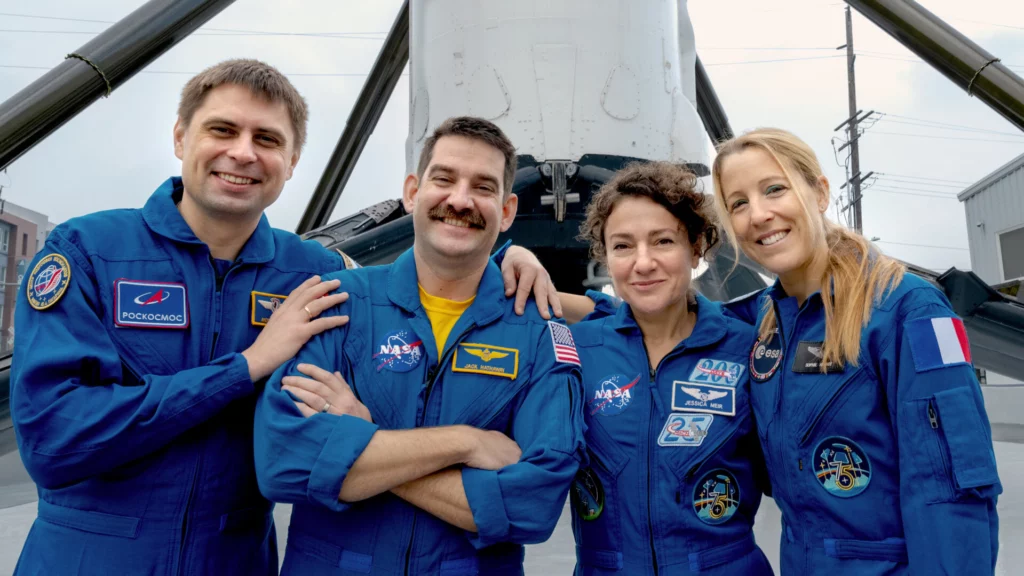
Part 4 of 4
To bring this series to a close, we simply wanted to draw attention to the people who embody these innovations and are making history. These faces are the culmination of a chain of excellence in which cutting-edge engineering, technical precision and operational support work behind the scenes. Behind every second of flight lies the combined talent of thousands of men and women, transforming technological boldness into a tangible reality for the benefit of all.
From Claudie Haigneré to Sophie Adenot, via Jean François Clervoy and Thomas Pesquet, French astronauts embody a rare continuity: that of space excellence linking the first European human spaceflight missions to the ambitions of the Artemis II programme.
French Astronauts
The careers of these French astronauts reflect a common commitment: to train, test, share knowledge and prepare for the next stages of human exploration, from the ISS to the Moon.
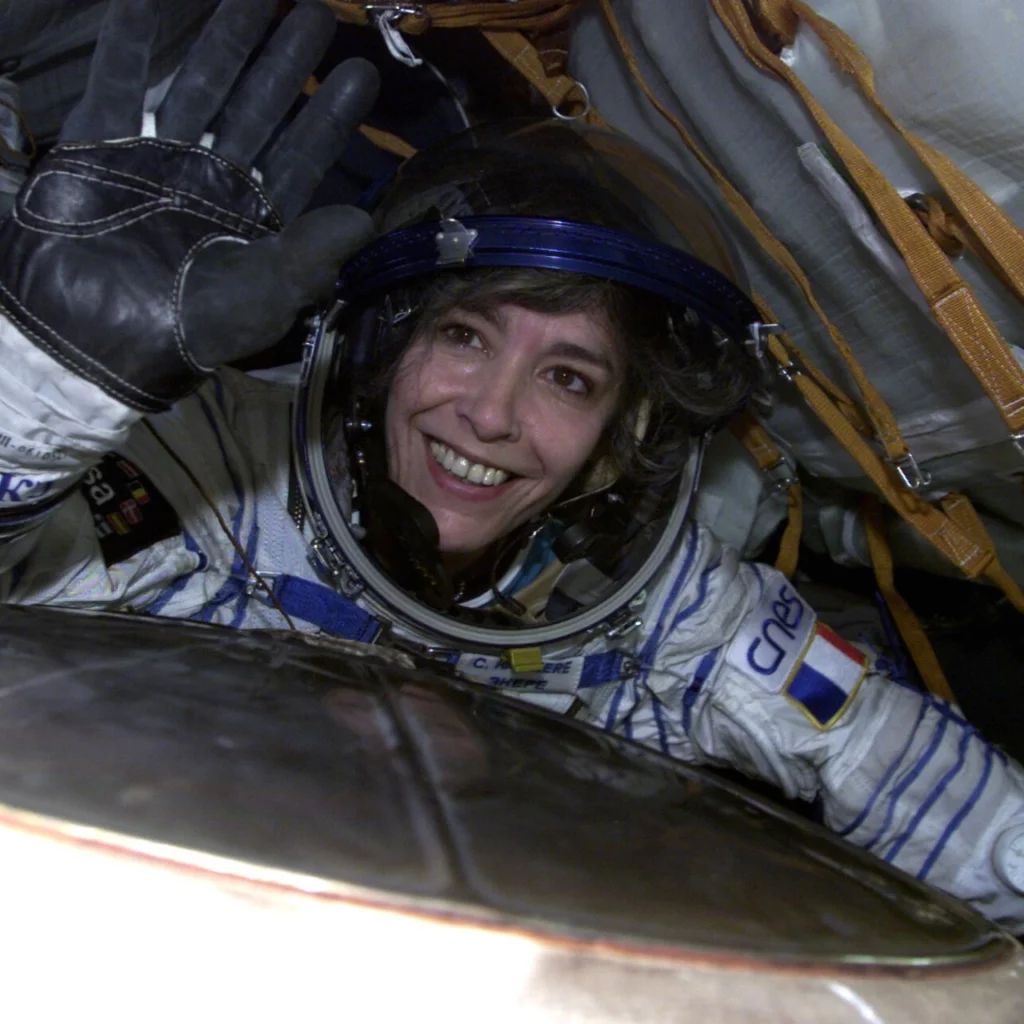
Astronaut, ambassador and adviser to the Director General of the ESA.
- The first French woman in space: she made her first flight in 1996 during the Cassiopée mission aboard the Russian Mir space station.
- First European woman aboard the International Space Station (ISS): in 2001, she took part in the Andromède mission, becoming the first European to join the International Space Station.
- Elite training: before being selected by CNES, she was a doctor of medicine, specialising in rheumatology, and held a PhD in neuroscience.
“Competition exists, but it is humanity that is exploring, and France and Europe have a unique voice in this. We are now on the eve of crewed missions to distant destinations, the Moon very soon, and there are still many challenges to overcome to ensure the safety of infrastructure and crews.” — Claudie Haigneré, at the conference organised by the Friends of the Hôtel-Dieu Saint-Jacques in Toulouse, on 4 June 2024.
With Claudie Haigneré, France’s space history is part of a dual legacy: that of science, driven by her medical background, and that of Europe, of which she is one of the first major figures in manned spaceflight.
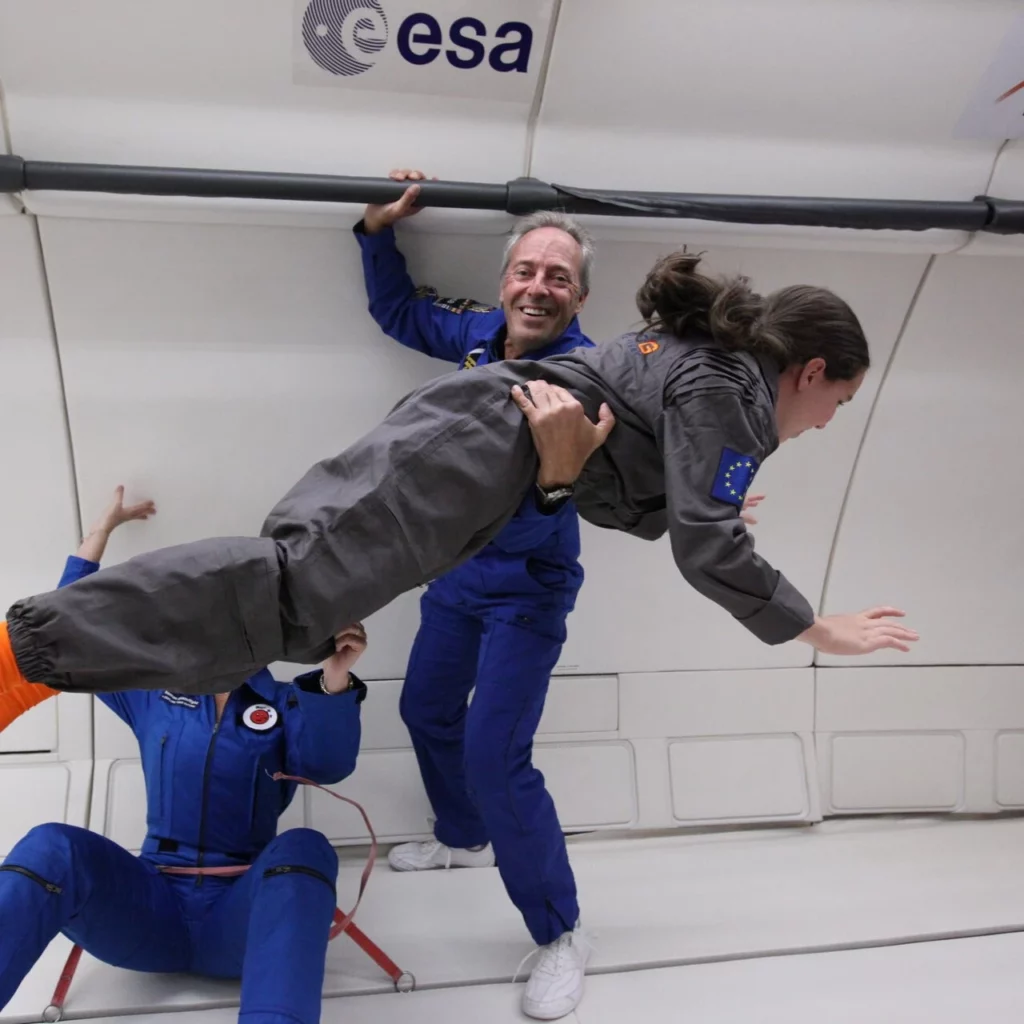
- Ambassador for Venturi Space – the 100% European Mona Luna rover.
- Hubble Space Telescope repair engineer: during his STS-103 mission in 1999, he played a crucial role in repairing and replacing the space telescope’s instruments.
- Robotics expert: renowned for his mastery of the shuttle’s robotic arm, he has logged over 675 hours in space during his three flights.
- Elite education: a graduate of École Polytechnique and the Institut Supérieur de l’Aéronautique et de l’Espace (ISAE-SUPAERO), he is a General Armaments Engineer and founder of the company Novespace Air Zero G.
“Absolutely. Mona Luna is a way for ESA to learn about lunar technologies and to be a candidate for the Artemis programme on the surface. We are already on the ‘critical path’ with the ESM, which provides propulsion, water and oxygen to the Orion Crew Module. With these electric mobility capabilities, Europe will be able to make a significant contribution directly on the lunar surface. ” — Jean-François Clervoy, during the presentation of the Mona Luna rover at the Cité de l’espace, 31 March 2026.
Through Jean-François Clervoy, the legacy of crewed missions ties in directly with the challenges of the Artemis II programme: robotics, lunar mobility, European cooperation and the ability to operate on complex systems.
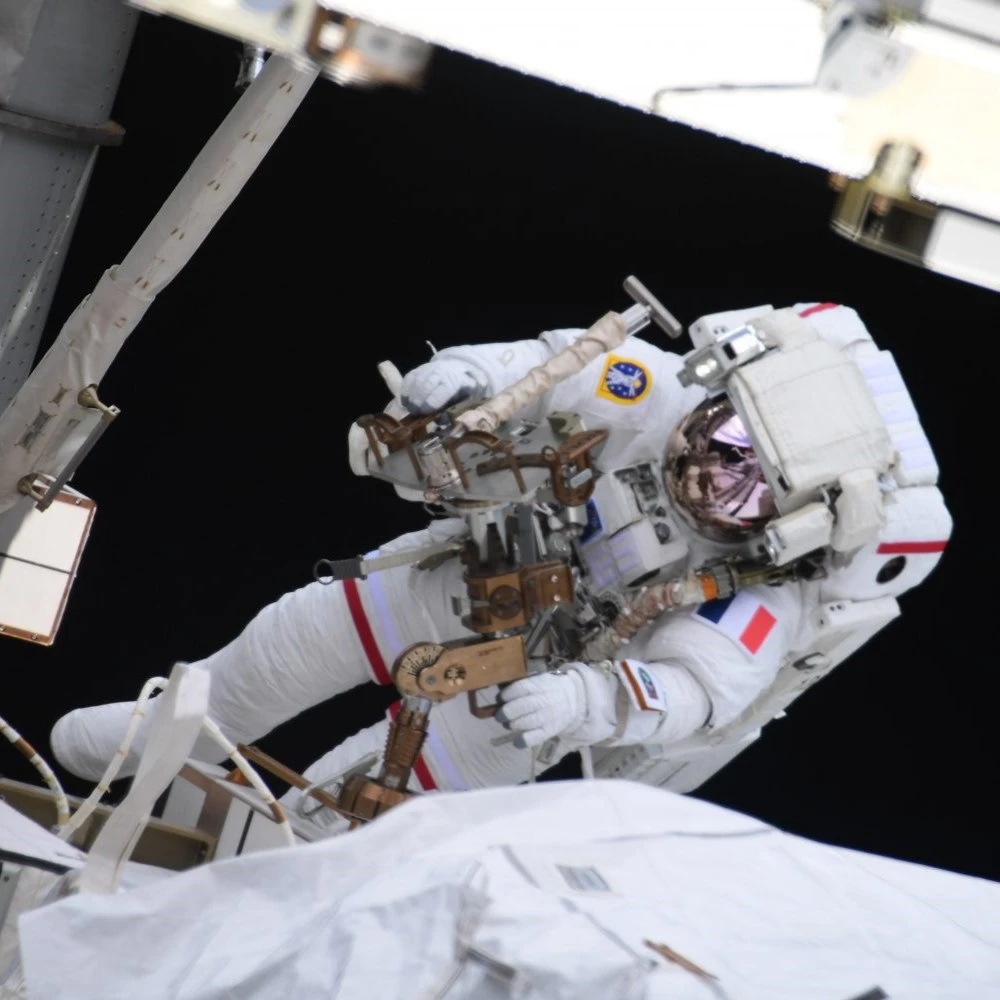
ESA astronaut and commander of the International Space Station during the Alpha mission. Candidate for the upcoming Artemis missions.
- Managing Director of Novespace a CNES subsidiary specialising in Air Zero G flights. These parabolic flights are conducted using an Airbus A310.
- European record holder: he holds the European record for the longest cumulative time in space (396 days) and the highest number of hours spent on extravehicular activities.
- ISS Commander: in 2021, during his Alpha mission, he became the first Frenchman to take command of the ISS.
- Elite training: an aeronautical engineer and graduate of ISAE-SUPAERO, he was an airline pilot for Air France before being selected by the ESA in 2009.
“When the airlock opens, the first person to exit (me, in this case) hooks their safety line headfirst and swings out into the void…” — On 22 August 2025, Thomas Pesquet shared a series of photos taken during the three spacewalks in June 2025.
Thomas Pesquet now embodies not only the contemporary profile of French astronauts, but also the operational continuity between low-Earth orbit missions and Europe’s future lunar ambitions.
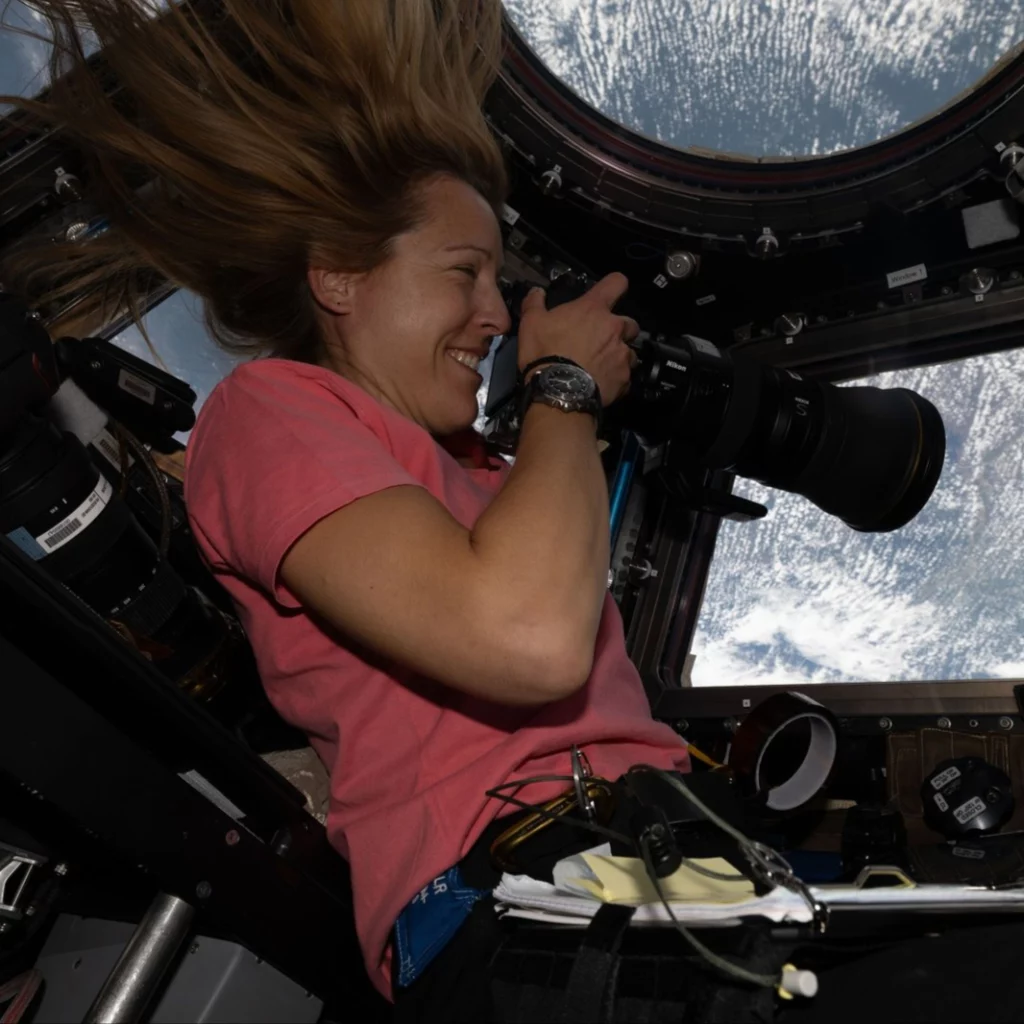
ESA astronaut. She is the second French woman in history to join the European astronaut corps, following in the footsteps of Claudie Haigneré three decades later.
- First mission: assigned to the εpsilon mission, she launched on 13 February 2026 to join the ISS.
- The next generation of space exploration: selected in 2022 from over 22,500 candidates, she officially received her astronaut ‘wings’ in April 2024 following intensive training at the European Astronaut Centre.
- First female helicopter test pilot: she is the first woman in France to have held this position within the French Defence Procurement Agency (DGA), accumulating over 3,000 flying hours across 22 types of aircraft.
- Elite training: a graduate of ISAE-SUPAERO and holder of a Master of Science from MIT, she is an expert in space systems engineering and complex environments.
“It is a tremendous honour to represent France and Europe. This first step towards the ISS is just the beginning of an adventure that will, I hope, lead us to make a lasting contribution to the future stages of lunar exploration.” — Sophie Adenot, during the announcement of her first space mission in Brussels on 22 May 2024.
With Sophie Adenot, a new generation of French astronauts is making its mark on the history of European space exploration, just as Artemis II ushers in a new era of lunar exploration.
When excellence becomes a legacy
These four journeys all point to the same underlying principle: space exploration relies not only on technology, but on the people who understand it, test it and pass it on. Through these French astronauts, Artemis II also emerges as a human story, one of science, courage, preparation and European continuity.
Image credits
Crew-12 © ESA / SpaceX
Claudie Haigneré © ESA
Jean François Clervoy © ESA / Novespace
Thomas Pesquet © ESA/NASA
Sophie Adenot © ESA / NASA