

Part 3 of 4
The French New Space sector is now establishing itself as one of the key drivers of the European space economy, encompassing start-ups, public funding, industrial sovereignty and regional roots.
Technological innovation cannot thrive without a solid foundation. Alongside achievements in orbit, the space race is an industrial driver and a matter of sovereignty.
This third section lifts the veil on the financial architecture and regional clusters underpinning this ambition.
From the strategic investments of France 2030 to the vitality of regional hubs, we analyse how this hybrid ecosystem is consolidating a cutting-edge economy that creates value and jobs firmly rooted in our regions.
In this context, the French New Space movement does not merely signify the arrival of new private players. It reflects a deeper transformation of the space economy, where public authorities, established industrial players and start-ups are working together to build the critical infrastructure of tomorrow.
Financial architecture and clusters: the economic driver
French New Space no longer relies solely on traditional public procurement, but on a hybrid ecosystem combining state sovereignty with the dynamism of private investment. This transformation is turning space into a genuine driver of industrial and social growth within a future global ‘one trillion economy’.
For France, the challenge is therefore twofold: to capture a growing share of this global space economy and to make French New Space a tool for competitiveness, autonomy and technological sovereignty.
As a strategic high-tech sector, space has long been a domain reserved for public authorities. In line with the trend that has emerged at the international level, the French space sector has, for the past decade, been confronted with the emergence of the New Space phenomenon, resulting in significant transformations, particularly due to the emergence of new space actors and new prospects for innovation.
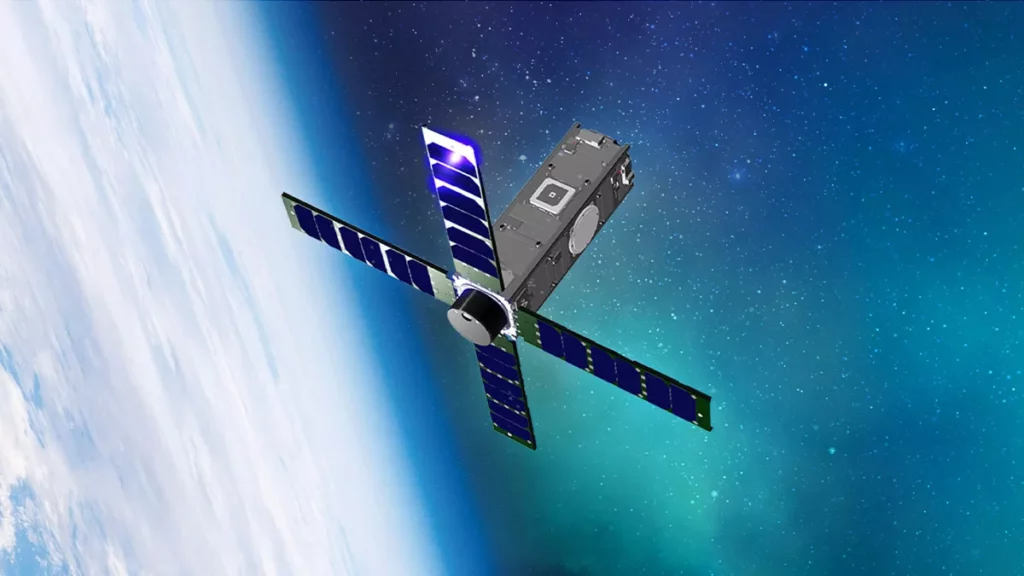
This transformation calls for heightened vigilance regarding the use and exploitation of space. Such vigilance is all the more essential as the French New Space sector is opening up new applications, ranging from satellite data to constellations of nanosatellites, including orbital services and space surveillance.
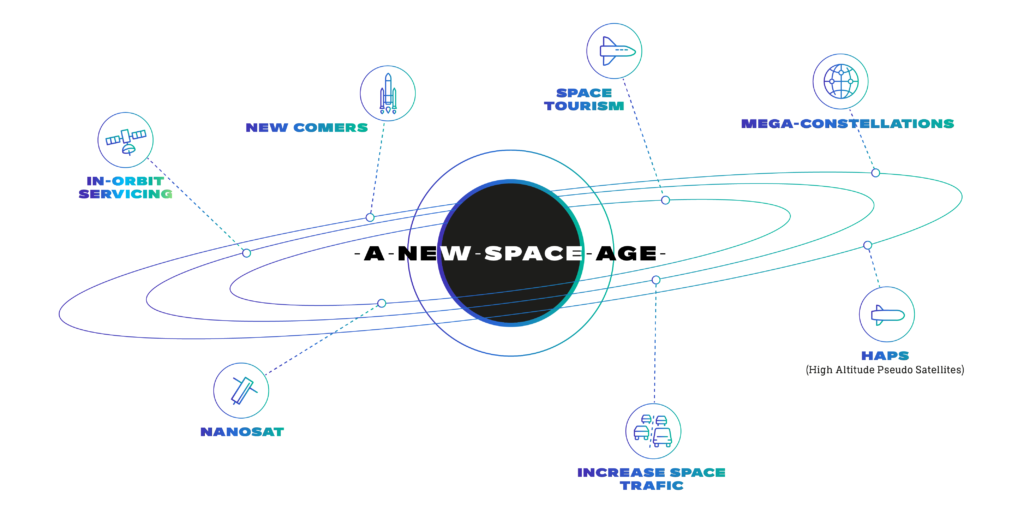
In line with the international trend, the French space sector has for the past decade been faced with the emergence of the “NewSpace” phenomenon. © CNES
A challenge for global competitiveness
The Draghi Report on EU Competitiveness identifies space as a strategic sector with projected annual growth of 9% by 2035. Faced with the United States and China capturing this value, France is mobilising its expertise: the Catalogue of Space Industry Capabilities now lists 250 companies, a unique tool for promoting this French ecosystem. This mapping provides strategic visibility for the French space industry and strengthens the country’s ability to structure a clear offering in the face of the sector’s major powers.
A major economic force: the Space Recovery Plan
With a turnover of €4.2 billion, the sector is growing steadily. Driven by exports of components and data services, the French space sector now accounts for 16,000 high-level direct jobs across the entire manufacturing chain. This concentration of talent ensures the sustainability of our expertise, whilst the European Commission estimates that around 10% of the European economy already depends on space-related activities (particularly navigation).
As such, the space economy is no longer confined to exploration or defence. It already underpins transport, agriculture, finance, telecommunications, civil security and environmental policies.
The France 2030 Initiative
A budget of €1.5 billion has been specifically earmarked to support disruptive innovation. As part of France 2030, this support targets technologies capable of strengthening orbital autonomy, industrial competitiveness and the demonstration capabilities of French companies.
This funding also supports critical in-flight demonstration phases. This strong signal from the State secures the path for start-ups and attracts private investors to the industrial champions of tomorrow.
This hybrid funding model is one of the keys to French New Space: it reduces technological risk whilst accelerating the transition from research to market.
Regional hubs of excellence
A strategic industrial geography structures the national territory around specific areas of expertise:
- Toulouse remains the global hub for satellite system design and the exploitation of space data, with companies such as Look Up Space specialising in space situational awareness (SSA), and U-Space, an expert in the design of high-performance nanosatellites for constellations.
- Reims is establishing itself as a major hub for micro-launchers with the arrival of Latitude, which aims to provide autonomous access to orbit for small satellites.
- Marseille and the coastal region are capitalising on their expertise in hostile environments and underwater engineering to design extreme habitats, as exemplified by Spartan Space.
This territorial organisation gives the French space ecosystem a particular strength: each hub concentrates expertise, yet the whole functions as an integrated national ecosystem. This territorial complementarity also transforms the space economy into a driver of regional development, creating skilled jobs as close as possible to industrial and scientific clusters.
Strategic duality
Beyond exploration, these investments ensure dual technological superiority, serving both civil ambitions and national defence imperatives simultaneously.
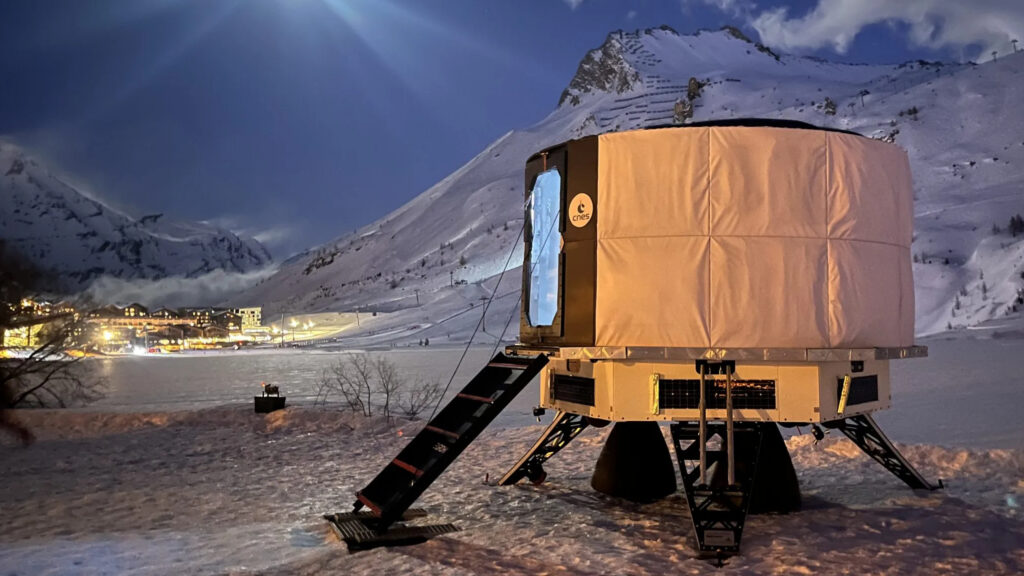
2024 Eurohab II at Lac de Tignes. © Spartan Space
Agility and sovereignty: the French industry facing the challenges of Artemis
French industrial excellence, through its start-ups and iconic astronauts, places the nation in a leading position to shape a responsible space economy. By mastering technologies for survival in extreme environments, France is transforming the Moon into a laboratory for sustainable solutions for our own planet.
This approach illustrates the singularity of the French model: designing space technologies capable of serving exploration, sovereignty, the ecological transition and terrestrial applications all at once.
However, this path to the lunar surface remains fraught with major technical challenges that demand great agility in the international schedule. Originally intended to mark humanity’s return to the lunar surface, the Artemis III mission could see its scope change. According to recent analyses by NASA, if certain critical systems are not finalised in time — notably SpaceX’s Starship lunar landing system or Axiom Space’s new spacesuits — the mission could be reclassified.
Rather than a lunar landing, Artemis III could then be transformed into a meeting mission in lunar orbit, enabling the docking of the Orion Crew Module with the SpaceX spacecraft to be tested. This scenario, which prioritises safety and the consolidation of technological milestones, serves as a reminder that space exploration is an incremental and responsible process.
For French stakeholders, this potential postponement of the moon landing offers additional time to refine essential technological components, such as Spartan Space’s EuroHab habitat or the Mona Luna rover. Mastering self-sufficiency on this eighth continent is indeed an essential prerequisite for eventually envisaging crewed exploration of Mars, thereby ensuring that Europe’s contribution will be operational as soon as the first foot sets foot on the regolith once again.
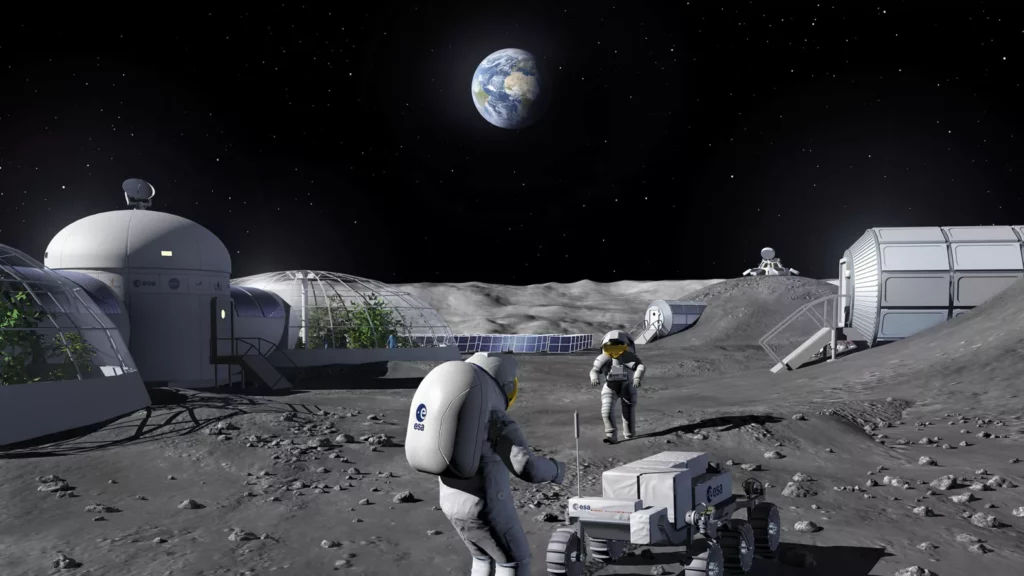
Most lunar missions are now seeking to establish a permanent human presence on the Moon. © ESA – P. Carril
Behind Artemis II, an entire space economy is taking shape. France’s New Space sector is playing a decisive role in this, bringing together public funding, venture capital, industrial start-ups and regional expertise.
Earth in sight
As the Orion Crew Module’s wake traces a return trajectory to Earth, it marks above all the dawn of an era in which space innovation reminds us of our responsibilities on Earth. For Think.green, this odyssey confirms that curiosity remains the most powerful driver of our evolution when underpinned by an ethic of sustainability. It also shows that France’s New Space initiative is not limited to a technical conquest. It is becoming an industrial, regional and cultural project, capable of fostering dialogue between space innovation and earthly responsibility.
By designing solutions for survival in hostile environments, France and its partners are shaping the conservation tools that our own planet desperately needs.
This analysis builds on our previous feature on French technologies in the Artemis program and their role in sustainable lunar exploration.