


By 2050, 2.1 billion people worldwide will be aged 60 or over, twice as many as in 2020. Between 2015 and 2050, their share of the global population will rise from 12% to 22%, according to the World Health Organization. Across OECD countries, long-term care spending and unit costs represented 1.8% of GDP in 2023 and could reach 2.8% by 2050.
This demographic and financial pressure is increasing the value of a resource that is far harder to expand at the same pace: the human time available for care.
The WHO also highlights the role of physical and social environments, including the home, neighbourhood and wider community, in determining how people age and retain their functional abilities.
The home is therefore becoming an integral component of independence.
Radar, ambient sensors, embedded vision, behavioural analytics, connected medical devices, longitudinal AI, assistive robotics and conversational interfaces can already identify changes in functional status, adapt the living environment and coordinate interventions.
A home supports independence when it detects functional deterioration early enough, preserves remaining capabilities and mobilises a proportionate response.
Its economics can therefore be understood through three mechanisms: avoided costs, deferred costs and reallocated human resources.
From Connected Home to Infrastructure for Independence
Reading a Trajectory Before an Incident Occurs
Falls cause approximately 684,000 deaths worldwide each year, while 37.3 million falls require medical attention annually, according to the WHO.
Risk often develops well before the incident itself.
Walking speed, night-time awakenings, time spent in bed, movement between rooms, daily activity and sleep patterns can all change gradually. Tracked over time, their combination begins to reveal a functional trajectory.
Vayyar Care uses radio-frequency sensing and 4D radar imaging to detect presence, movement and falls without cameras or wearable devices. In January 2026, the company documented the deployment of more than 316 sensors with Essex County Council across care homes, supported living settings and private homes.
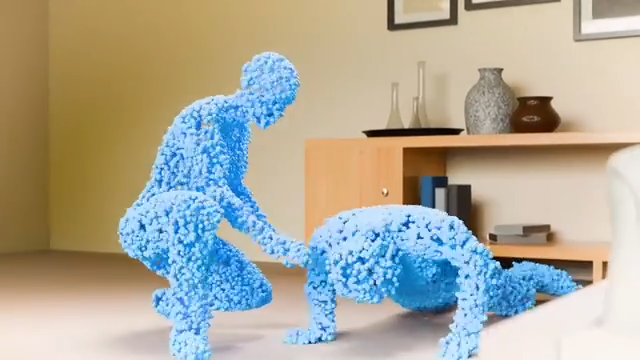
Vayyar Care 4D radio-frequency modelling: the system maps presence, movement and falls without cameras or wearable devices. © Vayyar Care
Nobi integrates computer vision, fall detection, lighting and communication into a ceiling-mounted light. An evaluation published in May 2026 by NHS Lancashire and South Cumbria, conducted with Lancaster University, covered 800 lamps installed across 80 residential and nursing homes. It reported an approximately 32% reduction in the likelihood of falling, 23% fewer ambulance call-outs and an average response time of less than three minutes following an in-room fall.
The home thus moves from detecting an isolated event to observing a trajectory.
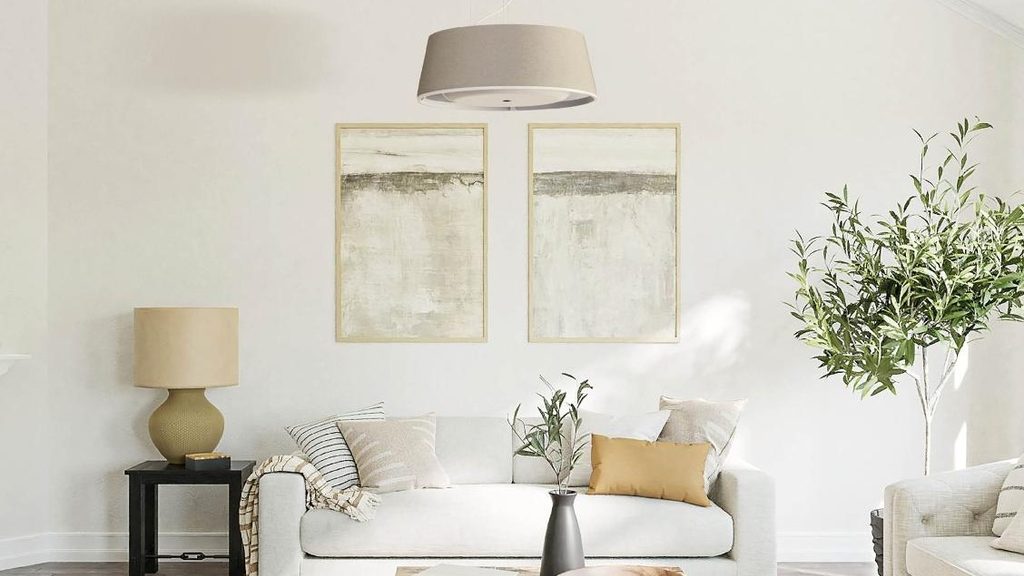
Nobi smart lighting combines optical sensors, artificial intelligence, fall detection and prevention, adaptive lighting and hands-free two-way communication. © Nobi
This capability calls for a proportionate data architecture. Radar without identifiable imagery, edge processing and the retention of trends rather than exhaustive traces can all limit the exposure of personal data.
A monitoring architecture becomes more sophisticated when it understands more while exposing less data.
Clinical Measurement in the Home
Withings is extending this convergence between the home and medical monitoring. In June 2026, the company acquired Biosency, a specialist in remote respiratory monitoring, before launching Withings Medical in the United States in July under Medicare’s ACCESS model.
Sleep, weight, body composition and cardiovascular or respiratory parameters can generate longitudinal data directly from the home.
Combined with functional data, these measurements become more informative. A change in weight alongside reduced mobility, altered sleep patterns or respiratory deterioration may justify closer attention or intervention.
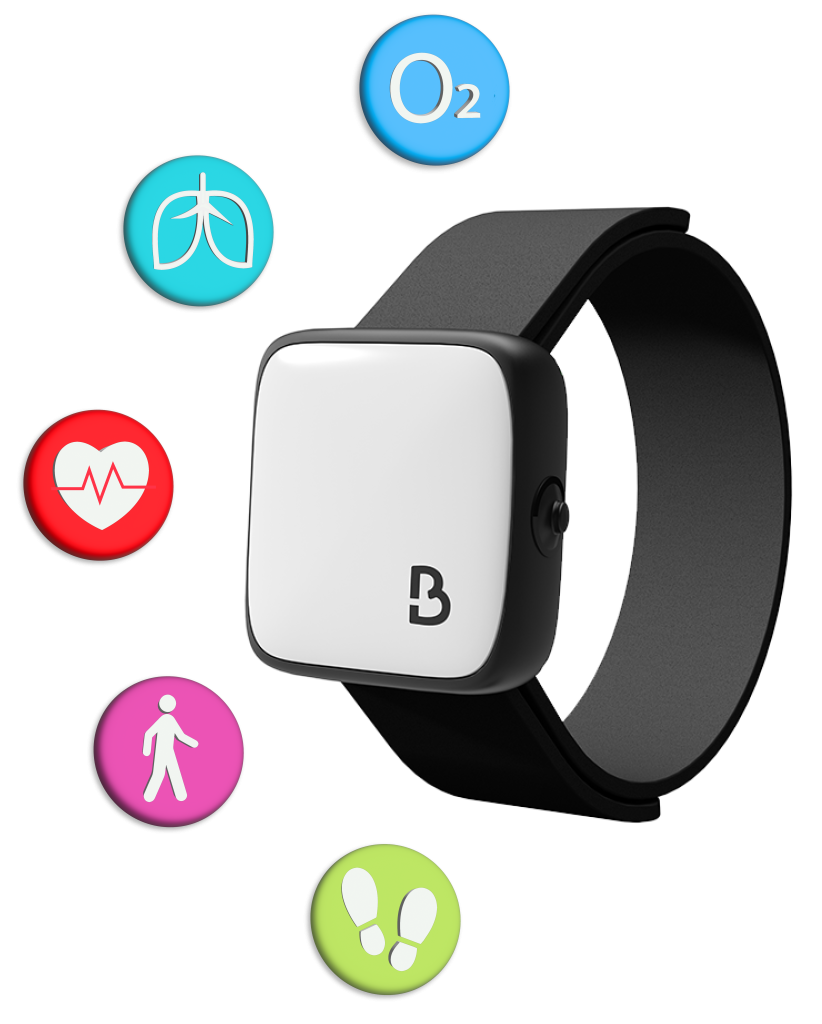
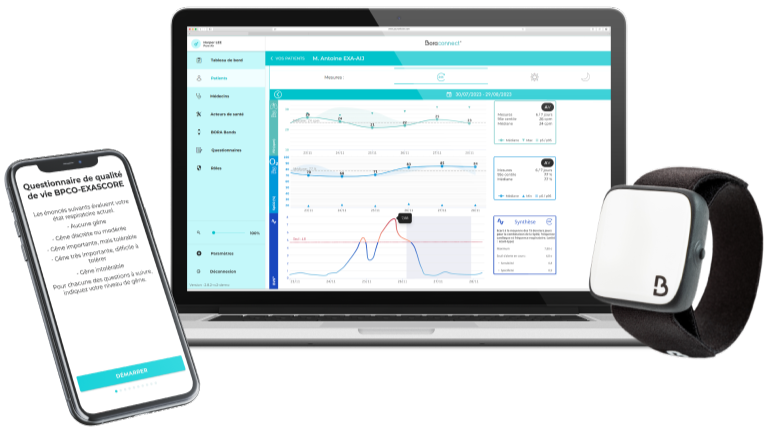
Bora connect®, Biosency’s platform, provides web and mobile visualisation of vital signs and data from respiratory support devices. © Biosency
The home can therefore provide information that is rarely available during a single consultation: how a person actually functions between two encounters with the healthcare system.
Supporting Without Accelerating Functional Decline
Preserving Meaningful Effort
Motorised blinds, voice controls, deliveries, teleconsultations, automated furniture and robotics reduce friction in everyday life.
For a frail person, their accumulation can also reduce opportunities to walk, stand up, handle objects, make decisions or leave the home. Physical and functional deconditioning may then progress towards severe loss of mobility and, in the most advanced cases, confinement to a chair or bed.
The calibration of assistance therefore becomes a design variable in its own right.
Automatic lighting can make night-time movement safer. Sit-to-stand assistance can support the strength that remains available. An adjustable worktop can extend the ability to cook independently. Robotic assistance can take over part of a movement while preserving active participation.
This approach echoes the principle of reablement, particularly well established across Nordic care systems.
In Denmark, municipalities have been required since 2015 to offer time-limited rehabilitation programmes to people who may improve their functional capacity and subsequently reduce their need for support at home. The Danish Health Authority frames this approach across the physical, cognitive, psychological and social dimensions of functional capacity.
Applied to the Smart House, it leads to a clear design principle:
Every form of assistance should preserve, as far as possible, the use of the function it is designed to support.
The home becomes adaptive. The level of intervention evolves with the occupant’s capabilities.
Maintaining Physical, Cognitive and Social Stimulation
The home can also support physical, cognitive and social activity.
Floor projection for balance training, visual movement guidance, exercises embedded within the living environment, circadian lighting, music linked to activity, conversational interfaces, augmented reality and remotely shared games can bring part of preventive care into everyday routines.
The experience of ElliQ, developed by Intuition Robotics and deployed with the New York State Office for the Aging, illustrates this approach. By February 2026, the device was present in 834 homes across New York State, following more than 3,500 requests. Conversation, wellbeing activities, games, reminders and communication with relatives are among its uses.
The caregiver application also allows users to set certain goals, receive alerts, share messages and photographs, arrange video calls and coordinate several relatives or carers.
Teleconsultation, delivery services and remote interaction reduce the constraints of distance. They also influence the frequency of outings, visits and face-to-face interaction.
Digital proximity creates value when it sustains continuity with physical and social life.
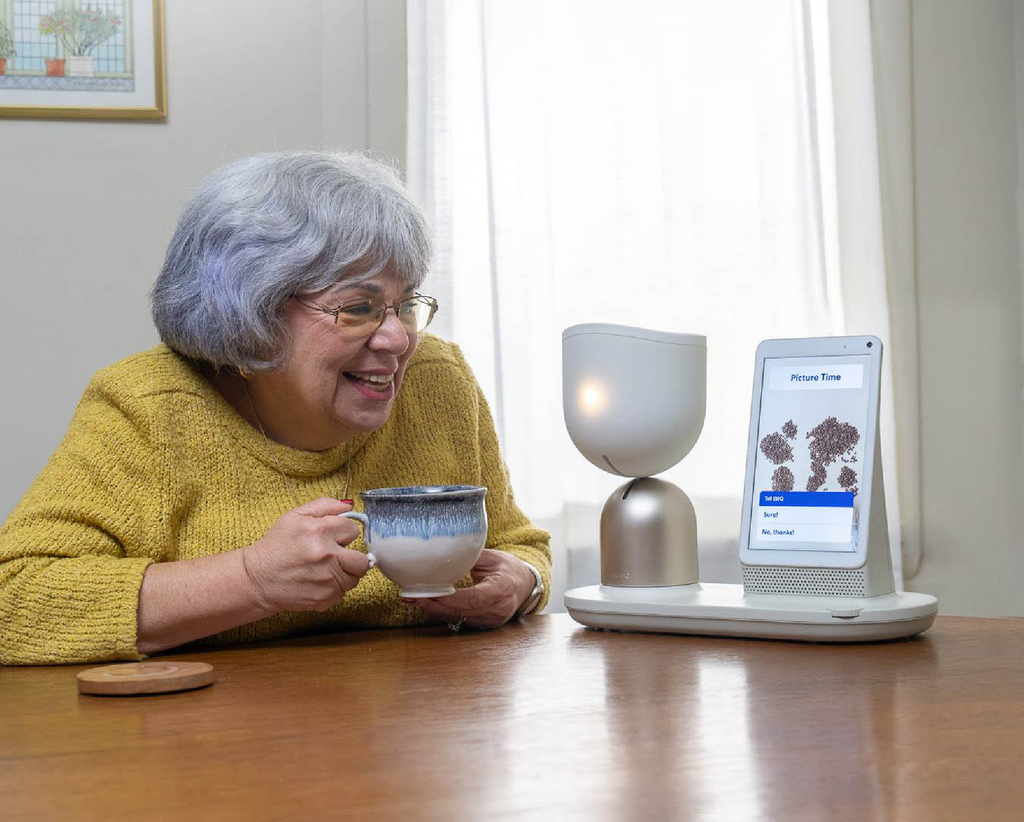
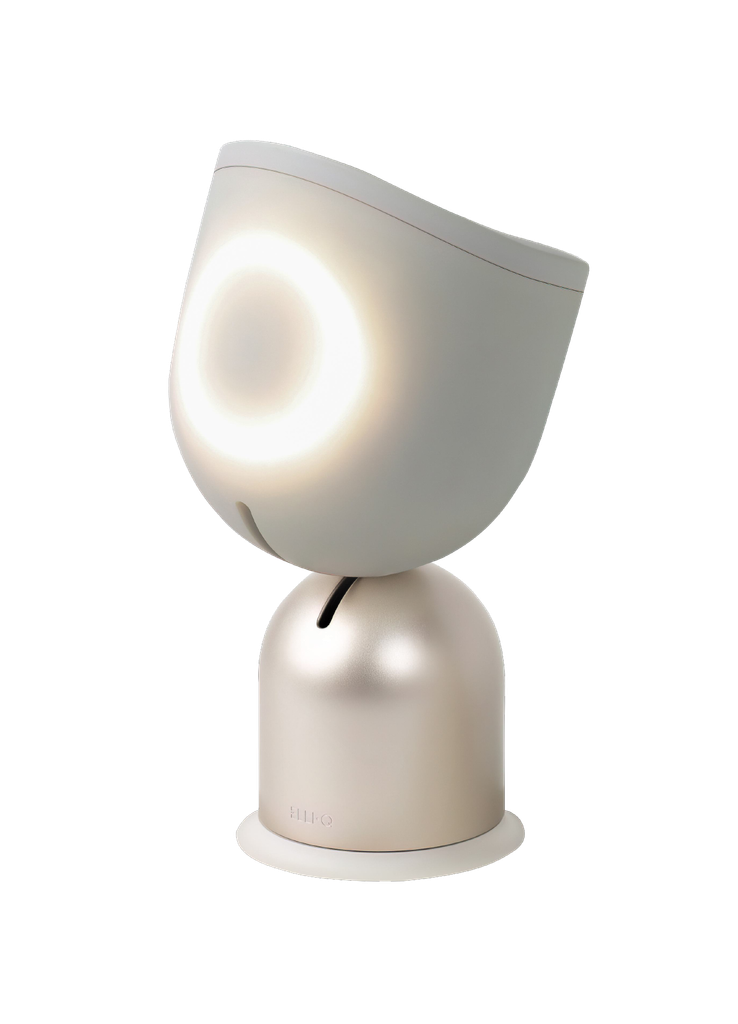
ElliQ, a conversational companion for older people at home, combines interaction, activities and connection with relatives. © Intuition Robotics / NYSOFA
From Monitoring to Care Orchestration
Giving Caregivers Information That Changes Decisions
An instrumented home can generate thousands of signals. Transmitting them in raw form shifts the monitoring burden to relatives and professionals.
Prioritisation therefore becomes central.
A single unusual night-time awakening may be incidental. Repeated awakenings combined with reduced mobility and a break in routine describe a different trajectory.
Sensi.AI applies this logic to ambient audio in home care. Its platform analyses physical and behavioural events, identifies patterns and trends, and provides relevant information to care teams.
The operational value lies in reducing decision noise.
Relatives spend less time checking whether intervention is required.
Professionals can prioritise situations in which the trajectory is changing.
Care coordination teams retain continuity of information between visits.
The OECD also highlights growing pressure arising from population ageing, the labour-intensive nature of long-term care and the availability of both professional and informal carers.
Human time becomes a resource to be directed where it is most needed.
Shift Coverage, Sensi’s AI agent, automatically identifies the most appropriate available caregiver for an open shift, reducing the scheduling burden on operational teams. © Sensi
Avoided, Deferred and Reallocated Costs
A fall, ambulance call-out or hospital admission that does not occur represents an avoided cost.
Admission to residential care that can safely be postponed represents a deferred cost.
A routine visit replaced by reliable remote information, allowing professional time to be redirected towards a more complex situation, represents a reallocated cost.
These forms of value accrue to different actors. An individual, landlord, insurer or care provider may finance the technology, while the resulting savings may benefit the hospital system, long-term care services, the family or several of them simultaneously.
The separation between the party financing the technology and the party capturing its economic benefit is one of the model’s critical structural issues.
The severity of dependency also changes the equation.
For people with severe needs, the OECD estimates the theoretical average cost of home care at 292% of median income among older people, compared with 211% for institutional care, across the countries and territories studied.
For people with low or moderate needs, estimates covering 17 OECD countries suggest that shifting 10% of institutional long-term care expenditure towards home-based care could reduce total expenditure by 4.9% over the following five years, where individual circumstances make such a shift appropriate.
The economic equation therefore depends on where care is delivered, when it is delivered and at what level of intensity.
Specialist facilities remain essential for people requiring continuous presence, complex care or a secure environment. The same ambient technologies can also improve care within those settings, as illustrated by the NHS evaluation of Nobi.
The level of need and the resources required therefore become the determining variables in deciding between care at home and institutional care.
A Place-Based Architecture for Independence
From the Home to the Wider Care Network
South Korea has been rolling out a new system of coordinated post-hospital care. since 27 March 2026. People requiring medical support at home after discharge can now apply through local welfare centres or the National Health Insurance Service, replacing several previously separate procedures.
Local authorities assess individual needs, develop a personalised support plan and oversee follow-up. The system covers four areas: healthcare, health management, long-term care and support for independent living.
Around 1,150 partner clinics and hospitals identify patients requiring support after discharge and refer them to the appropriate services. The government plans a progressive expansion through to 2030, with data from this initial phase informing a five-year plan.
For the Smart House, this organisation changes the significance of data generated in the home: it can become part of a continuum linking hospitals, local authorities, long-term care and community services.
The home therefore becomes an operational component of the care pathway.
Singapore extends this architecture to neighbourhood level.
In May 2026, the Ministry of Health announced three new Age Well Neighbourhoods, bringing the total to four and covering more than 110,000 older residents. Active Ageing Centres, Community Health Posts, home support services and age-friendly infrastructure together form this local ecosystem.
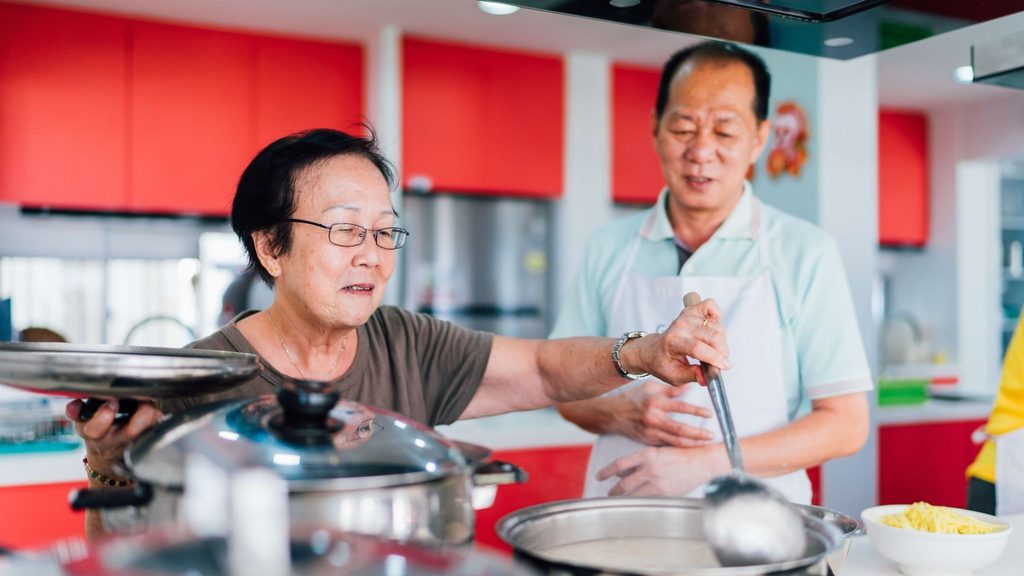
In Singapore, Active Ageing Centres provide social, physical and group activities, including cooking, to support independence and sustain interaction within the neighbourhood. © Age Well SG
Since April 2026, the enhanced Home Personal Care programme has also incorporated technology-enabled 24-hour monitoring for falls and other incidents, with more than 5,600 beneficiaries expected.
Mobility, activity, social relationships, community health and local services extend the capabilities of the home into the surrounding neighbourhood.
Japan similarly brings together housing, healthcare, long-term care, prevention and support for everyday living through its Community-based Integrated Care System.
In Denmark, reablement embeds the preservation of functional capacity within the organisation of support. Since 2015, municipalities have been required to offer temporary rehabilitation programmes to people who may regain greater independence and subsequently reduce their need for support at home, according to the Danish Health Authority, Sundhedsstyrelsen.
These models operate at different levels: continuity of care in South Korea, community-based provision in Singapore, integration between housing and health in Japan, and functional preservation in Denmark.
Together, they integrate the home into the organisation of healthcare, support and prevention.
Measuring What the Home Enables People to Keep Doing
The true measure of a Smart House lies in the functional trajectory it helps shape.
Mobility preserved, everyday activities maintained, social interaction sustained, deterioration detected earlier, falls prevented or managed more quickly, professional time reallocated, the monitoring burden on relatives reduced, and severe dependency deferred where circumstances allow.
The built environment provides the physical setting. SilverTech provides sensing and assistance. MedTech generates selected clinical measurements. AI interprets trajectories. Professionals organise intervention. Relatives provide part of the relational continuity. Local systems connect these capabilities with the resources available.
Value is created through their coordination.
Ageing in place therefore requires a demanding definition: preserving for as long as possible the ability to move, decide, act, interact and participate, with the level of assistance calibrated to the actual evolution of each person’s capabilities.
The performance of the Smart House will ultimately be measured by everything it enables its occupant to continue doing for themselves.