

In 2025, rivers worldwide saw one of their driest years in thirty-five years. The World Meteorological Organization recorded seven consecutive years of anomalous river flows, alongside a decline in terrestrial water storage over the past decade.
The strain is equally apparent in how water is used. Agriculture accounted for 72% of global freshwater withdrawals in 2023, according to the FAO. In 2024, 2.1 billion people still lacked access to safely managed drinking-water services, according to the WHO/UNICEF Joint Monitoring Programme for Water Supply, Sanitation and Hygiene.
Reservoirs, storage basins, cisterns and aquifer recharge shift an existing resource through time. When volumes become insufficient or too uncertain, research turns directly to the source itself.
Atmospheric water captured by sorbent materials, greywater treated within buildings, wastewater purified to drinking-water standards, brackish groundwater desalinated, seawater filtered, irrigation guided by the plant’s actual water status: WaterTech is gradually building a multi-source water architecture.
At household level, the aim is partial self-sufficiency. In agriculture, it is to increase the value generated per cubic metre of water. For human hydration, three criteria remain fundamental: safety, availability and cost.
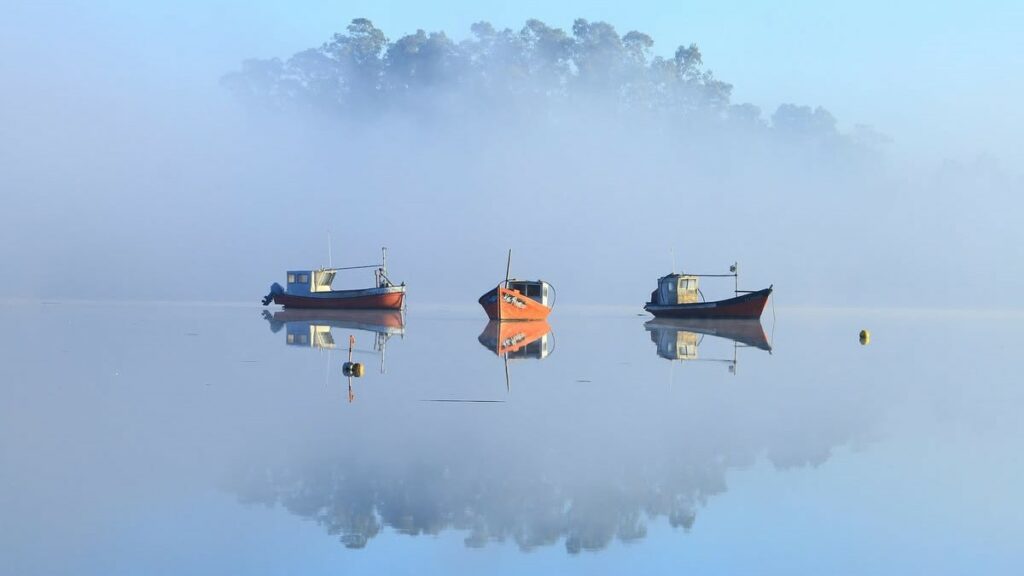
A global view of the water cycle and its recent imbalances through hydrological data. © World Meteorological Organization, 2026
Water sources move closer to demand
Le réseau d’eau moderne repose sur une géographie relativement stable : capter, traiter, transporter, consommer, évacuer. Plusieurs technologies déplacent une partie de ces opérations dans l’immeuble, sur le terrain agricole ou directement à proximité du besoin.
AirJoule™: extracting water from the atmosphere
In Newark, Delaware, AirJoule Technologies is developing a platform based on sorbent materials capable of capturing water vapour from the atmosphere. The heat required to regenerate them can come from low-grade heat sources, including waste heat.
Its AirJoule Core system is designed to produce around 250 litres per day. AirJoule Prime increases output to approximately 2,000 litres per day, with stated applications in industry, data centres, defence and communities facing constraints on water supply.
The AirJoule technology in action, from capturing atmospheric humidity to producing liquid water. © AirJoule, 2025
In July 2026, Kubota launched pilot deployments with AirJoule in Texas and California to test atmospheric water production within decentralised residential infrastructure combining water production, treatment and reuse.
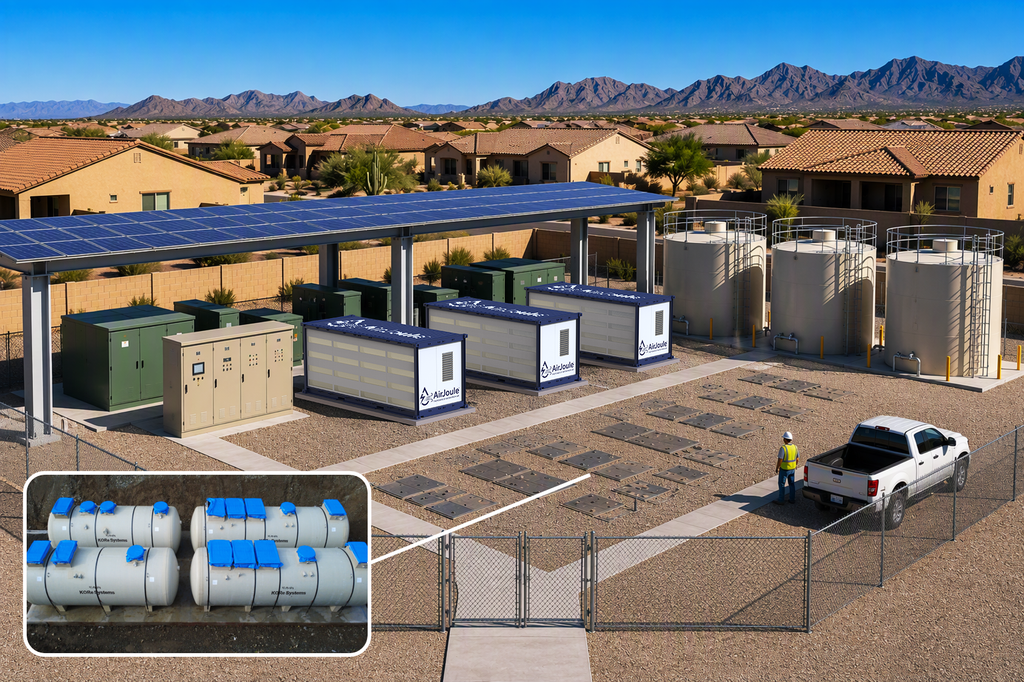
Kubota Water and Environment pilot installation designed to evaluate atmospheric water production under real-world conditions. © Kubota Water and Environment U.S.A., 2026
The company was named Water Tech Innovation of the Year 2026 at the CleanTech Breakthrough Awards. Its partnerships with GE Vernova, Carrier and Kubota, together with the first residential pilot deployments, show a technology moving from demonstration towards market deployment, although it has not yet reached large-scale adoption.
Producing several hundred or several thousand litres close to where they are needed already changes the equation for an isolated home, a critical facility or a site whose expansion is constrained by water availability. The reservoir is no longer confined to the ground: part of the resource is dispersed through the atmosphere.
Epic Cleantec: keeping water circulating within the building
In San Francisco, Epic Cleantec is working with an even closer resource: water that has just been used.
Its OneWater™ systems can combine greywater, blackwater, rainwater and condensate. Following prefiltration, biological treatment, membrane filtration and disinfection, the water can be reused for toilets, washing, cooling towers or irrigation. According to Epic Cleantec, up to 95% of a building’s wastewater can be recycled in this way, while recovering part of its thermal energy.
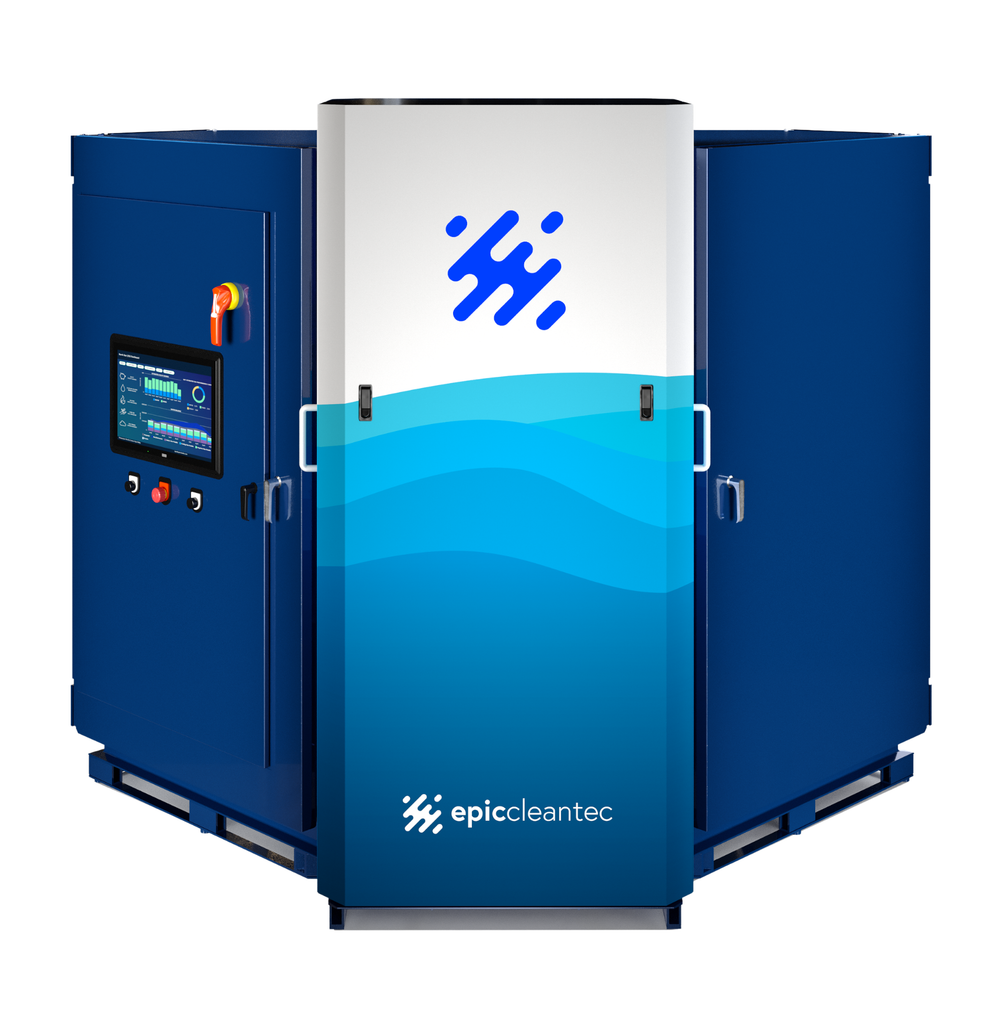
With OneWater™ system, water treatment becomes part of the building’s infrastructure. © Epic Cleantec
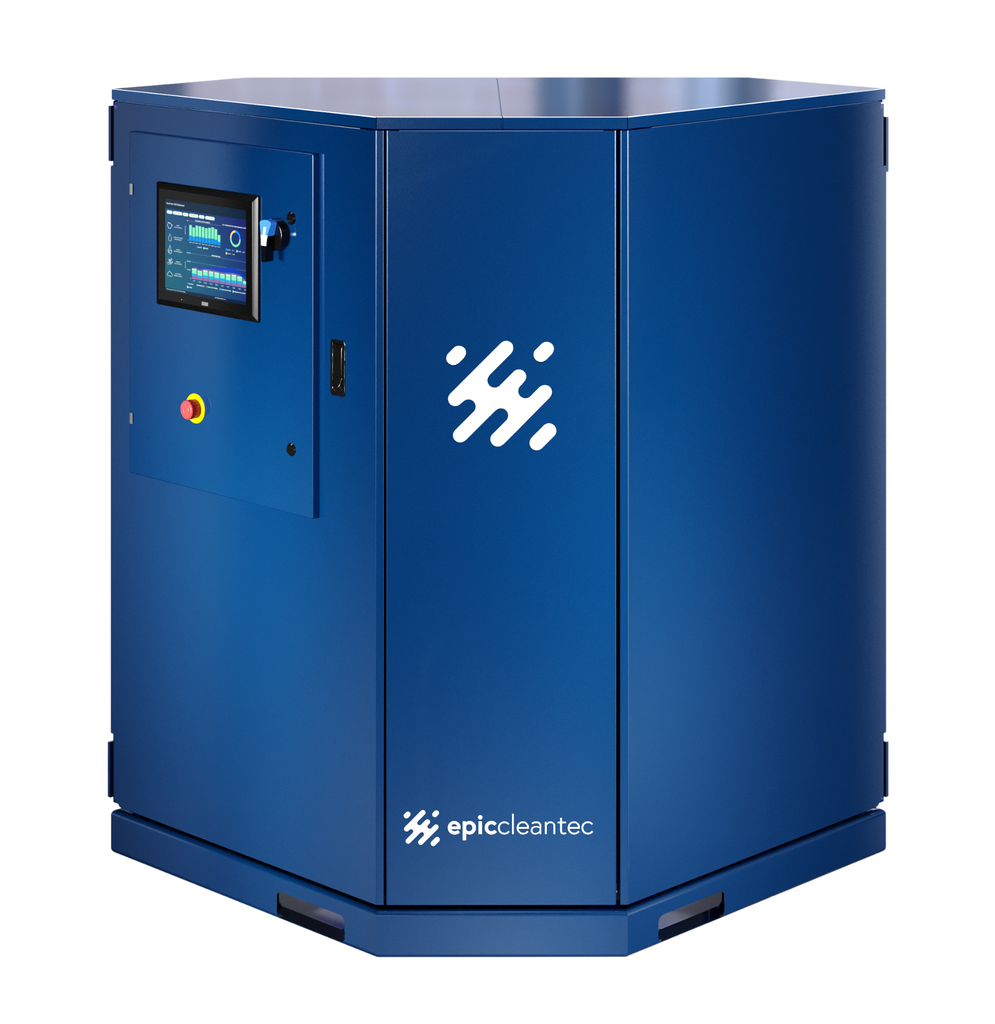
With OneWater™ Rain system, roofs and air-conditioning systems also become collection points for certain building uses. © Epic Cleantec
In California, this approach gained further regulatory backing on 22 April 2026, when rules governing the on-site treatment and reuse of non-potable water in multi-family residential, commercial and mixed-use buildings came into effect.
Epic Cleantec already operates systems in residential buildings, hotels and campuses. In Honolulu, the Kuilei Place project is designed to recycle around 32,000 m³ of greywater each year. In San Francisco, The Landing recycles approximately 11.4 m³ per day. The company was named Water Tech Company of the Year 2026 by CleanTech Breakthrough and was included in TIME and Statista America’s Top GreenTech Companies 2026.
Perhaps the most striking example is almost a cultural provocation: in 2025, Epic released two beers brewed with highly purified water recovered from showers and washing machines. The experiment does not make building greywater a general source of drinking water. It makes tangible the level of treatment that water considered “used” can achieve.
Here, beer becomes a demonstration medium, making tangible a level of water quality that the word “recycled” can still make difficult to accept. © Epic Cleantec, 2025
Wastewater becomes part of the drinking-water mix
California has crossed another regulatory threshold. Its direct potable reuse regulations, adopted in 2023 and effective from 1 October 2024, allow wastewater to be transformed into water intended for a public supply network without first passing through a lake or aquifer serving as an environmental buffer.
The process relies on successive treatment barriers and monitoring controls. The US Environmental Protection Agency distinguishes direct potable reuse from indirect potable reuse, in which purified water first passes through an aquifer, lake or river.
In Orange County, the Groundwater Replenishment System already applies this second approach on an industrial scale. Water that was previously discharged into the Pacific is treated using microfiltration, reverse osmosis, ultraviolet light and hydrogen peroxide before being returned to the groundwater basin.
“Wastewater” describes its history. Its chemistry after treatment describes its value.
Seawater and saline aquifers move to a new scale
Desalination already operates at industrial scale. Its next generation is focusing on pressure, membranes, energy consumption and the volume of brine discharged.
Desalination already operates at industrial scale. Its next generation is focusing on pressure, membranes, energy consumption and the volume of brine discharged.
California-based OceanWell is moving part of the reverse-osmosis process to the seabed.
Its submerged modules use the natural hydrostatic pressure available at depth to drive water through membranes, reducing the mechanical work required at the surface. A low-velocity intake system is also designed to limit the impact on marine organisms.
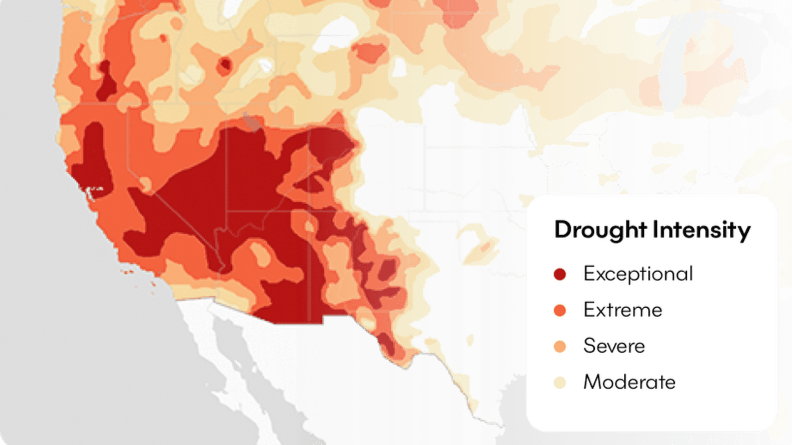
The technology is still being validated. An EPA permit authorises offshore trials off the California coast until 2030, while a prototype is being tested with the Las Virgenes Municipal Water District.
Ultimately, the California Water Farm 1 project is targeting 227,000 m³ of fresh water per day from a subsea farm off Malibu. This figure is a commercial target, not a demonstrated operating capacity.
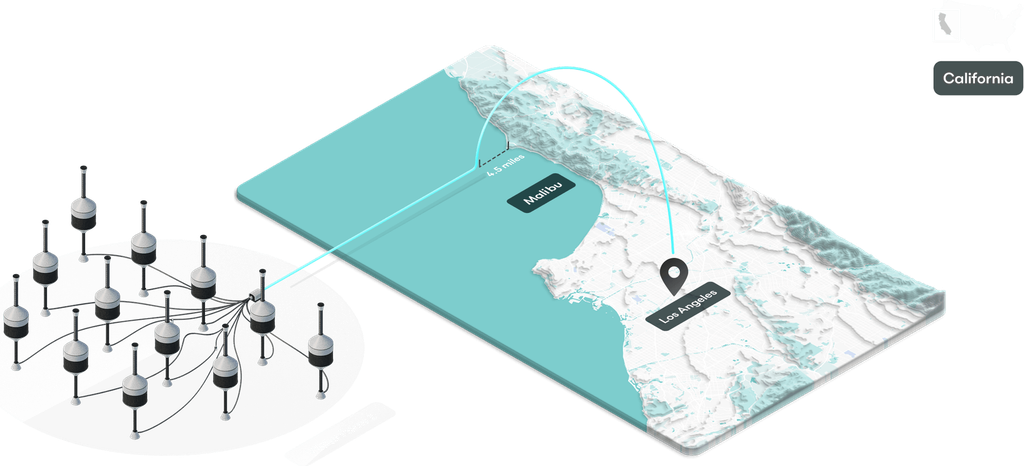
California Water Farm 1 proposes a subsea desalination farm around 7 km off Malibu, with a target capacity of 227,000 m³ of fresh water per day. © OceanWell, 2026
In May 2026, OceanWell was selected as a semi-finalist in the XPRIZE Water Scarcity competition following a phase of physical testing assessing technical merit, feasibility and operational performance. In its category, systems were required to demonstrate integrated production of around 1,000 litres of fresh water per day for two weeks.
OceanWell tests its pressure-driven desalination process in two complementary environments: a biological test tank and a simulated deep-ocean environment. © OceanWell, 2025
Hydrovolta: desalinating without unnecessary demineralisation
Saline water is not limited to the sea. Saltwater intrusion, brackish aquifers, nitrates and mineralisation make many groundwater resources difficult to use, including for agriculture.
In Leuven, Hydrovolta is developing SonixED™, a patented combination of electrodialysis reversal, ultrasound to reduce scaling and selective membranes. In electrodialysis, ions pass through the membranes under the influence of an electric field while the water remains in the main flow. Depending on the composition of the resource, this selectivity can remove certain salts or nitrates without systematically removing calcium and magnesium.
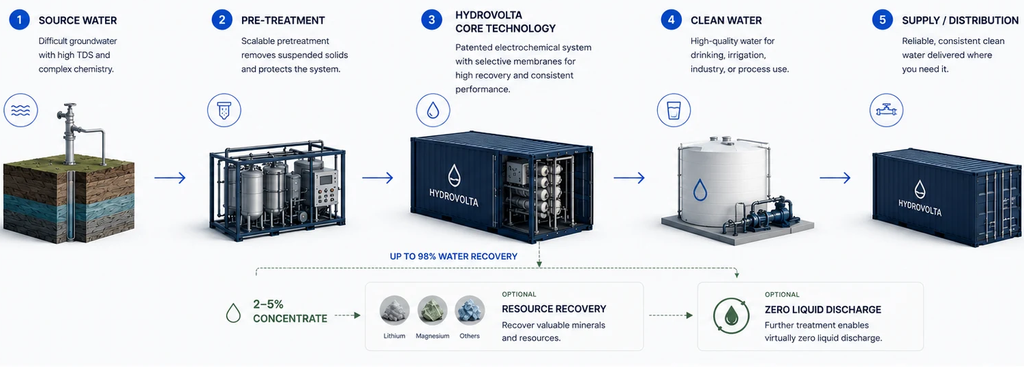
SonixED™ illustrates a different approach to water treatment: adapting separation to the composition of the water rather than removing everything indiscriminately. © Hydrovolta
The European Innovation Council has provided around €2.29 million towards the development of the technology. Its 2026 catalogue places Hydrovolta at TRL 8 and describes containerised units intended for decentralised desalination, water reuse and brine management. The company reports an active deployment in Morocco and a contracted pilot project in Australia.
For a farm far from a network, a brackish aquifer that can be treated locally may matter more than a new reservoir with an uncertain supply.
Agriculture begins to measure the plant’s thirst
Agriculture and energy are among the main users of freshwater in Europe. The Joint Research Centre estimates total water demand in Europe at between 140 and 200 billion m³ per year. At this scale, producing new resources is not enough: measuring demand, reusing water and treating resources previously unsuitable for irrigation become equally important.
CropX: detecting water stress before opening the valve
Precision agriculture has long relied on soil and weather data. CropX is gradually bringing the plant itself into the equation.
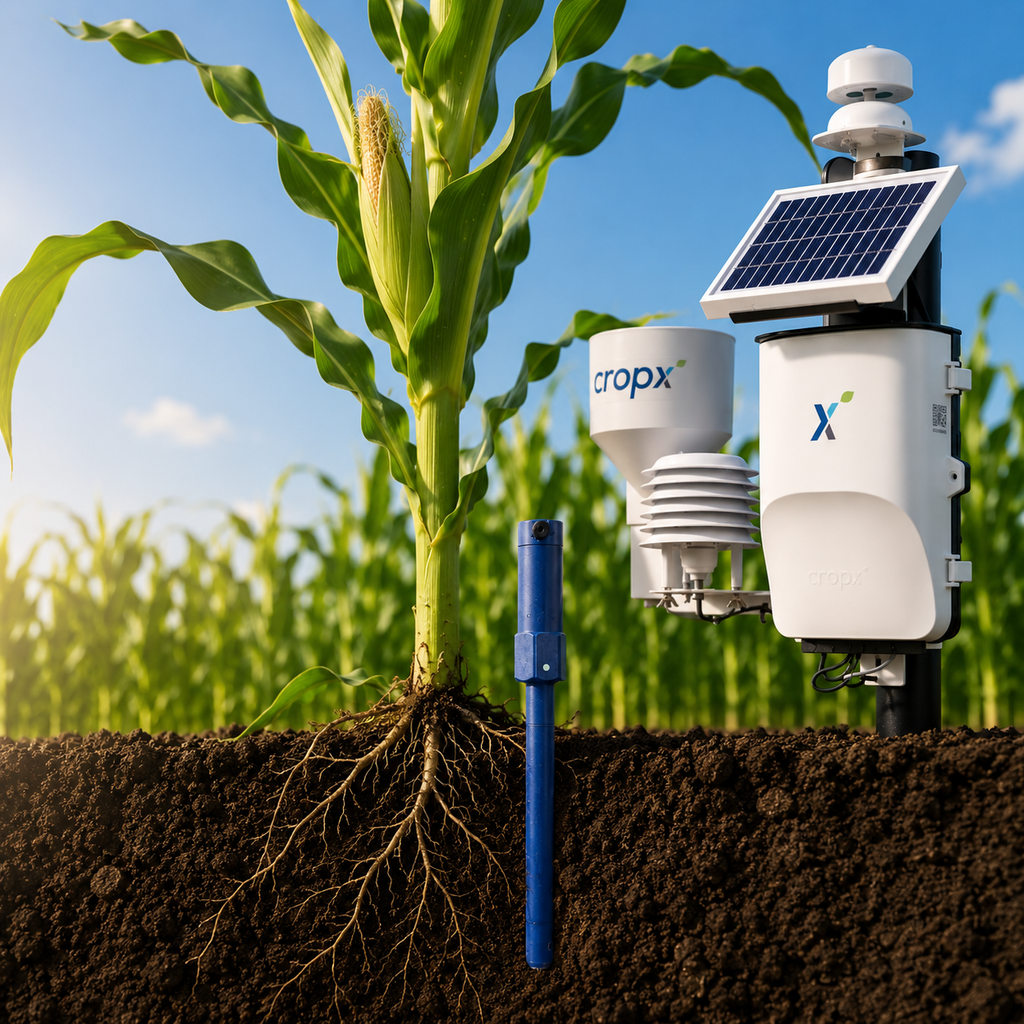
Strato provides field-level weather insights, integrated directly into the CropX platform to connect local conditions with agronomic decision-making. © CropX
In March 2026, the company launched CropX Vision, an artificial intelligence system capable of estimating water stress in vines from an image of the canopy. Its platform combines this information with soil sensors, weather data, evapotranspiration and irrigation systems.
Across the US Great Plains, 200 CropX sensors were deployed in 2026 with hundreds of farmers to help determine whether a field should be irrigated based on its soil profile and water status. Other modules determine when a field can receive agricultural effluent without increasing the risk of runoff or leaching.
Other modules determine when a field can receive agricultural effluent without increasing the risk of runoff or leaching.
The plant itself becomes a sensor of demand. Irrigation is no longer calculated solely from a schedule or an estimate of soil conditions; it moves closer to the actual physiological state of the crop.
At the same time, the European Water Reuse Regulation allows treated urban wastewater to be used for agricultural irrigation subject to quality requirements and risk management. Cities and agriculture can therefore use the same molecule of water at different points in time.
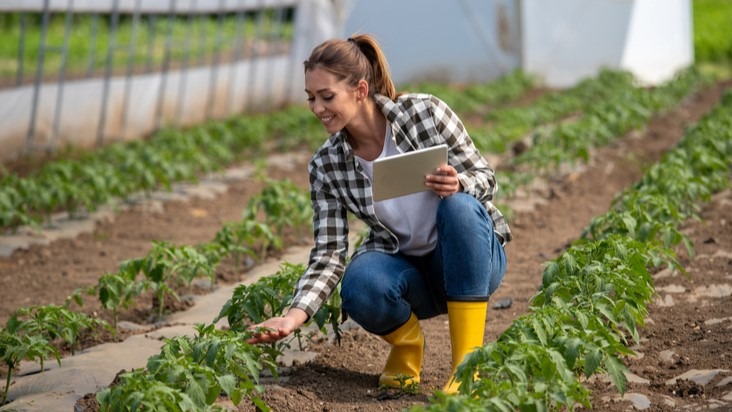
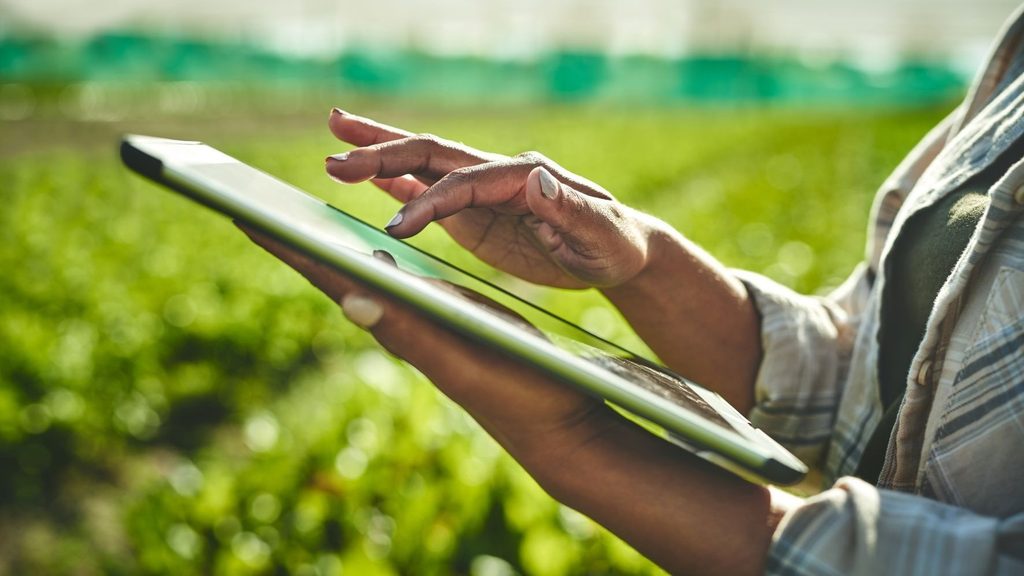
The CropX ecosystem, from sensors installed in the field to data monitoring through a centralised interface. © CropX
Human hydration: the non-negotiable need
A household can choose not to water a lawn. A farm can change a crop or its irrigation strategy. Physiological need creates a different hierarchy.
The World Health Organization defines access to water through four combined requirements: sufficient quantity, continuity, safety and affordability.
Vulnerability is also unevenly distributed across age groups. The UK’s NHS identifies babies, children and older people as among those most at risk of dehydration. For children, growth is also linked to water quality: the WHO notes that diarrhoeal episodes linked to contaminated water deprive children of nutrients required for growth and contribute to malnutrition. Available evidence does not justify treating childhood growth as a simple function of how much water a child drinks. It does, however, establish the relationship between safe water, diarrhoeal disease, nutrition and development.
Scarcity also has an economic dimension. UNICEF notes that as water becomes scarcer, it becomes more expensive, while the distance required to collect it places pressure on school time, domestic work and household income.
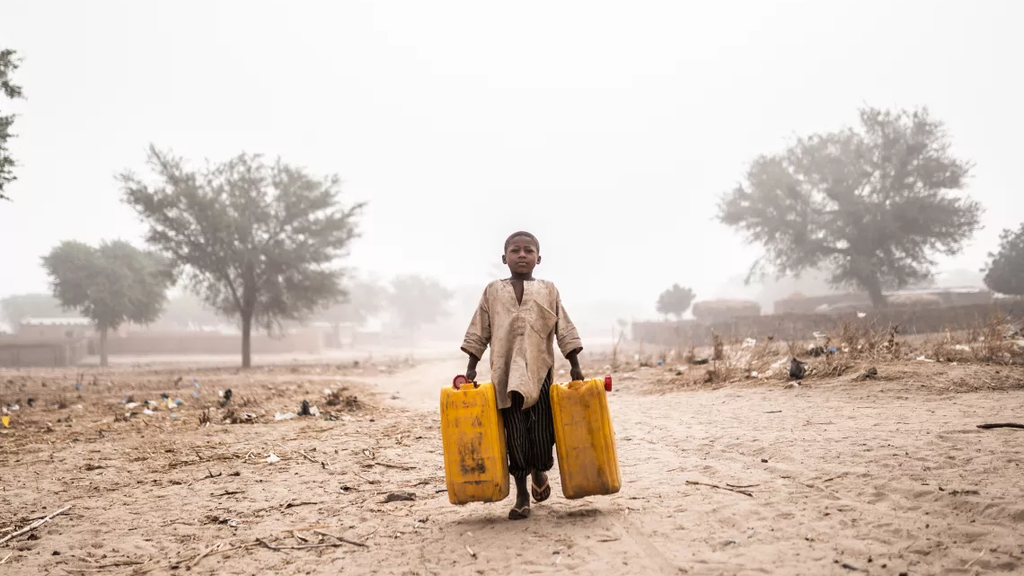
In Niger, children walk up to 15 kilometres to reach a water point, turning daily access to water into a constraint on both time and mobility. © UNICEF/UNI315914/Haro, 2020
This is where the individual scale takes on a different significance.
A home does not need to produce all of its own drinking water to reduce its dependence on external supply. A cistern can cover some outdoor uses. Greywater can supply toilets. A compact treatment system can extend the water cycle within the building. An atmospheric water unit can provide tens or hundreds of litres where the network lacks capacity or reliability. Drinking-water quality can remain reserved for the volumes that actually require it.
The meter, the cistern, the membrane, the sensor and the sorbent are no longer standalone pieces of equipment. Together, they form the first components of a distributed water infrastructure.
The tap could gradually become the end point of several different sources: the public network, rainwater, recycled water, treated groundwater, the atmosphere or the sea. Their respective share will vary according to location and use.
Water itself does not change. Its sources, however, are becoming more diverse.