

A grain like no other
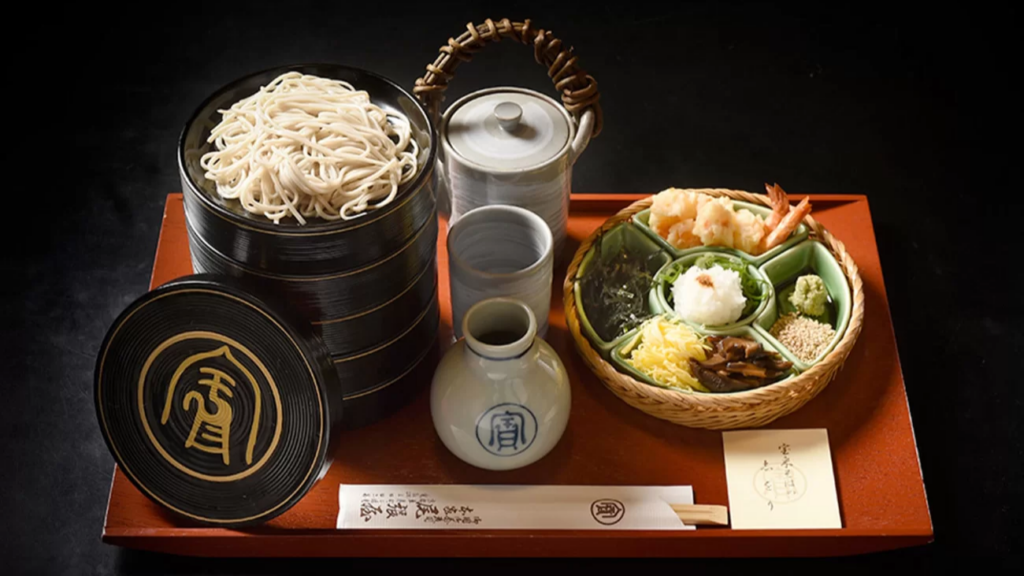
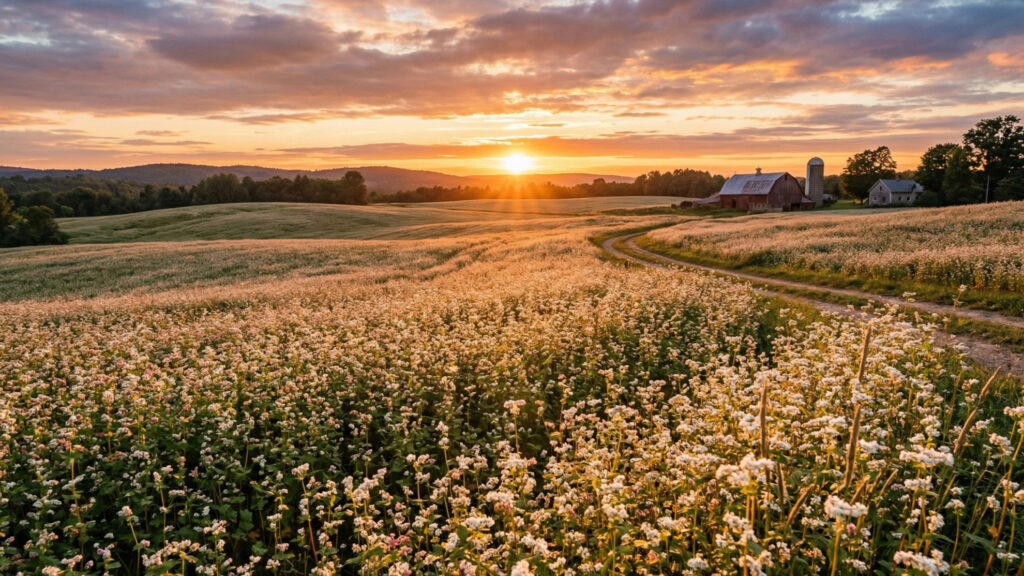
Buckwheat – Fagopyrum esculentum – is not a cereal in the strict botanical sense; it belongs to the Polygonaceae family, which makes it a pseudo-cereal. It has accompanied trade between civilisations: originating in the tropical regions of South-East Asia, it followed the Silk Roads to Europe, East Asia, North America and Southern Africa. From Breton buckwheat to Japanese soba noodles, this grain thus tells a global story, encompassing culinary, agricultural, cultural and technological aspects.
Long considered a subsistence crop, it has seen a resurgence in interest in recent years. According to a market study published in 2024 by Market Research Future, the global buckwheat market was valued at approximately €1.55 billion (estimate from a private market study). By comparison, global buckwheat production stands at around 2.5 million tonnes per year according to the FAO (Food and Agriculture Organisation of the United Nations). This growth is linked to demand for gluten-free products and the search for foods perceived as more sustainable. This gluten-free pseudo-cereal thus meets a dual need: diversifying food uses whilst promoting a hardy, undemanding and adaptable plant.
Buckwheat husks, stalks and shoots – once considered waste – are now being put to use in a variety of sectors: bedding, insulation, cosmetics and bioplastics. This article explores the diverse culinary and industrial uses of this plant, as well as the diplomatic cooperation it has fostered between different countries, including France and South Korea.
A travelling grain: the origin and global spread of buckwheat
Archaeobotanical and genetic data indicate that buckwheat was domesticated in the Yunnan region of China around 4,000 to 3,000 years BC (Ohnishi, 1998).
It then spread throughout East Asia:
- Around 2000 BC on the Korean Peninsula: buckwheat arrived in Korea, as evidenced by charred remains discovered at Bronze Age sites.
- Around 1500 BC in the Japanese archipelago: introduced to Japan via Korea, it became the basis for soba noodles in the medieval period.
- The Middle Ages in Europe: brought by the Crusaders or via the Silk Road, it spread throughout Europe from the 13th century onwards. Its hardiness, which allows it to grow in poor soil, earned it the nickname ‘black wheat’.
- European colonisation of the Americas: settlers imported it to North America, where its cultivation remained marginal.
In Zimbabwe, buckwheat is listed by the FAO as one of the ‘forgotten crops’ to be revived in the interests of food sovereignty. Introduced in the 1920s, it had virtually disappeared before being brought back into favour through local projects supported by FAO policies.
A world tour of flavours and festivals
France
Specialities
- Brittany: buckwheat flour is used to make galettes, crêpes, porridge or kig ha farz. It is a staple of the Breton diet.
- Savoie: crozets, small square buckwheat pasta first made in the 17th century in Tarentaise (from the local dialect word ‘croé’, meaning ‘small’). By the end of the 18th century, the soup made with them was a staple for the iron miners of Allevard. Since 1844, Alpina Savoie has kept this tradition alive.
In this context, buckwheat goes beyond being a mere ingredient: it becomes a territorial, agricultural and cultural marker.
Events
No dedicated festival. Crozets are, however, celebrated at numerous mountain festivals in Savoie and Haute-Savoie.
According to FranceAgriMer, the buckwheat sector in France currently comprises around 2,650 producers and 80 collectors. Over the 2020–2024 period, the area under cultivation reached 48,200 hectares, with an average harvest of 28,500 tonnes. In 2024, the harvest surged to 31,100 tonnes, driven by a sharp increase in the area under cultivation (68,800 hectares), a level not seen for over fifteen years.
An ORTF report from 9 June 1967 in Tréguier (Brittany) focusing on kig ha farz. It shows hotelier Mr Darchenne (Hôtel de la Tour d’Hastings) doing his shopping, followed by his wife preparing the dish in the kitchen. © INA
Russia
Specialities
- Kacha: porridge made from hulled and roasted buckwheat, a national dish. According to a saying quoted by the Office of the Federal Service for Supervision of Consumer Rights Protection and Human Well-being in the Novgorod Oblast: ‘Buckwheat porridge is our mother, and rye bread our father.’
- Blinis: pancakes often made with buckwheat flour, associated with the Maslenitsa festival.
Events
- Maslenitsa – February/March – traditional spring festival.
- Buckwheat Day – 17 March – national food festival.
- Kacha Festival (variable date) – local event featuring a recipe competition (e.g. in Suzdal).
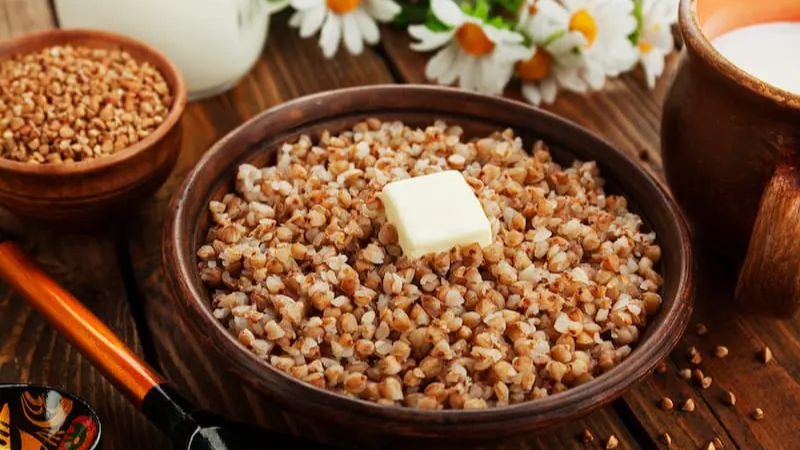
Kacha: a buckwheat porridge originating in Russia, specifically in southern Siberia and the Altai region © Rospotrebnadzor
South Korea
Specialities
- Memil guksu: hot buckwheat noodles.
- Memil makguksu: cold buckwheat noodles.
- Memil chongtteok: rolled buckwheat pancakes.
- Memilcha: tea made from roasted buckwheat seeds.
Events
- Hyoseok Cultural Festival (Pyeongchang) – September 2025 (60,000 visitors) – celebrates the writer Lee Hyo-seok.
- Chuncheon Makguksu & Dakgalbi Festival (Chuncheon) – October 2025 (over 300,000 visitors, €5.77 million in economic impact) – combines makguksu with spicy chicken dakgalbi.
- Ora Memil Flower Festival (Jeju) – 3–5 October 2025 – buckwheat fields immortalised in a Netflix series.
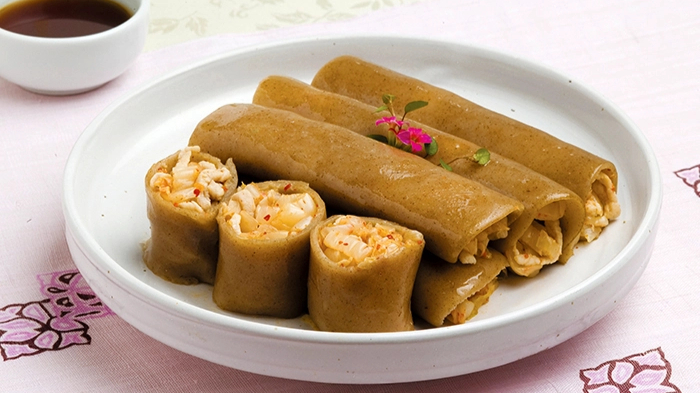
Made from buckwheat grown mainly in the provinces of Gangwon, Pyeongan and Hamgyeong, memil chongtteok are a highly renowned local speciality. © Korea.net
Japan
Specialities
- Zaru soba and kake soba: buckwheat noodles associated with the toshikoshi soba ritual.
- Soba miso: a fermented paste combining roasted buckwheat and red miso, dating back to the Edo period.
- Sobacha: tea made from roasted buckwheat seeds.
Soba noodles illustrate buckwheat’s ability to become a staple food, a seasonal ritual and an enduring cultural symbol.
Events
Shinshu “Shin‑Soba Matsuri” (Nagano Prefecture) – autumn – festivals in Ina, Nagawa and Otari celebrating the new harvest.
China
Specialities
- Kǔ qiáo miàntiáo: buckwheat noodles from Yunnan.
- Qiáo mài jiānbǐng: buckwheat pancakes, steamed or pan-fried, from the North-East (Hebei, Shandong).
- Wúqǐ qiáo mài hé le: chopped noodles from Wuqi (Shaanxi).
- Qiáo mài dòufu yè: buckwheat tofu sheets (Lixian).
- Qiáo mài bā gāo: steamed buckwheat pancake, served in pieces with a sauce (Beijing).
Events
- Manlong Buckwheat Festival (Xichou) – organised by the Yi ethnic group.
- Hualuo Buckwheat Festival (Wenshan) – in honour of the god of buckwheat.
North America
Specialities
Production modeste – around 30,000 acres in the United States (mainly Washington and North Dakota – source: USDA). Growing demand for gluten-free products.
Events
- Preston County Buckwheat Festival (West Virginia, USA) – 24–28 September 2025 (83rd edition) – buckwheat cakes.
- Festival de la Galette (Louiseville, Quebec, Canada) – 2–11 October 2026 – a continuation of the Breton tradition.
Buckwheat cakes © Preston County Buckwheat Festival
Other events
- Cerealia (Italy) – from 20 September to 31 October 2025, this travelling festival celebrates ancient Mediterranean grains through talks, cookery workshops and farmers’ markets. Over 40 events are being organised across the peninsula.
Making the most of by-products: from pillows to nanofibres
Pillows and soft toys
In Japan, the makura pillow stuffed with buckwheat hulls (soba-gara) has been around since the 17th century, a time-honoured tradition. Long-established manufacturers such as Yoshida Makura (founded in 1929, now in its sixth generation) and Marusen (Nagano, with over 47 years of artisanal production) carry on this tradition.
Under a microscope, each husk takes the shape of a ‘canoe’, creating natural air channels. The material wicks away heat and moisture, does not flatten, is biodegradable and free from chemical treatments. This pillow embodies the principles of slow design.
In France, Fleur de Sarrasin and Couette Castex offer pillows made from organic buckwheat hulls, bearing the Origine France Garantie label and Oeko-Tex certified.
The same philosophy of comfort and the circular economy extends to buckwheat-filled pet toys, such as the Handmade Rat Cat Toy by Max & Woodys, or the Stingray Cat Toy made from organic cotton and hemp, filled with buckwheat hulls and catnip by The Kind Pet.
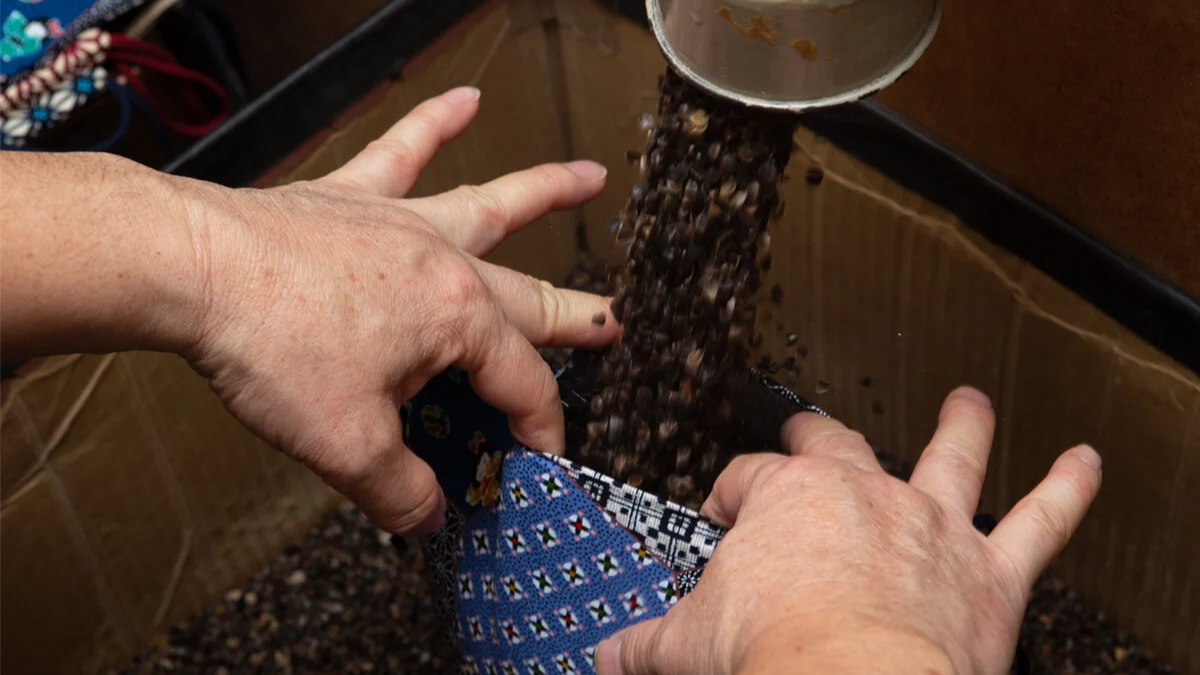
As Shinshu is a region renowned for its soba noodles, the buckwheat grains are turned into fragrant, flavourful noodles, whilst the buckwheat husks are used as filling for pillows. © Marusen
Food and health
In the field of fermented plant-based drinks, the Latvian start-up Fermentful (Riga) has developed a green buckwheat kefir with probiotic properties, sold in four flavours (plain, vanilla, wild berries, chocolate) and B Corp certified.
Graine de Breton, in Brittany, produces 30 tonnes of coffee substitutes made from barley, spelt and buckwheat.
In the honey sector, several French beekeepers market organic buckwheat honey with woody and malty notes, such as Les Ruchers du Morvan and Le Petit Rucher Denonois.
Extracts are used in food supplements for their beneficial effects: Treasure from garden: Bioactive compounds of buckwheat (Science Direct).
- Cardiovascular health: buckwheat helps reduce total cholesterol and triglycerides, whilst helping to prevent the formation of blood clots (thrombi), thanks to the antiplatelet and antithrombotic properties of rutin.
- Blood sugar control: the study indicates that consuming buckwheat helps to lower blood glucose levels, making it a potential ally in diabetes management.
- Antioxidant and anti-inflammatory properties: buckwheat is a rich source of antioxidant flavonoids, which help protect cells from damage caused by free radicals, thereby helping to reduce inflammation.
Transforming a Baltic superfood — green buckwheat — into a modern, probiotic-rich drink designed to support digestion and everyday wellbeing. © Fermentful
Cosmetics
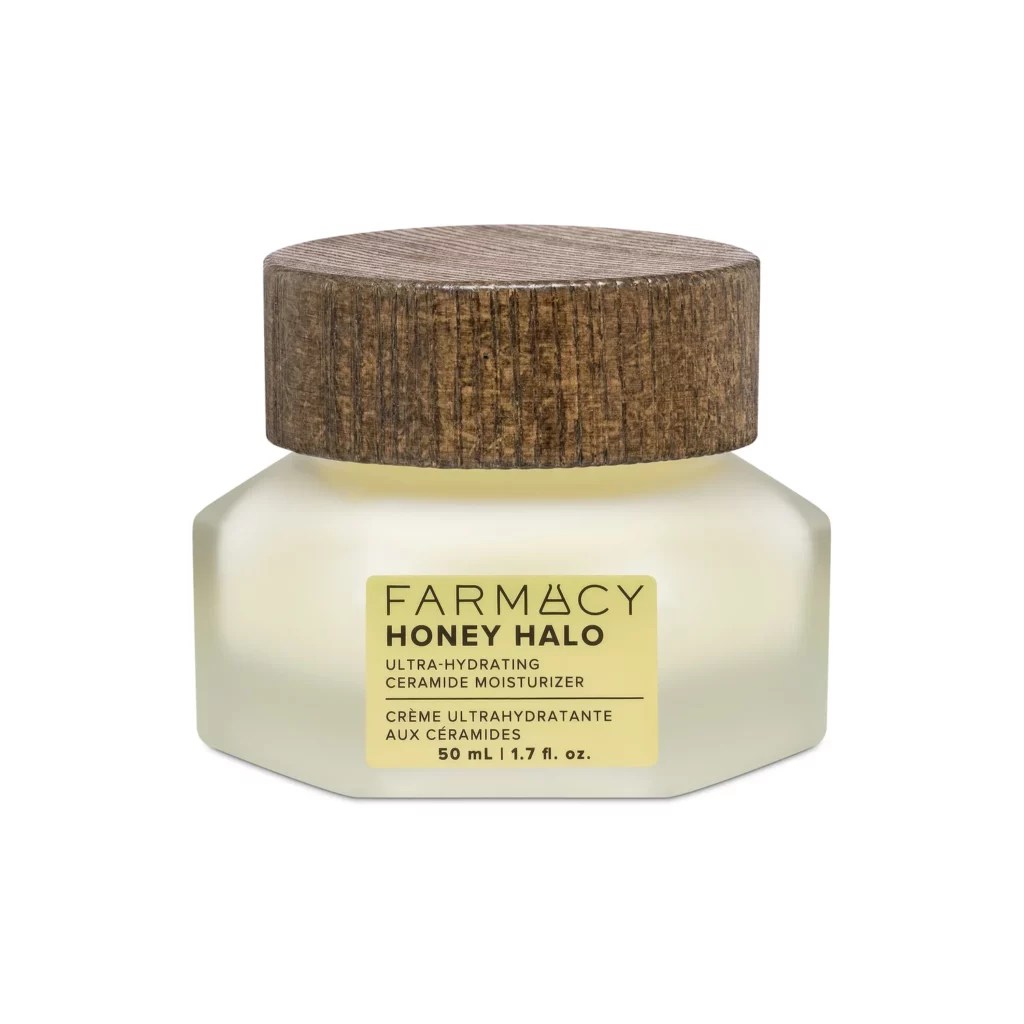
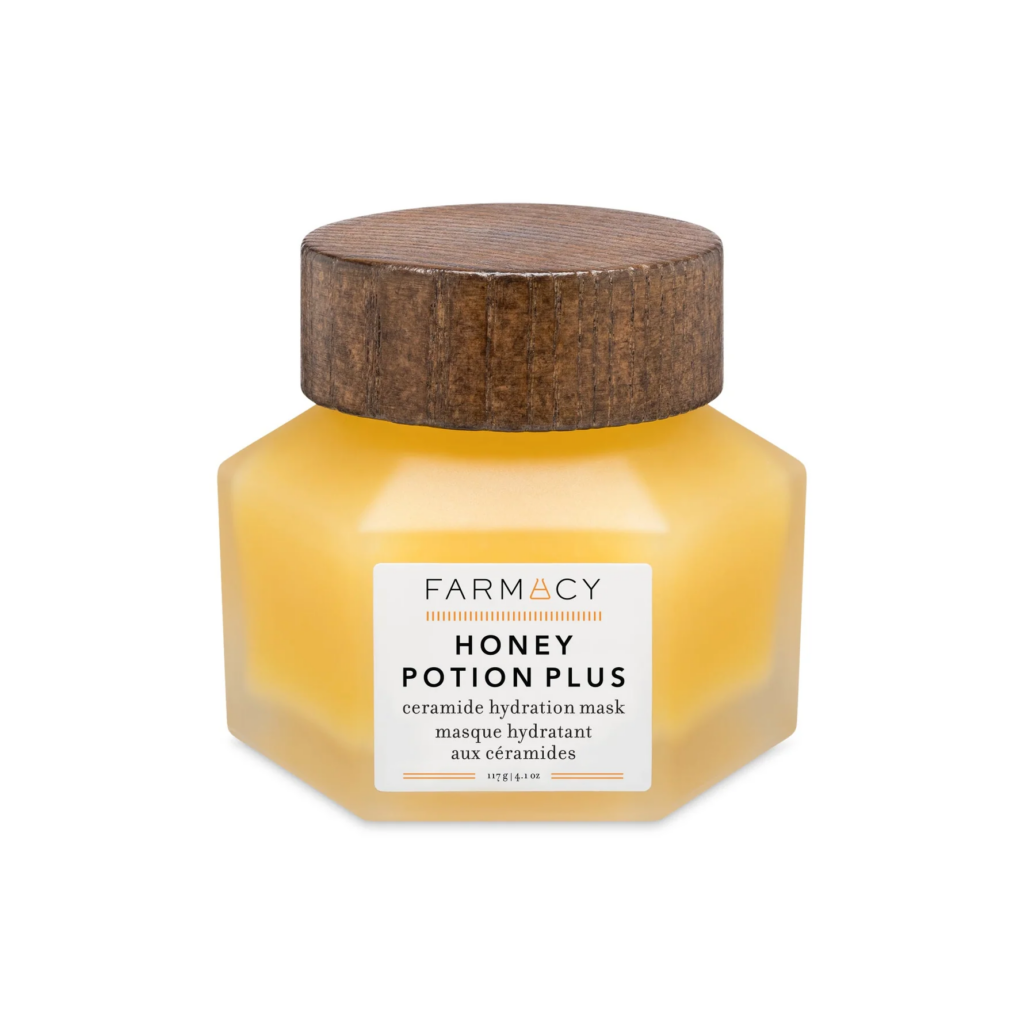
Farmacy Beauty, a New York-based brand, uses buckwheat honey for its moisturising and antioxidant properties. It features in products such as the Honey Halo Ultra-Hydrating Ceramide cream and the Honey Potion Plus mask.
The Korean brand Dr.G uses buckwheat seed extracts in its Hydra Aqua Watery Gel cream for the same benefits.
Innovative materials
In South Korea, patent KR100933354B1 (2009) combines these shells with waste rubber to produce thermal and acoustic insulation panels.
A study by Nakamura et al. (Cellulose journal, 2019) produced cellulose nanofibres from husks, paving the way for bioplastic films.
Global market and R&D prospects
The world’s leading producers of buckwheat (grains) are, according to FAO data (2022–2023) and sectoral studies:
- Russia: 1,222,382 tonnes (2022), the world’s leading producer.
- China: approximately 504,000 tonnes (2023), second-largest producer.
- Ukraine: 210,720 tonnes (2023), third-largest producer, with a 42.7% year-on-year increase.
- France: a traditional producer, the sector has seen mixed developments. France remains the leading producer in the European Union, but around 30% of the quantities used within its borders are imported, mainly from Poland and China.
- United States: 86,700 tonnes (2023).
- South Korea: production fluctuating between 11th and 17th place globally (around 15,000 tonnes), heavily dependent on imports.
The public R&D sector is organised as follows:
- France: INRAE (the French National Institute for Agricultural, Food and Environmental Research) has been running participatory buckwheat breeding programmes in Brittany for 25 years, working directly with farmers. The institute is also participating in the European LIVESEEDING project (2022–2026), which brings together 37 partners from 13 countries to develop high-quality organic seeds.
- Korea: KITECH (Korea Institute of Industrial Technology) has developed insulation panels made from hulls (patent KR100933354B1, 2009) .
The RDA (Rural Development Administration) has played a key role in the selection and dissemination of the Yangjeol buckwheat variety, valued for its early maturity and high yield. Since 2020, the institute has been producing and supplying seeds of this variety to farmers, and supports its production through subsidies, such as in 2024 in Jeju Province.
Japan: The University of Tsukuba is a leading research centre for buckwheat. Its teams are working on selecting varieties resistant to lodging, drought-tolerant and resistant to bolting, and are using genomic tools to improve yields and nutritional quality.
Diplomacy through labelling
Protected designations
- France: PGI ‘Farine de blé noir de Bretagne’ (2010, INAO). This Protected Geographical Indication guarantees that the flour is produced, processed and manufactured in Brittany using traditional methods.
- Japan: GI for Taishu Soba (Tsushima Island, 2018 – MAFF). The Japanese Geographical Indication protects the reputation and authenticity of this buckwheat grown on Tsushima Island, considered one of the first regions in Japan to have cultivated buckwheat.
- South Korea: local initiatives in Gangwon Province, particularly around the Bongpyeong region celebrated by the writer Lee Hyo-seok, seek to have buckwheat recognised as agricultural heritage.
UNESCO Intangible Cultural Heritage
Japan – Washoku (2013): inscribed on 4 December 2013 by UNESCO on the List of Intangible Cultural Heritage, Washoku is a ‘social practice’ based on respect for nature and the sustainable use of resources. Fermentation techniques (miso, shoyu), the aesthetic of seasonal produce and soba noodles – both ritualistic and artisanal – form its foundation.
A Japanese tradition for New Year’s Eve dinner, Toshikoshi Soba. © CBS LA
Buckwheat, a source of artistic inspiration
Literature
- During the Tang dynasty (618–907), the Chinese poet Bai Juyi (772–846) wrote: ‘The moon shines, the buckwheat flowers are like snow.’
- In 1841, Hans Christian Andersen published ‘The Buckwheat’, a fable about a proud stalk struck down by a storm.
- In 1862, Victor Hugo associated buckwheat bread with poverty and dignity in Les Misérables.
- In 1941, the Korean resistance fighter Yun Dong-ju (1917–1945) wrote: “The field of white buckwheat, over there, in September, my heart remains there.” The flowering buckwheat becomes a metaphor for the absent homeland.
Painting
- In 1888, Émile Bernard produced a sketch in Pont-Aven entitled Study for Buckwheat, in which two women in local dress are arranging sheaves of buckwheat with bright red stalks. The work encapsulates the Synthetist aesthetic of the Pont-Aven group (Friends of the Pont-Aven Museum).
- The following year, Paul Sérusier painted The Harvest of Buckwheat (1889), now in the collection of the Art Institute of Chicago. The vertical composition and flat areas of colour reflect the Japanese influence on the painter, a member of the Nabis group.
From gluten-free diets and the promotion of by-products to research into bio-based materials, buckwheat is emerging as a heritage resource capable of opening up new fields of innovation.
The resilience of a heritage grain
From the acidic soils of Brittany to the highlands of Zimbabwe, buckwheat has managed to thrive. Its husks, stalks and shoots – once considered waste – are now worth their weight in green gold: bedding, insulation, cosmetics, bioplastics.
France, Korea and Japan possess complementary strengths: research, certification and innovation.
The continued cultivation of buckwheat is a commitment to culinary and farming traditions which, from one continent to another, share the same need for resilience.