
N°7 – Deeptech series between France and South Korea
On April 3, 2026, in Seoul, during his official visit, President Emmanuel Macron and his counterpart Lee Jae-myung reaffirmed the continuation of the strategic partnership between France and South Korea. The discussions focused on clean technologies, artificial intelligence, biotechnologies, and also gastronomy, with the “diplomatic table” being highlighted during a state dinner.
Alsatian sauerkraut and Korean kimchi use the same biological process: the lacto fermentation of cabbage. Contemporary research is studying its applications in health, sustainability, and precision nutrition.
On the occasion of the 140th anniversary of diplomatic relations, 1886 to 2026, the two nations are examining how their fermentation based knowledge can connect with synthetic biology and artificial intelligence.
The article presents the historical roots of these two specialties, their economic cooperation, research frameworks, industrial applications, gastronomic diplomacy, the tables that celebrate them, the events of 2026, and future perspectives.
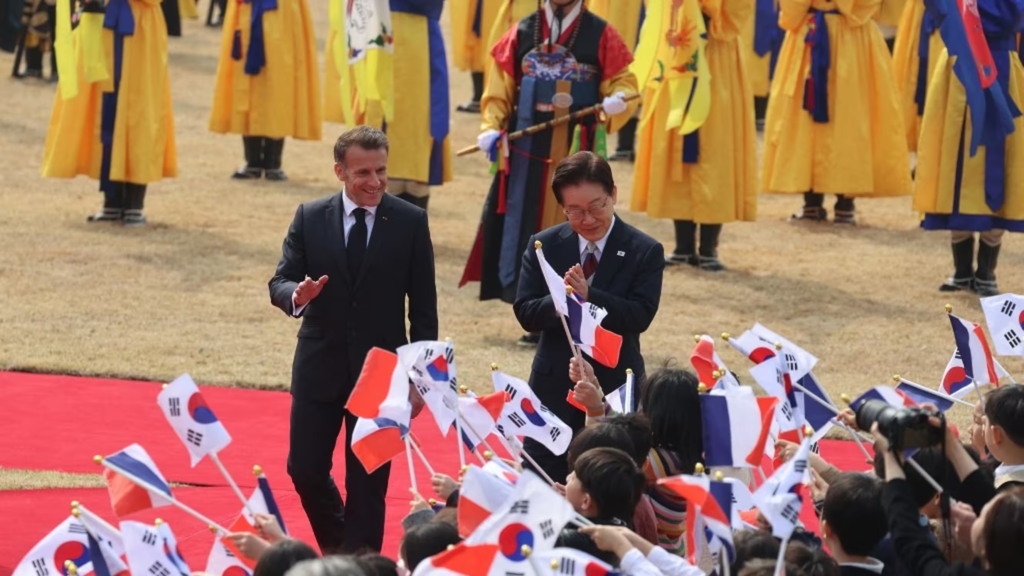
French President Emmanuel Macron and South Korean President Lee Jae myung attend the official welcoming ceremony at the Blue House, the presidential palace, in Seoul, on April 3, 2026. © Ludovic Marin – AFP
Before becoming objects of research, these fermented foods are first and foremost deeply rooted cultural, social, and territorial markers.
Intertwined Heritage
France: Alsatian sauerkraut, a protected fermented vegetable
The cultivation of cabbage for sauerkraut has a long history in Alsace. According to the National Institute for Origin and Quality (INAO), “climatic conditions in Alsace are favorable to cabbage cultivation, notably with harsh winters”; inhabitants therefore developed fermentation to preserve the vegetable throughout winter.
The Ecomuseum of Alsace has highlighted the deep-rooted tradition of this practice; a study by Marc Grodwohl published in 2009 in the journal Culture & Musées traces the presentation of cabbage, pork, and sauerkraut between 1984 and 2006.
Legend has it that fermented cabbage entered Alsace in 451, carried in the saddlebags of the Huns during their expeditions. The first written trace of the Alsatian word Sürkrüt, meaning “sour cabbage”, appears in the 15th century: at the time, sauerkraut was eaten in fine strands in monasteries.
In the 19th century, the dish spread beyond Alsace, carried by migrations and the annexation of 1871. In 1895, a Parisian song, La choucroute au jambon, with lyrics by Alfred Isch Wall and music by L. A. Dubost, was created at the Alcazar d’été, a sign that sauerkraut was entering French popular culture.
At the same time, the tradition spread beyond Europe. From the beginning of the 19th century, the Moravian Brethren, Protestant settlers from Central Europe, introduced it to Pennsylvania and North Carolina as an alternative to German sauerkraut.
Alsace currently produces approximately 25,000 tons of sauerkraut per year, accounting for nearly two-thirds of France’s total production. Since July 3, 2018, “Choucroute d’Alsace” has held Protected Geographical Indication (PGI) status. The Association for the Promotion of Alsatian Sauerkraut (AVCA) is responsible for its protection and management. This recognition protects much more than a regional product: it highlights the expertise in lacto-fermentation that places sauerkraut among the most fundamental fermented foods of France’s culinary heritage.
Chef Martin Fache, author of “Petit traité de la choucroute,” presents a Choushi made with sauerkraut and smoked herring. © Echappées belles
Korea: kimjang and kimchi, intangible cultural heritage of humanity
The United Nations Educational, Scientific and Cultural Organization (UNESCO) defines kimchi as “the name given to preserved vegetables seasoned with spices and fermented seafood.” The earliest written records date back to the Three Kingdoms period (57 B.C. – 668 AD). At that time, kimchi did not yet contain chili peppers.
The change occurred in the early 17th century, following the introduction of red chili peppers via Japan: gochugaru (chili pepper powder) gives kimchi its vermilion color and spiciness. Traditional white kimchi still exists in certain regions.
Korean folk wisdom sums up this relationship with kimchi in a proverb: “Kimchi-man isseodo bap meongneunda” (김치만 있어도 밥 먹는다). Literal translation: As long as there is kimchi, one can eat rice. The meaning conveys contentment and resilience.
This central place in the diet is manifested each year through a collective ritual: kimjang—the preparation and sharing of kimchi before winter. Inscribed in 2013 on the Representative List of the Intangible Cultural Heritage of Humanity, UNESCO emphasizes that this rite “also reminds many Koreans that human communities must live in harmony with nature.” The tradition is typically passed down from mother-in-law to daughter-in-law.
The Democratic People’s Republic of Korea also had its kimchi-making tradition inscribed on the Representative List of the Intangible Cultural Heritage of Humanity in 2015, evidence of how deeply rooted this practice is throughout the peninsula.
Beyond the collective effort, each region cultivates its own culinary traditions. According to Master Kim Gyeong-mi, a specialist in Jeolla Province, kimchi “uses a variety of vegetables and salted seafood as its only seasonings. It is rich in itself. However, it is the fact that it is never excessive despite this richness that makes Jeolla kimchi so special.”
Korea and kimchi: this traditional dish made from fermented vegetables—as delicious as it is healthy—is part of the incredible rise of Korean culture, which has become a global phenomenon in recent decades. © ARTE TV
Institutional Framework and Economic Cooperation
Economic diplomacy and bilateral agreements
Scientific cooperation between France and South Korea is rooted in an agreement signed in 1981. This framework is regularly updated by the Joint Strategic Committee on Science and Technology, which defines common research priorities and issues calls for co-funded projects.
At its 8th meeting in Paris in June 2023, COMIX launched the first joint call for projects between the French National Research Agency (ANR) and the National Research Foundation of Korea (NRF). Launched in 2025 on the theme “Biotechnologies Using Artificial Intelligence,” it covers bioinformatics, genomics, personalized medicine, and precision agriculture—fields directly related to fermentation. A second call is scheduled for 2026. In this context, fermented foods are becoming a concrete application area for combining artificial intelligence, biotechnology, and lacto-fermentation.
To initiate these collaborations, the Science and Technology for Research and Transfer (STAR-T) program is funding exploratory missions by French researchers to Korea. For their part, Bpifrance and the Korea SMEs and Startups Agency (KOSME) are facilitating cross-border business setups.
On the startup front, La French Tech Seoul, launched in December 2015, will celebrate its tenth anniversary in 2026. It continues to facilitate access to the Korean market for French startups.
Finally, the Franco-Korean Chamber of Commerce and Industry (FKCCI), the third-largest foreign chamber in Korea and the sixth-largest French chamber worldwide, brings together more than 475 companies. In April 2026, it held the first meeting of its Food & Beverage Committee, focusing on changing Korean consumer expectations, the rise of healthy alternatives, and the appetite for French products such as wine, butter, and cheese. The FKCCI also plans to map the French presence in Korea and establish a “Maison France Éco” in 2026.
Korean companies operating in France
Several Korean food groups are choosing France as their gateway to Europe.
In July 2024, during the Paris Olympics, CJ CheilJedang – Bibigo opened a pop-up Bibigo Market in the 7th arrondissement. The market sold kimchi, mandu, chicken and other K-Food products. The company aims to make France its key market in Europe. This strategy confirms the growing prominence of kimchi in the European fermented foods market, driven by K-Food and the demand for products with a strong cultural identity.
In October 2025, Daesang Corporation – Jongga supported the establishment of a Kimchi Day (22 November) in Paris – the first local authority in the EU to officially recognise this celebration. It also organises culinary competitions with Le Cordon Bleu Paris. Furthermore, its Jongga brand, the world’s leading kimchi manufacturer, exports to over 60 countries and has recently opened a factory in Poland to supply the European market.
Pulmuone, a tofu specialist, took part in SIAL Paris 2024 (October 2024) for the first time, showcasing a range of tofu, kimchi and instant noodles. In November 2025, Pulmuone announced the creation of a European subsidiary in Amsterdam to sell its products in France, Germany and Spain.
Jinsunmi Kimchi, a brand of Daekwang F&G CO., Ltd., has been preserving the traditional production methods of the Gimhae region since 1987. The company exports its products to ten countries (the United States, Canada, Australia, etc.).
Meanwhile, Sias – a Franco-Korean joint venture established in September 2021 – has set up its first factory in Roye, in the Hauts-de-France region, covering 3,000 m², producing mandu and fried rice. A second factory is under construction in Wisches, Alsace. The total investment is expected to reach €14 million, and the workforce is set to grow from 120 to 250 employees by 2027.
Squid Game nights aren’t complete without bibigo on the table. Will your squad survive the Red Light, Green Light game to claim the ultimate prize — delicious bibigo food? © Bibigo
The role of Korean public institutions
The promotion of kimchi in France is underpinned by a structured institutional framework, led by two public agencies.
The Korea Agro-Fisheries & Food Trade Corporation (aT) coordinates activities on the ground.
- During the 2024 Paris Olympic Games, aT delivered additional shipments of kimchi to Korean athletes and distributed maps of Korean restaurants in the capital.
- In October 2025, aT organised the first K-Food Week in France: 24 restaurants, from Paris to Strasbourg, incorporated kimchi, Korean sauces or rice into their menus.
- The initiative was extended to the Paris International Agricultural Show (February–March 2026), where cooking demonstrations introduced kimchi to a wide audience.
- In March 2026, the aT brought together 600 international exhibitors at the Paris Franchise Fair, with 89 business meetings taking place over three days.
- The agency also expanded its reach beyond France: during the Milan Winter Olympics (February 2026), trams decked out in kimchi colours ran through the city, accompanied by a central pop-up store where Italian and Korean chefs created fusion dishes.
The Ministry of Agriculture, Food and Rural Affairs (MAFRA) sets the strategy. Its K-Food Plus roadmap identifies priority products by geographical area.
- In February 2026, MAFRA held its first annual steering committee meeting: kimchi was designated a strategic product for North America, whilst Europe was targeted for vegan foods – a category into which kimchi naturally fits.
The Ministry also launched the K-Food Ambassadors programme, which selects local influencers and culinary experts to promote Korean cuisine in each country.
Finally, to mark the 140th anniversary of diplomatic relations, the Korean Cultural Center in Paris has organised a series of events combining contemporary art exhibitions, festivals and culinary conferences. Several French local authorities have also been approached to establish a Kimchi Day, following the pioneering example of the 15th arrondissement in 2025.
Together, this forms a coherent ecosystem: the aT handles on-the-ground initiatives and engagement with professionals, MAFRA provides the strategic vision, and the Korean Cultural Centre focuses on cultural promotion. Kimchi thus benefits from a comprehensive promotional infrastructure in France – an advantage that Alsatian sauerkraut does not enjoy abroad.
Research, Innovation and Industrial Applications
INRAE and fermented foods
The French National Research Institute for Agriculture, Food and the Environment (INRAE) is conducting significant research into fermentation.
A literature review coordinated by the institute, published in 2023 in the scientific journal Trends in Food Science & Technology, provides a detailed analysis of the lacto-fermentation of vegetables, from sauerkraut to kimchi. This study confirms the scientific community’s growing interest in these foods, which meet societal expectations for a healthy and sustainable diet.
The research aims to “explore the immense natural biodiversity of microorganisms” in order to preserve food whilst limiting the use of additives.
Lactic fermentation emerges here as a key lever for linking naturalness, preservation, microbial biodiversity and new nutritional expectations.
The World Institute of Kimchi (WiKim)
Established in 2010, the World Institute of Kimchi (WiKim), based in Gwangju, is the only national research institute entirely dedicated to kimchi and fermented foods. It operates under the Ministry of Science and ICT (MSIT). This specialisation makes kimchi a key scientific model for understanding lactic acid fermentation and its applications in the fermented food industry.
The institute conducts research into the microbiology of kimchi, production standardisation and health benefits.
In 2025, WiKim published a study on the role of bacteriophages in fermentation, demonstrating that these viruses help regulate the microbial balance and preserve the quality of kimchi.
In February 2026, WiKim announced an artificial intelligence technology capable of predicting the stage of fermentation based on nine key components (lactic acid, succinic acid, sucrose, glucose, fructose, amino acids).
Dr Won Tae-woong, head of the Smart Fermentation Research Group, states: “We have developed a technology that can accurately predict the stages of kimchi fermentation using AI.”
This work, carried out with Professor Hong Young-sik of Chonnam National University, was published in Food Chemistry.
In 2021, WiKim also conducted a joint study with the French team led by Jean Bousquet, professor emeritus at the University of Montpellier, on the potential effects of kimchi in relation to Covid-19.
The institute is also collaborating with American and Japanese universities on probiotics and food safety.
Its research into precision fermentation is of direct interest to the pharmaceutical and nutraceutical industries, opening up opportunities for cooperation with French laboratories.
From the selection of 35,000 strains of lactic acid bacteria to the intelligent automation of production, the Institute is shaping the future of K-Food. © WiKim
Applications and industrial prospects
Lactic acid fermentation produces probiotic bacteria with documented health benefits. It is now one of the most extensively studied processes in the field of fermented foods, particularly for its links to the microbiota, natural preservation and food innovation. A review published in 2023 in Trends in Food Science & Technology confirms the scientific interest in these foods.
WiKim has isolated strains – Latilactobacillus curvatus WiKim0169 and Pediococcus acidilactici WiKim0170 – that boost immunity in animals.
INRAE, for its part, houses a collection of 4,000 food bacterial strains.
Fermented foods reduce waste: they extend the shelf life of vegetables and, in the case of sauerkraut, eliminate the need for refrigeration during fermentation.
INRAE emphasises, “Fermenting plants means doing without additives to preserve them: a natural process that requires little heavy equipment”.
These properties align with the European Green Deal’s objectives to reduce food waste.
Precision fermentation is the most promising innovation. This technology uses microorganisms programmed to produce proteins, flavourings or texturisers.
Several French start-ups are at the forefront: Standing Ovation (which raised €30 million in 2026) and Nutropy.
In South Korea, Intake completed a $9.2 million Series C funding round in 2025. The ‘Ferments du Futur’ programme (€48.3 million) and the ANR–NRF 2025–2026 call for projects to provide platforms for bilateral collaborations.
Great Tables
France: from Alsatian winstubs to Parisian restaurants
From Alsatian winstubs to Korean restaurants in Paris and Seoul, fermented foods are moving beyond the domestic sphere to become gastronomic hallmarks in their own right. Before guiding the reader to the restaurants where they can sample sauerkraut and kimchi, it is worth paying tribute to the living legacy of Alsatian sauerkraut. Chef Martin Fache, a retired master restaurateur (former owner of L’Agneau d’Or in Munster) and co-author of Le Petit traité de la choucroute with Pierre-Brice Lebrun (Éditions Le Sureau, 2022), embodies this expert transmission of Alsatian fermentation expertise. His rigour and passion for local produce illustrate the revival of gourmet sauerkraut.
Chez Yvonne – since 1873 – Strasbourg
This winstub boasts a décor of antique wood panelling and serves a slow-simmered sauerkraut. The Michelin Guide has awarded it a Bib Gourmand and rightly presents it as the epitome of Alsatian tradition
Maison Kammerzell – since 1427 – Strasbourg
They offer their famous ‘Choucroute aux trois poissons’ (sauerkraut with three fish), created by Guy-Pierre Baumann in 1970. Its 15th-century Gothic façade, a listed historic monument, provides an exceptional setting opposite the cathedral.
La Table d’Olivier Nasti – since 1901 – Chambard, Kaysersberg
Deeply rooted in the local terroir, it celebrates fermented cabbage. The Gault&Millau guide states that “everything is surprising yet familiar, such as this new-style sauerkraut with its briny juice and caviar”.
Bofinger – since 1864 – Paris
Founded in 1864 by an Alsatian innkeeper, its Art Nouveau dome and sauerkraut have made it a Parisian institution. As the capital’s first Alsatian brasserie, it charms with its Belle Époque décor and lively atmosphere.
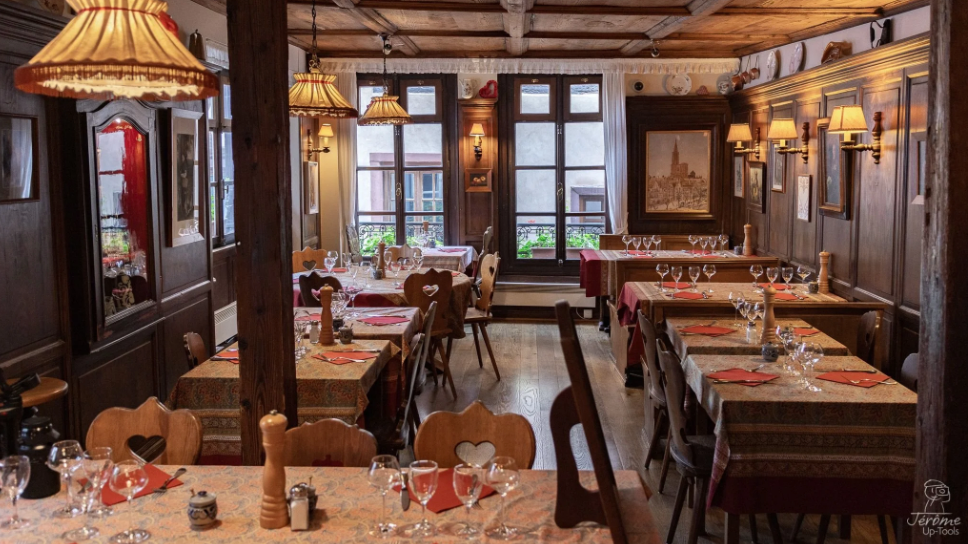
Since 1873, the most famous of the winstubs has been a must-visit for anyone seeking an authentic experience. It serves a hearty sauerkraut dish that has been slowly simmered. © Chez Yvonne
France: kimchi in the kitchen
Mojju – Paris
A Korean fusion restaurant conceived by chef Thibault Sombardier, a former contestant on Top Chef, and led in the kitchen by Korean chef Hosub Im. The Michelin Guide praises a “meticulously designed menu, executed to perfection by a Korean team”.
La Table de Mee – Paris
This intimate 24-seat restaurant run by the Gwon family celebrates authentic and refined Korean cuisine: mandu (kimchi dumplings), japchae, so galbi jjim (beef stew). Hyun Mee and You Chul provide a warm welcome. The restaurant has been awarded a Bib Gourmand by the Michelin Guide.
Mandoobar – Paris
This small, intimate restaurant, awarded a Bib Gourmand by the Michelin Guide, specialises in mandu (Korean dumplings) and tartares, prepared before diners’ eyes by chef Kim Kwang-Loc, who is passionate about traditional Korean herbs.
Kimchi Street – Paris
Conceived by A. Jung, the venue offers an intimate, Korean-style setting, serves a wide selection of homemade kimchi made to traditional recipes, offers Korean fried chicken, bibimbap and bulgogi, and also hosts cultural exchanges and workshops.
Korea: tradition at every meal
Alongside the Michelin Guide, South Korea has its own leading gastronomic guide: the Blue Ribbon Survey. Launched in 2005, it is regarded by professionals and the general public alike as the local equivalent of the Red Guide, with a rating system ranging from 1 to 3 ribbons.
Kwon Sooksoo – Séoul
Chef Kwon Woo-joong presents a neo-classical cuisine where fermentation reigns supreme. Right from the starter, a ‘kimchi trolley’ showcases original creations – water kimchi (mul-kimchi), galchi fish kimchi – for a true culinary ritual.
Gaeseong Mandu Koong – Séoul
Housed in a hanok in the heart of the arts district, this traditional restaurant has been listed in the Michelin Guide’s Bib Gourmand since 2017. It serves homemade kimchi made from nappa cabbage and radish. The weathered wooden décor, small ponds and traditional veranda immerse diners in the atmosphere of a traditional Korean home.
Mingles – Séoul
Chef Kang Mingoo blends tradition and modernity around Korean fermented foods. His famous ‘Jang Trio’ reimagines doenjang, ganjang and gochujang as desserts, whilst kimchi flavours sauces and condiments throughout the meal.
Solbam – Séoul
This neo-classical restaurant reinvents traditional local kimchi. Chef Eom Tae-jun, who grew up in the countryside, uses a long fermentation process and plays with seasonal ingredients to create environmentally conscious cuisine.
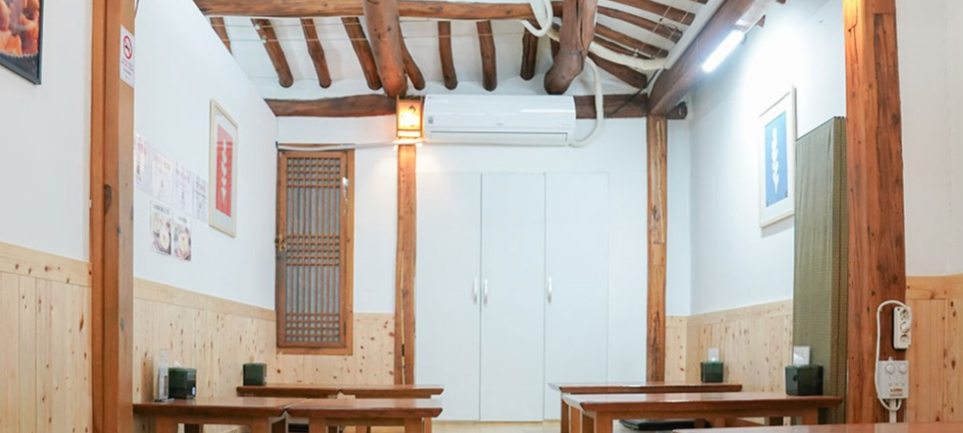
In Seoul, in a hanok house with weathered wooden décor, the restaurant serves homemade kimchi and its famous mandu made with fermented dough. A journey back to Korea of yesterday. © Gaeseong Mandu Koong
Gastronomic Diplomacy
Kimchi and sauerkraut demonstrate how fermented foods can become tools for cultural outreach, capable of linking heritage, local identity and international influence.
Kimchi without the fuss
The introduction of Kimchi Day in Paris’s 15th arrondissement (October 2025) paved the way for a series of cultural initiatives.
The ceremony took place as part of Korea Expo Paris 2025, attended by Philippe Goujon, mayor of the 15th arrondissement, and Senator Agnès Evren. The event brought together over 500 participants for a giant kimjang.
Organised by Daesang – Jongga and the Association Mes Amis (AMA), this event illustrates the active role of private groups in promoting kimchi.
As part of the 140th anniversary of diplomatic relations, the Korean Cultural Center in Paris is organising a special programme combining contemporary art exhibitions, festivals and conferences, with a focus on gastronomy to strengthen Korea’s culinary soft power.
The sauerkraut show
Sauerkraut is less well known abroad, but it is regularly showcased at major French events.
At the Châlons-en-Champagne Fair, it is presented alongside other products with Protected Geographical Indication (PGI) status as part of a celebration of French agricultural excellence.
The Association for the Promotion of Alsatian Sauerkraut (AVCA) works to promote this vegetable, notably at the Paris International Agricultural Show, where Alsatian Sauerkraut PGI made history at the 60th Show by becoming the first vegetable in France to take part in the General Agricultural Competition in 2024.
This inaugural edition, organised as part of a closed-door experimental session, saw eight sauerkraut producers present 15 products (8 raw and 7 cooked sauerkrauts) to a jury of eight people.
Although no medals were awarded that year due to the experimental nature of the competition, the Alsatian industry felt immense pride.
The success of this initiative quickly bore fruit: the very following year, in 2025, Alsatian sauerkraut won its first gold, silver and bronze medals.
Events in 2026: Cabbage on your Table
Several events have already made their mark in 2026.
- The Paris International Agricultural Show awarded gold to the sauerkraut producer Angsthelm et Fils, and silver and bronze to Maison Le Pic.
- The 70th World Congress of the Maîtres Cuisiniers de France was held in Seoul, the first edition to take place in Asia, bringing together 200 chefs from 22 countries to celebrate the 140th anniversary of diplomatic relations.
- In May, the 4th edition of the K Plus Festival in Paris showcased traditional Korean fermentation techniques.
Coming up:
- Août – Geispolsheim (Alsace) : 58th Sauerkraut Festival, Sunday 30 August.
- Septembre – Krautergersheim (Alsace) : 51st Sauerkraut Festival, 26 and 27 September.
- Gwangju Kimchi Festival from 23 to 25 October (workshops, tastings, competitions).
- November – Séoul : Food Week Korea 2026 at COEX
- (4-7 novembre). The FKCCI will be running a French pavilion.
The Korea Kimchi Festival: a global event promoting kimchi
Beyond local events, the Korea Kimchi Festival is an international event dedicated to celebrating and promoting kimchi. Held annually, it highlights the many facets of kimchi: traditions, flavours, health benefits and cultural significance.
For its 2026 edition (the exact dates of which have not yet been announced), the Korea Kimchi Festival has appointed two official ambassadors:
- Lee Chae-sun, known as ‘Madame Kimchi’, runs an hand-made kimchi business in Montreal (Canada).
Chef Hera Hwang, a specialist in traditional Korean cuisine and a culinary researcher based in Berlin, works to promote Korean gastronomy in Europe.
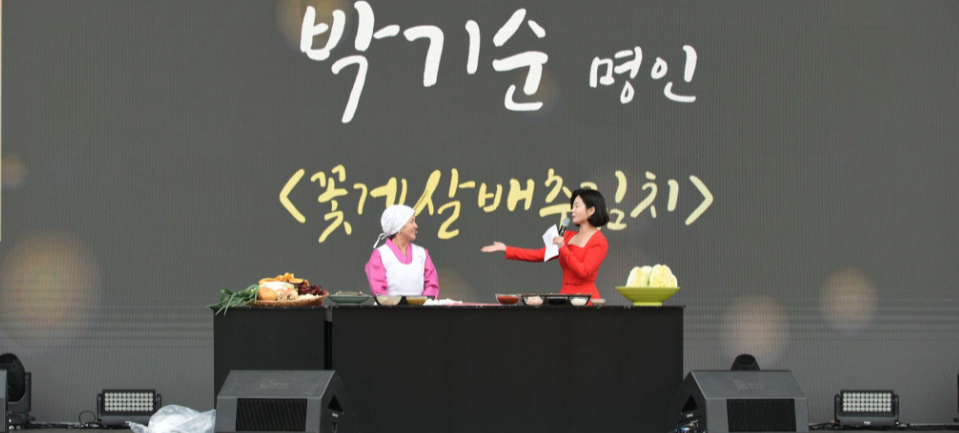
Kimchi masterclass at the Gwangju Kimchi Festival. A hands-on workshop where the country’s only kimchi masters to have received the Presidential Award enthusiastically share their most treasured secrets. © Gwangju Kimchi Festival
The Call of Cabbage
Sauerkraut and kimchi come together not only on the plate.
These two specialities tell the same story: that of a cabbage transformed, through lactic fermentation, into cultural heritage, a scientific resource and a diplomatic language.
They converse in the laboratories where the ferments of the future are being developed.
They harmonise in trade that reconciles PGI and intangible heritage.
They speak with two voices: that of an Alsatian chef passing on his craft, and that of a Korean master perpetuating the kimjang.
The 140th anniversary of diplomatic relations opens a window.
One that allows fermentation to be seen not as folklore, but as a deep-tech grammar of cooperation.
Fermented cabbage calls upon its diplomats.
Between kimchi and sauerkraut, fermented foods thus become a shared grammar linking tradition, biotechnology and Franco-Korean cooperation.