

Part 2 of 4
The Artemis program marks a major new milestone in lunar exploration, uniting space powers around a common goal: to establish a sustainable human presence beyond Earth’s orbit. Having outlined the diplomatic framework for this new era, we are now crossing the achievement threshold.
Exploring the Moon requires us to rethink our relationship with the hostility of the environment. In this part, we highlight French technological excellence, which transforms these extreme constraints into a laboratory for innovation. In this context, the Artemis program is establishing itself as the defining framework for contemporary lunar exploration, where technological innovations are redefining human capabilities in extreme environments.
Fact Sheet: The Eighth Continent
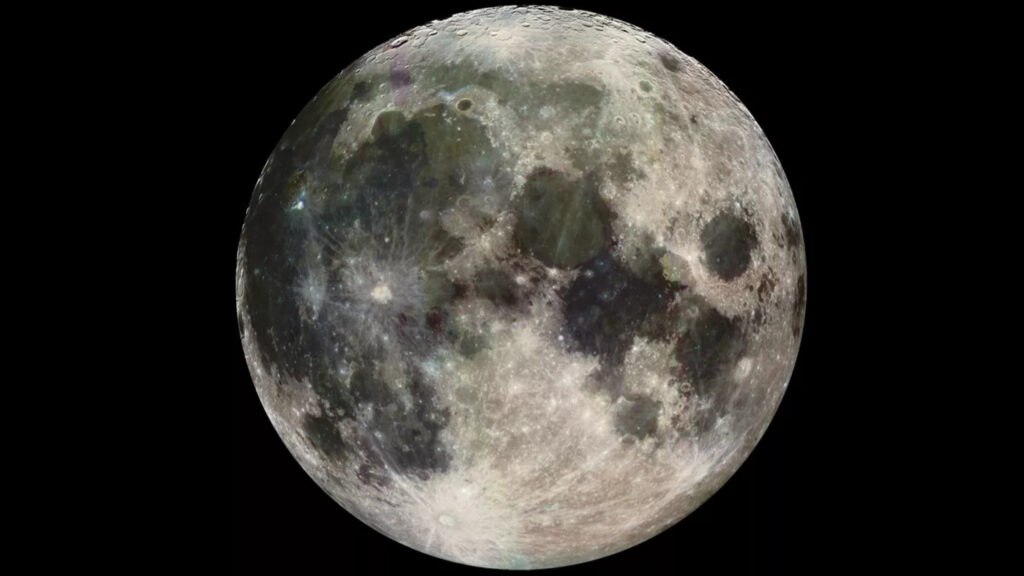
Before analysing the industrial challenges, it is important to define the specific characteristics of this unique theatre of operations. The IAU classifies the Moon as a natural satellite. It constitutes both a reserve of strategic resources and a fundamental regulator of Earth’s environment.
- Circumference: 10,921 km, or approximately 27% of the Earth’s size, offering a vast exploitable surface area.
- Gravity: 1.62 m/s², or 1/6 of Earth’s gravity, an ideal environment for testing lightweight structures and robotic mobility.
- Temperatures: extreme variations from -173°C to +127°C, posing a major thermal challenge for the durability of the materials developed.
- Composition of the regolith: this is the layer of loose debris (dust, pulverised rock) covering the bedrock. On the Moon, it results from the constant impact of meteorites, forming a thin, abrasive and adherent film, mainly composed of oxygen (42%), silicon (21%) and iron (13%), constituting an open-pit mine for in-situ construction.
- Critical resources: confirmed presence of water in the form of ice at the poles and potential for helium-3, the building blocks for space fuel and the energy of the future.
- Regulation of the tides: the Moon’s gravitational pull is the main driving force behind the tides. This constant movement of water masses ensures essential thermal mixing of the oceans, transporting heat from the tropics to the poles. Without this driving force, ocean currents would be radically different, profoundly altering the global weather.
- Stabilisation of axial tilt: this is undoubtedly its most vital role. The Moon stabilises the tilt of the Earth’s axis of rotation (currently around 23.5°). Without the presence of this massive satellite, the Earth’s tilt would oscillate chaotically between 0° and over 80° on geological timescales. Such variations would cause extreme climate changes, making the development of a complex and stable biosphere highly unlikely.
As part of the Artemis programme, a detailed understanding of the lunar environment is essential for designing infrastructure suitable for long-term lunar exploration.
Trailer for ‘Fais pas ci, fais pas ça: On va marcher sur la Lune’. © France Télévisions, 2024
Technological excellence
Transport sovereignty: independence of access and logistics Artemis II
Lunar exploration under the Artemis program relies on a range of critical technologies, in which France plays a pivotal role. The first pillar of any space strategy is the capability for autonomous deployment to lunar orbit. The EU Space Act highlights the importance of “autonomous, reliable and cost-effective” access, which is essential to securing Europe’s place in the Artemis II logistics framework. The ESA budget allocated to space transport (€2.8 billion) reflects this strategic urgency.
- Heavy cargo and strategic resupply of the Gateway: The Exploration Company is establishing itself as the linchpin of heavy logistics with its Nyx spacecraft. Unlike single-use models, this one is designed for reusability, enabling a drastic reduction in the cost of freight to the future lunar orbital station Gateway. The cost per kilo to the Moon could be reduced by a factor of 5 or 10. In 2024, the ESA allocated €25 million to this company to secure a European cargo return service.
- The agility of micro-launch: In Reims, Latitude is developing the Zephyr launcher, optimised for satellites weighing less than 200 kg. Supported by the France 2030 plan, it meets the need for the rapid deployment of connectivity constellations.
This deployment capability is a fundamental pillar of the Artemis programme and lunar exploration logistics.
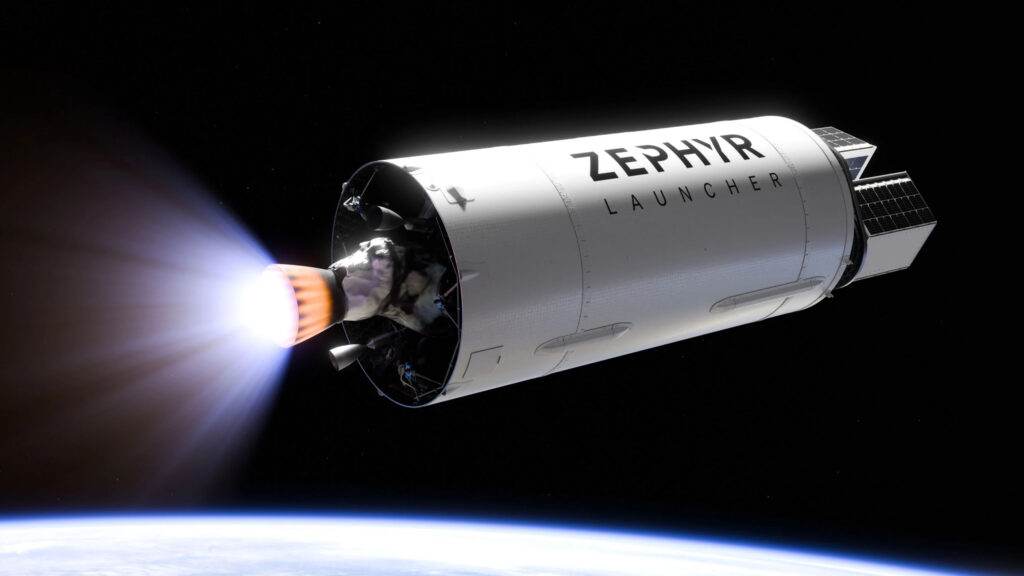
“Say Hello to the Future of SmallSat launches.” Designed and built in France, this launcher is compact yet powerful, capable of carrying 200 kg to low Earth orbit. © Latitude
Extreme habitability: from exploration to permanent occupation
One of the major challenges of the Artemis program is to move from a model of one-off exploration to a genuine lasting occupation of the lunar surface. To achieve this objective, the program requires breakthrough technologies. The ESA’s exploration budget stands at €2.7 billion.
- Mobility and modularity: Spartan Space’s Eurohab is a secondary inflatable habitat. It fills a major logistical gap: the ability of astronauts to venture away from the main landing site for extended missions. Deployable in a matter of hours, it triples the operational range on the lunar surface.
- Biopods’ biological self-sufficiency: Interstellar Lab is developing highly efficient bioclimatic domes. Technologies for the complete recycling of water and air are directly transferable to resilient terrestrial agriculture, a market estimated to be worth $18 billion by the end of 2026.
Security and resilience: from physical shield to digital bulwark
The increasing density of orbits is transforming space security into a global risk management imperative. The Space Operations Act (LOS), for which CNES is the technical guarantor, now imposes some of the most rigorous safety standards in the world.
- EU Space Surveillance and Tracking (EUSST): with over 34,000 objects larger than 10 cm catalogued, 9,000 of which are active satellites, the EU SST programme, led by the European Union Agency for the Space Programme (EUSPA), protects more than 600 European satellites. ESA now allocates 10% of its security budget (€700 million) to this protection, which is essential for the viability of ESA’s Moonlight Programme.
In France, Look Up Space is deploying high-precision radars to predict collisions in real time.
- Cybersecurity and Space Weather Events (SWE): protecting data links between the Gateway and Earth is vital. Leaders such as the Thales Group are working to secure these data flows using post-quantum cryptography, ensuring the integrity of Artemis II communications against radiation and cyberattacks.
- Precision propulsion: to keep these infrastructures secure, Ion-X’s ionic liquid propulsion and Gama’s solar sails ensure precise navigation and active avoidance within communication networks.
In the Artemis program, securing orbital infrastructure and communications is essential to the success of lunar exploration.
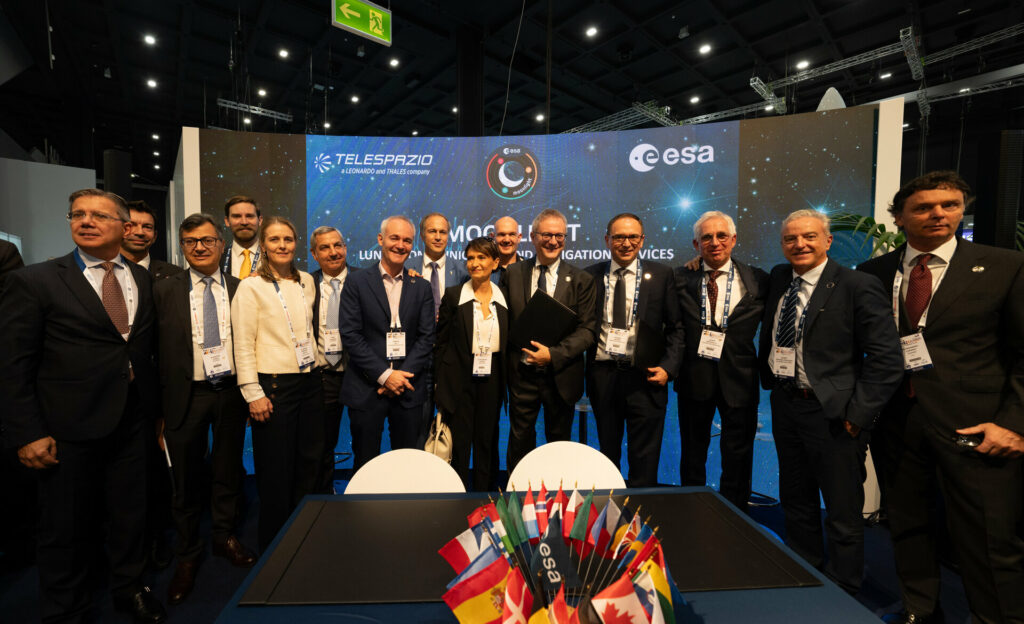
ESA is working with its industrial partners on the Moonlight initiative, to become the first off-planet commercial telecoms and satellite navigation provider. © ESA
Energy and resources: the key to lunar survival
Energy self-sufficiency is one of the central challenges of the Artemis program in ensuring the sustainability of lunar exploration. True self-sufficiency on the Moon depends on a major technological breakthrough: the ability to generate and store energy during the lunar night, which lasts 14 Earth days in total darkness and extreme cold.
- Energy self-sufficiency and thermal management: France is exploring solutions involving micro-nuclear reactors and radioisotope thermoelectric generators (RTGs) to address the intermittency of solar power. These combined heat and power (CHP) technologies are the only ones capable of keeping life-support systems operational. At the same time, the high-density batteries and fuel cells developed for these extreme missions are finding immediate applications on Earth for the stationary storage of renewable energy and decarbonised heavy-duty transport.
- In Situ Resource Utilisation (ISRU): extracting oxygen for breathing and hydrogen for fuel from regolith is the cornerstone of logistical independence. MAÅGM’s geophysical expertise is crucial here: their sensors enable the mapping, with millimetre precision, of water ice deposits trapped in the permanently shadowed craters at the poles, transforming the Moon into a veritable orbital service station. This ability to exploit local resources is a key driver of the Artemis program to reduce dependence on Earth-based supplies.
Health and accelerated ageing: CNES’s expertise
According to CNES, the space environment provides an ideal model for studying the mechanisms of human bodily decline, acting as an accelerator of age-related biological processes. Exposure to microgravity induces rapid physiological changes, such as bone demineralisation and muscle atrophy.
These phenomena make space an exceptional laboratory for geriatrics. Among the key innovations are Twin-V, virtual blood vessels, and robotic tele-ultrasound systems. Recently, the Centre for Expertise and Support in Satellite Applications and Networks (CESARS) at CNES successfully tested these satellite telehealth devices, confirming their ability to provide highly accurate diagnoses in real time. Developed by partners such as AdEchoTech, these tools are now helping to bridge the healthcare gap in France’s underserved areas, transforming a geographical constraint into a major asset for public health.
This French expertise covers several key areas:
- Modelling of diseases: by observing these accelerated processes, researchers are studying treatment protocols that serve as models for treating osteoporosis and sarcopenia on Earth.
- Cardiovascular system: the work carried out by CNES also focuses on arterial regulation mechanisms and vascular ageing. The absence of gravity simulates extreme sedentary conditions, providing valuable data for the care of ageing populations or those with reduced mobility.
- Medical benefits: this research enables the testing of the effectiveness of new countermeasures—whether pharmacological, nutritional or physical—for the direct benefit of patients on Earth.
This research, stemming from the Artemis program, transforms lunar exploration into an advanced laboratory serving terrestrial medicine.
Through the Artemis program, lunar exploration now goes beyond the scientific sphere to become a true driver of global innovation. This analysis follows on from our article about the geopolitical implications of the Artemis program.
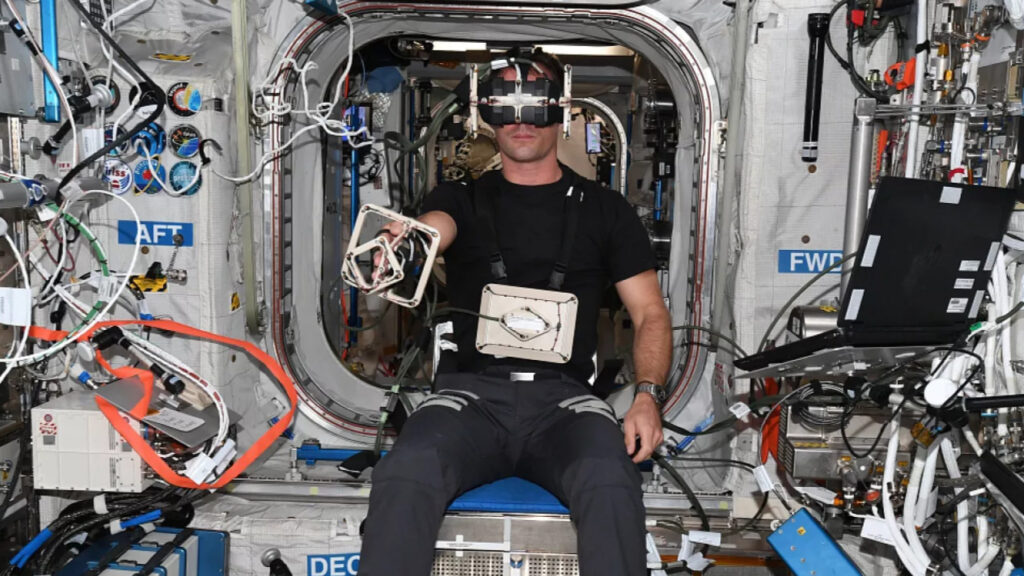
On board the ISS, Thomas Pesquet is conducting a space medicine experiment. Known as Gravitationnal References for Sensimotor Performance (GRASP), it investigates how hand-eye coordination adapts to microgravity © ESA/NASA/T.Pesquet, 2021