

On 9 April 2026, SILKBridge®, received 510(k) clearance from the US Food and Drug Administration. The resorbable silk-fibroin implant is designed to guide the regeneration of a severed peripheral nerve across a gap of up to 10 mm.
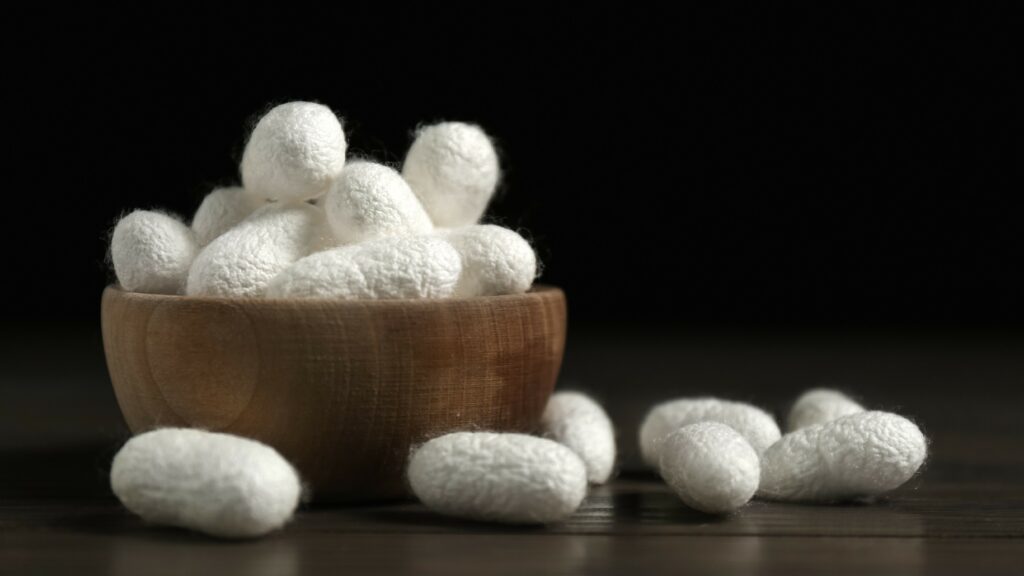
Developed in Milan by KLISBio®, SILKBridge® SILKBridge® is made from fibroin, the main structural protein in the silk produced by Bombyx mori, the domesticated silkworm. The conduit combines a textile layer of native fibres with two layers of regenerated fibroin produced by electrospinning. The FDA regulatory dossier details its structure, intended use and progressive resorption.
In 2026, the same family of proteins is being used to produce hydrogels containing therapeutic bacteria, bioinks that replicate the bone-marrow microenvironment, edible food coatings and wound-care materials. Spider-silk-inspired proteins are also moving into industrial-scale fermentation.
Molecular weight, secondary structure, assembly, geometry and degradation are becoming design parameters. In this sense, silk is becoming a programmable biomaterial.
From thread to protein
Chinese tradition places the origins of sericulture at around 2700 BC. For nearly three millennia, the production process remained a strategic secret: imperial decrees are said to have imposed the death penalty on anyone who disclosed it to a foreigner.
Silk nevertheless travelled far beyond China, reaching Egypt and the Roman Empire. In the sixth century, during the reign of Justinian, silkworm eggs were brought to Byzantium, enabling local production to be established. UNESCO traces this expansion along the Silk Roads.

Silk Road Week 2026 – Exhibition “Moonlight over the Silver Mountains” © China National Silk Museum
In 2024–2025, India produced 41,121 tonnes of raw silk, obtained by reeling filaments from silkworm cocoons, and estimated that the sector supported 9.73 million jobs. The world’s second-largest producer is also the only country to commercially produce all four major types of silk: mulberry, tasar, eri and muga, the latter being unique to India.
India’s Ministry of Textiles also documents the automation of silk reeling and the use of geographical data to identify suitable areas for sericulture.
Jacquard and the canuts: controlling the pattern
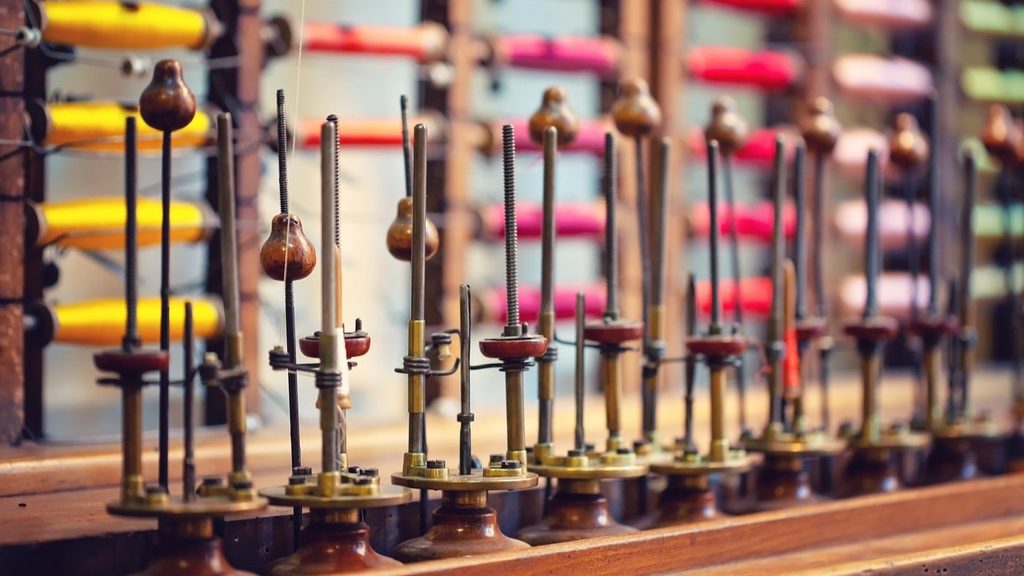
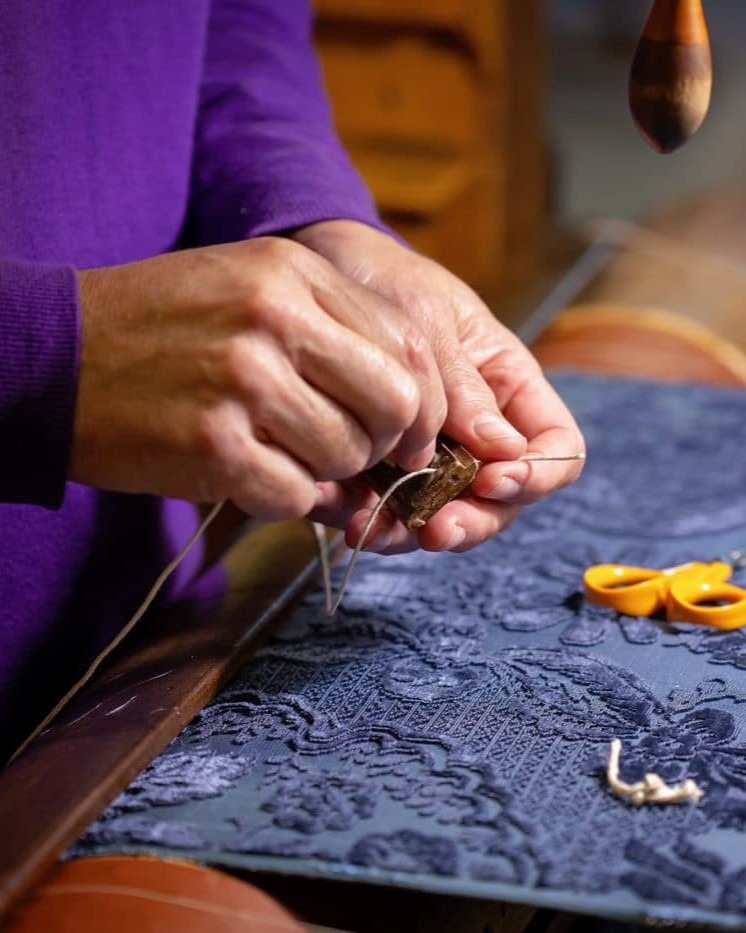
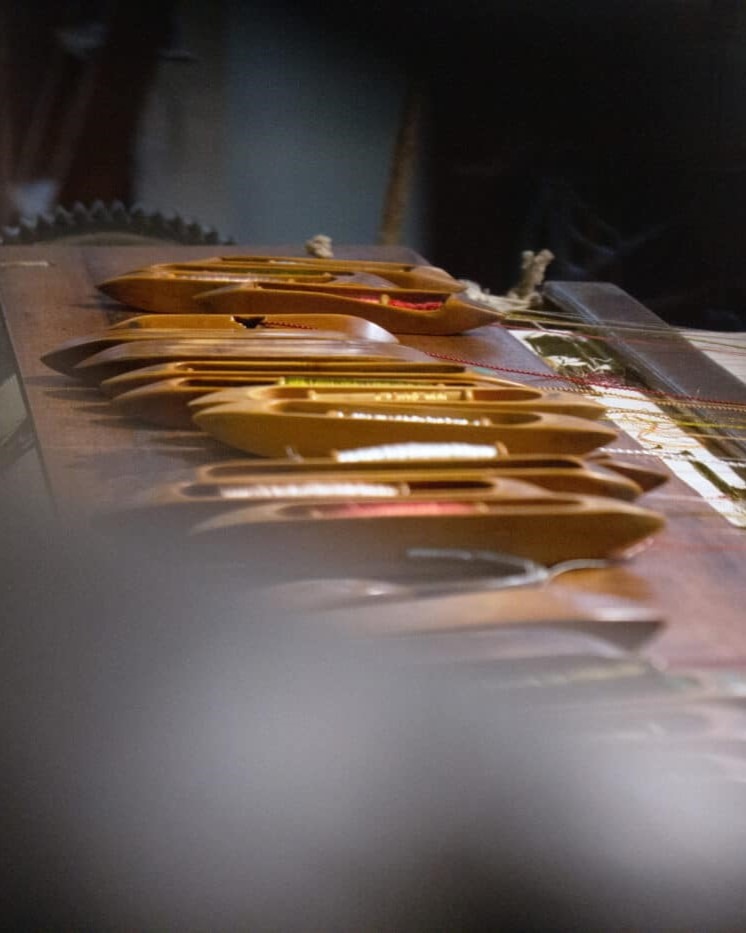
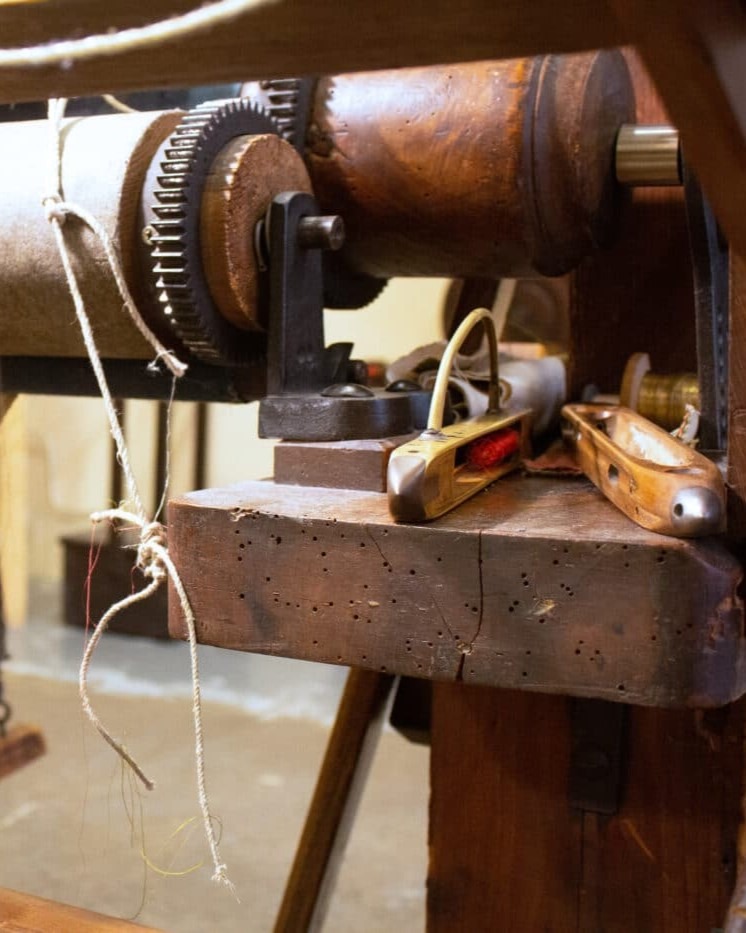
In Lyon, the canuts, silk weavers concentrated around the Croix-Rousse district, worked during the nineteenth century within the Fabrique, a silk-production system already organised around specialised trades. The Jacquard mechanism automated a crucial part of their work: selecting the warp threads required to create a pattern.
Each line of the design was encoded as perforations in punched cards that controlled the loom. The Musée des Tissus de Lyon describes the cards as “programming the weaving”.The Maison des Canuts preserves a working nineteenth-century hand-operated Jacquard loom and traces both the organisation of Lyon’s silk industry and the canut uprisings of 1831 and 1834.
Two centuries later, that level of control has moved below the scale of the thread.
© Maison des Canuts
Before the fibre: silk’s protein architecture
A Bombyx mori silk thread consists primarily of fibroin, which forms its structural core, and sericin, which surrounds the filaments. To produce a biomaterial, the sericin can be removed before the fibroin is isolated, dissolved or reformed.
In June 2026, a team at the Weizmann Institute of Science in Rehovot, used cryo-electron microscopy to observe fibroin transforming directly within the silkworm’s silk gland. The study, published in Nature Communications, follows the material from its liquid state through to the fibrillar structures that precede fibre formation.
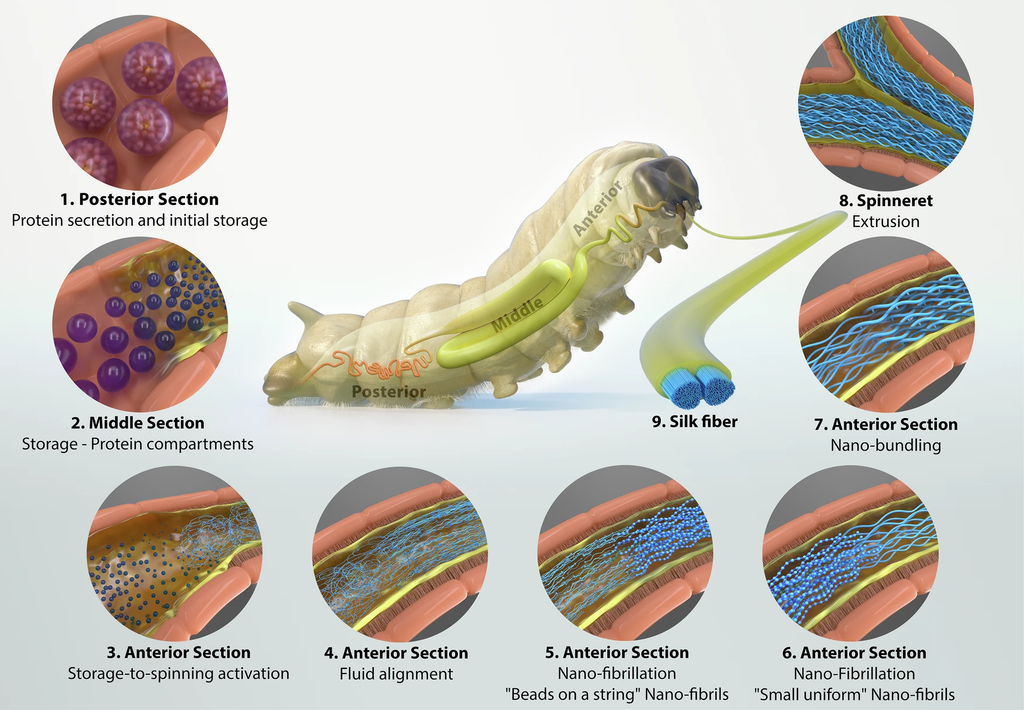
This progressive transformation reveals the different levels at which silk acquires its properties: protein concentration, molecular alignment, fibril formation and, finally, the organisation of the fibre itself. These are the parameters that biomaterials engineers are now seeking to control in order to tune fibroin’s mechanical, biological and functional properties.
Silk-fibre formation, from the progressive assembly of proteins within the silk gland to the formation of the fibre. © Nature Communications
Tuning the material
Extracting fibroin already alters its properties.
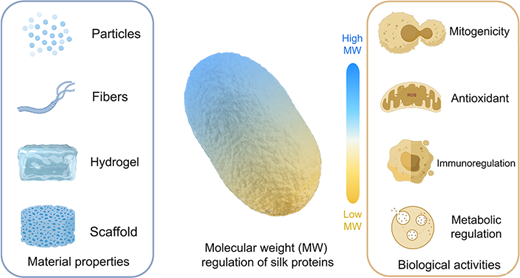
A review published in July 2026 in Biomacromolecules shows that extraction and processing alter the molecular-weight distribution of silk proteins. This distribution affects processing behaviour, mechanical properties, biodegradation and certain biological functions. The authors propose a molecular-weight-guided design approach linking process, structure, properties and function.
Fibres, films, particles, hydrogels and microstructures can therefore all be produced from the same protein family while exhibiting markedly different behaviours.
© Biomacromolecules
In May 2026, an international team involving researchers from Tufts University, Queen Mary University of London, Imperial College London and the University of Michigan, together with several other partner institutions, developed a method for directly transforming silk fibres using pressure and heat.
Their work, published in Nature Sustainability, produced materials capable of withstanding flexural stresses of up to 510 MPa and absorbing up to 45 MJ/m³ of energy before fracture. These figures reflect a combination of mechanical strength and the ability to absorb energy without sudden failure. The material also retains transparency in the visible spectrum and exhibits optical activity in the terahertz range.
Multifunctional silk
KLISBio®: guiding nerve regeneration
SILKBridge® uses fibroin as a temporary scaffold between the two ends of an injured nerve. Its semi-permeable wall maintains a space for axonal growth, allows nutrients to pass through and gradually resorbs as regeneration progresses.
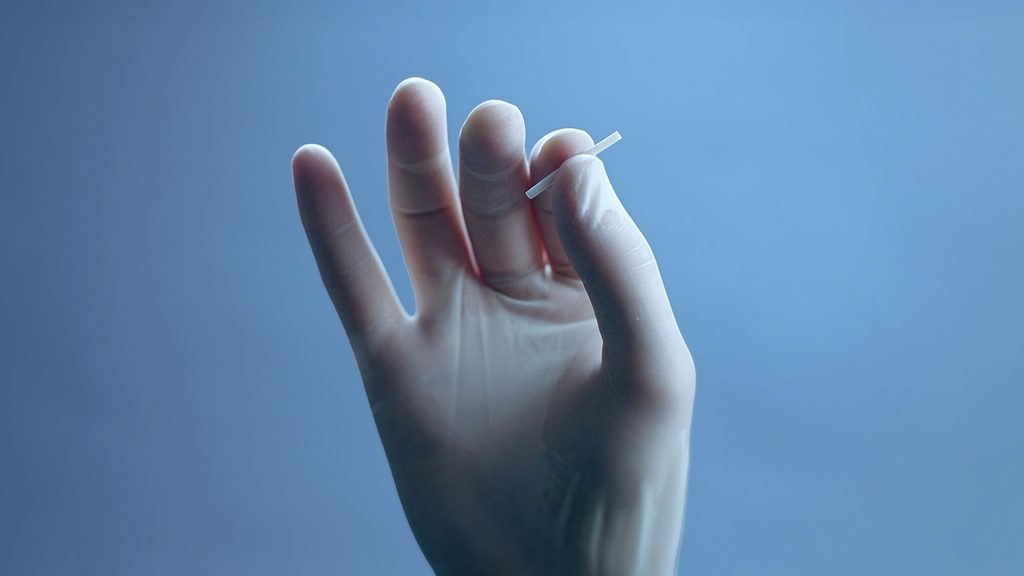
KLISBio® was supported by the European Innovation Council through a €3.5 million programme, including €2.5 million in European Union funding, completed in June 2026. The FDA’s 510(k) clearance of 9 April covers SILKBridge® for certain peripheral nerve discontinuities of up to 10 mm.
© KLISBio®
Silk Biomed: turning silk into a therapeutic bioreactor
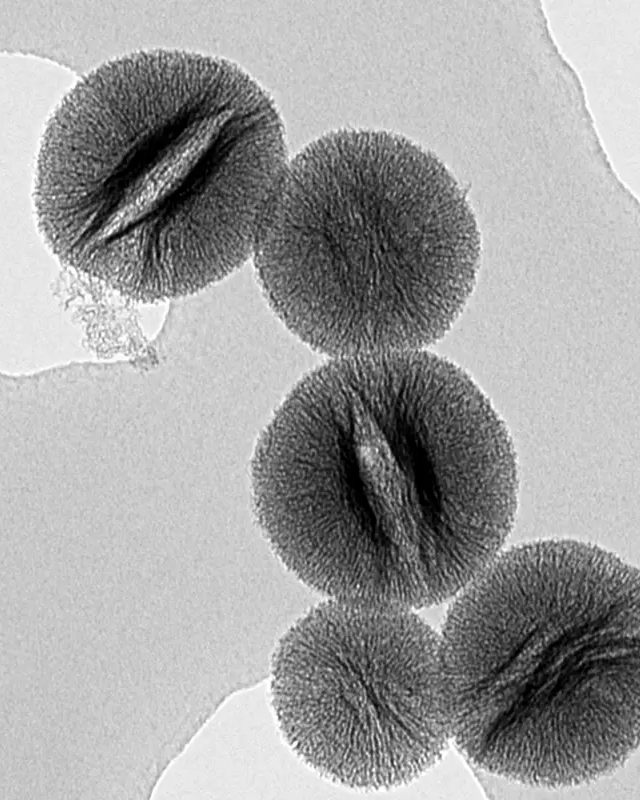
In Madrid, Silk Biomed is developing fibroin hydrogels capable of hosting genetically engineered bacteria designed to produce therapeutic molecules locally.
The company is coordinating the ISOS project, until November 2026, backed by €2.4 million from the European Innovation Council. The proof of concept targets the wet form of age-related macular degeneration: bacteria encapsulated within the hydrogel are engineered to produce anti-VEGF peptides in response to pathological signals.
The programme combines fibroin engineering, synthetic biology and protein design assisted by ProteinMPNN and AlphaFold. It remains at the preclinical proof-of-concept stage.
In 2019, Silk Biomed received a prix MATERPLAT award for Silk4Brain, a project focused on silk biomaterials for brain repair.
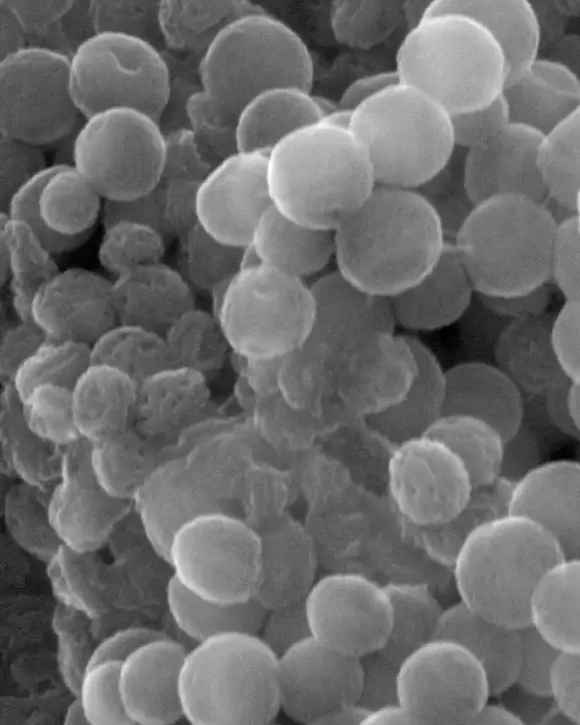
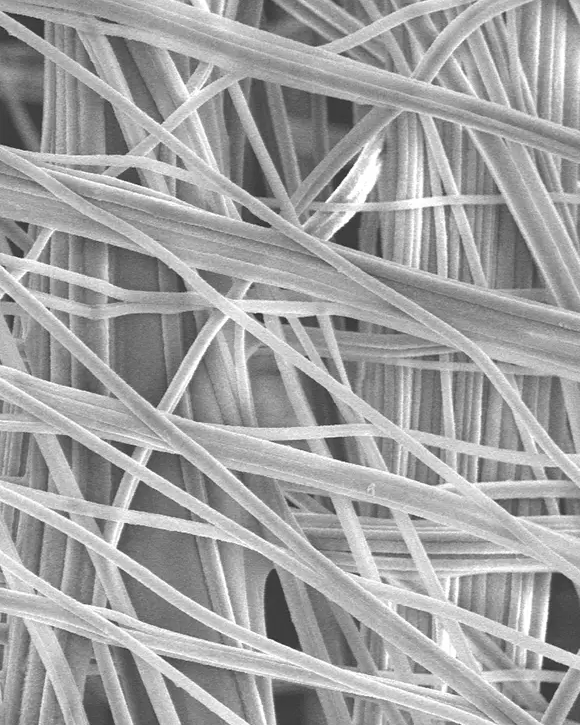
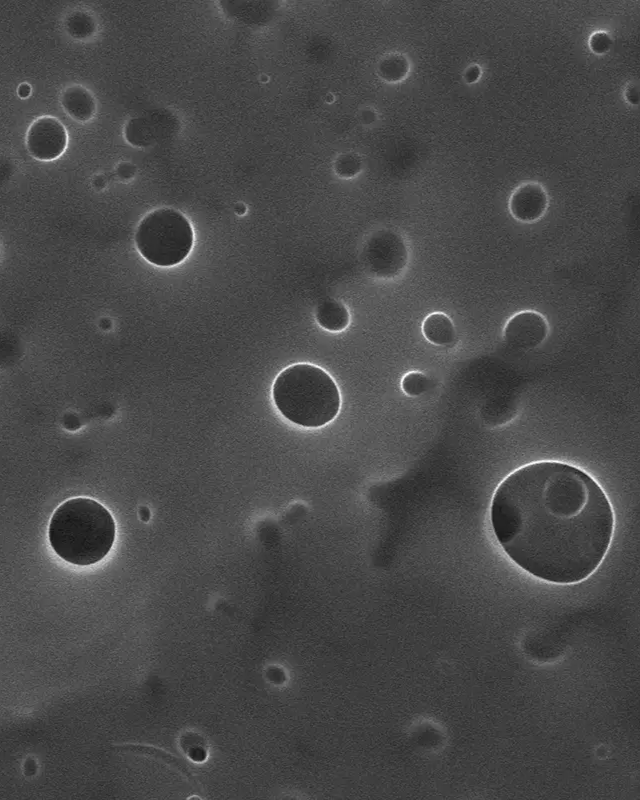
© Silk Biomed
Mori: an edible silk coating for food
In Boston, Mori® uses fibroin to create a microscopic edible coating for food.
The protein extracted from Bombyx mori forms a layer designed to slow oxidation and moisture loss in certain foods. FDA GRAS Notice No. 1026 covers its use as a surface treatment across several food categories.
The regulatory dossier covers applications including fruit, vegetables, fish, cheese and other foods.
Here, the protective function of the cocoon is repurposed as an invisible food coating.
mori-text-ff.mp4
Silk4B: 3D-printing bone marrow
In Pavia and Milan, Silk4B uses silk as a bioink to recreate the bone-marrow microenvironment.
The European SILKink™ , backed by €2.5 million from the EIC and completed in May 2026, developed a bioink capable of printing three-dimensional matrices suitable for culturing haematopoietic stem and progenitor cells.
The company created from the project is commercialising models in 2026 for researchers, pharmaceutical companies and academic institutions. CORDIS describes their use in drug studies and in the development of personalised bone-marrow models.
Work is also under way on using these matrices to produce platelets ex vivo.
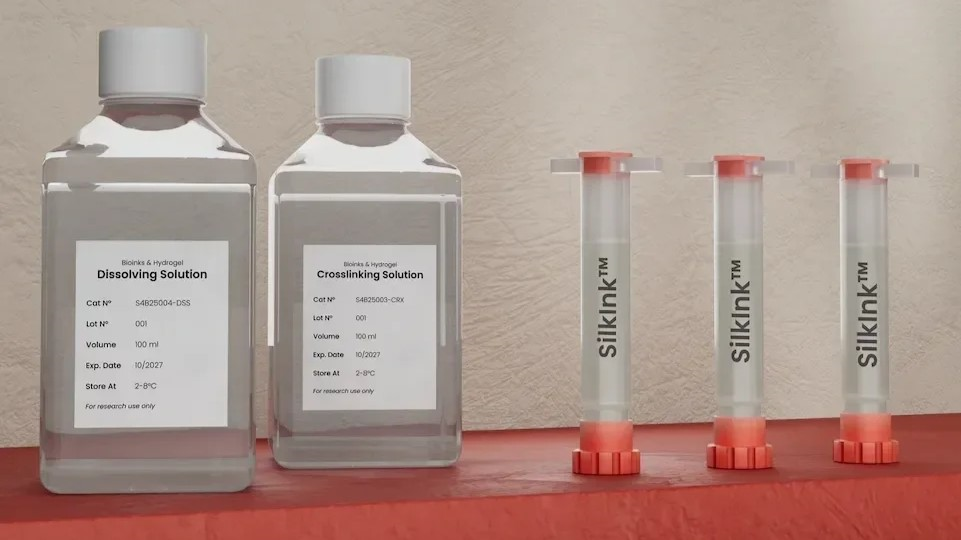
The SilkInk™ kit contains everything required for a complete 3D bioprinting workflow with SilkInk™: cartridges, crosslinking solution and dissolving solution. © Silk4B
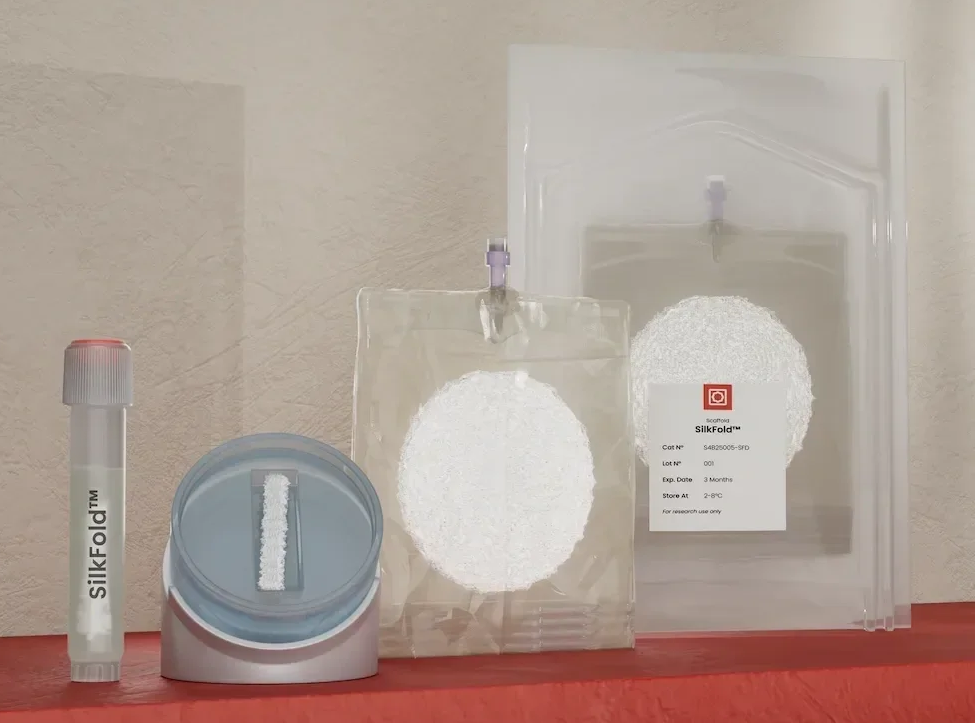
SilkFold™ is a biomimetic bone-marrow scaffold compatible with both static and perfusion culture. © Silk4B
Fibroheal: silk fibroin for wound care
In Bengaluru, Fibroheal Woundcare develops dressings, foams, powders and other wound-care formats based on silk proteins.
The BIRAC Impact Report 2026 lists Fibroheal among the companies that have commercialised technologies supported by India’s public biotechnology agency.
FibroHeal-Ag combines silk proteins with silver ions for infected wounds. Other formulations are designed to adjust absorption, tissue contact and exudate management.
According to a compendium published by BIRAC, Fibroheal had already commercialised more than 100,000 silk-protein wound-care products and secured four patents. In 2020, the company also received the National Technology Award for Technology Start-ups, an award presented by the Indian government to young companies developing technologies commercialised in India.
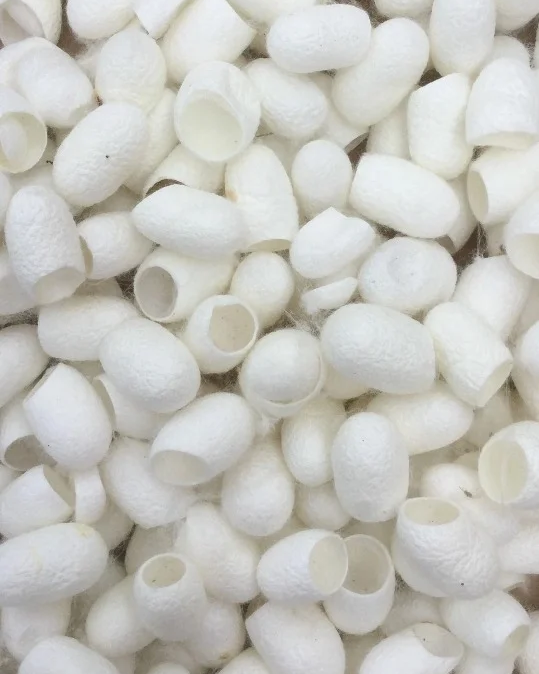
Cut cocoons – Extraction of high-quality sericin and fibroin. © Fibroheal
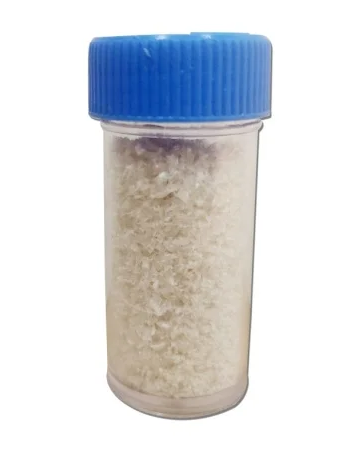
Lyophilised silk-fibroin particles – Pharmaceutical and nutraceutical applications. © Fibroheal
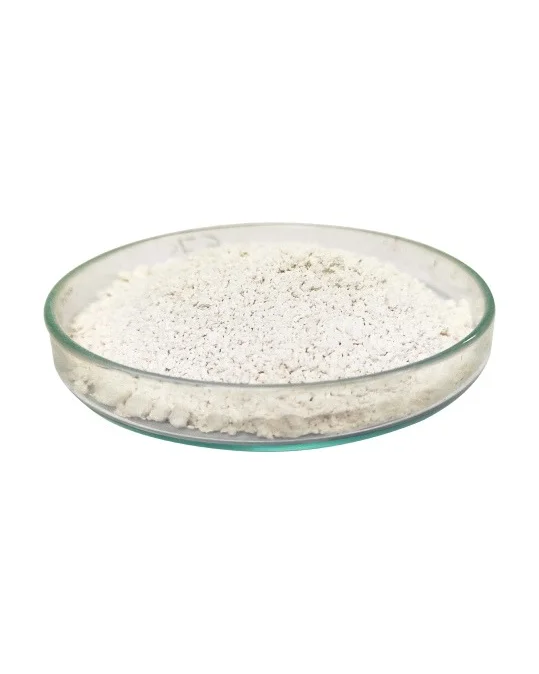
Silk-protein powder – Pharmaceutical and nutraceutical applications. © Fibroheal
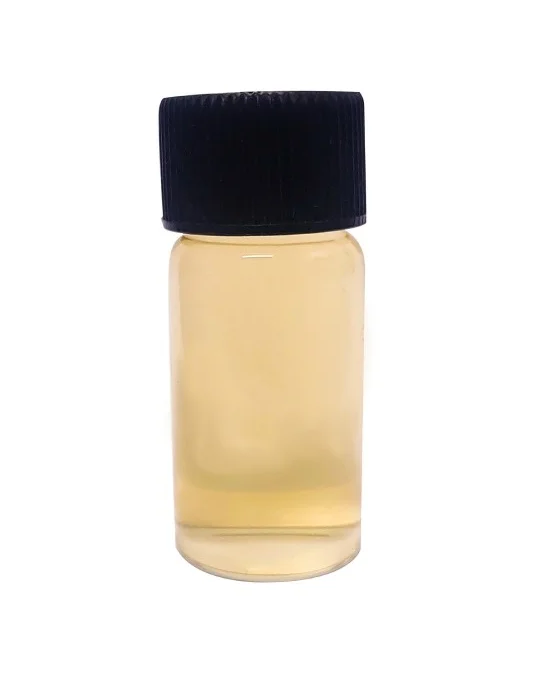
10% w/w silk-sericin solution – Cosmetic and hair-care applications. © Fibroheal
From cocoon to fermenter
AMSilk: producing silk proteins by fermentation
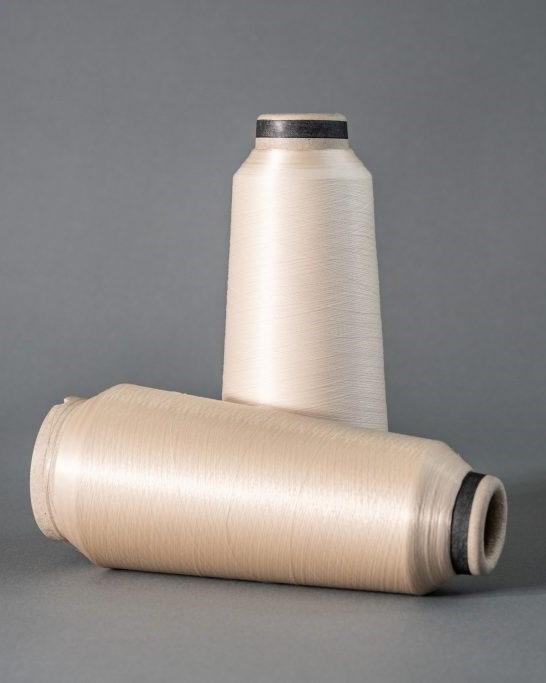
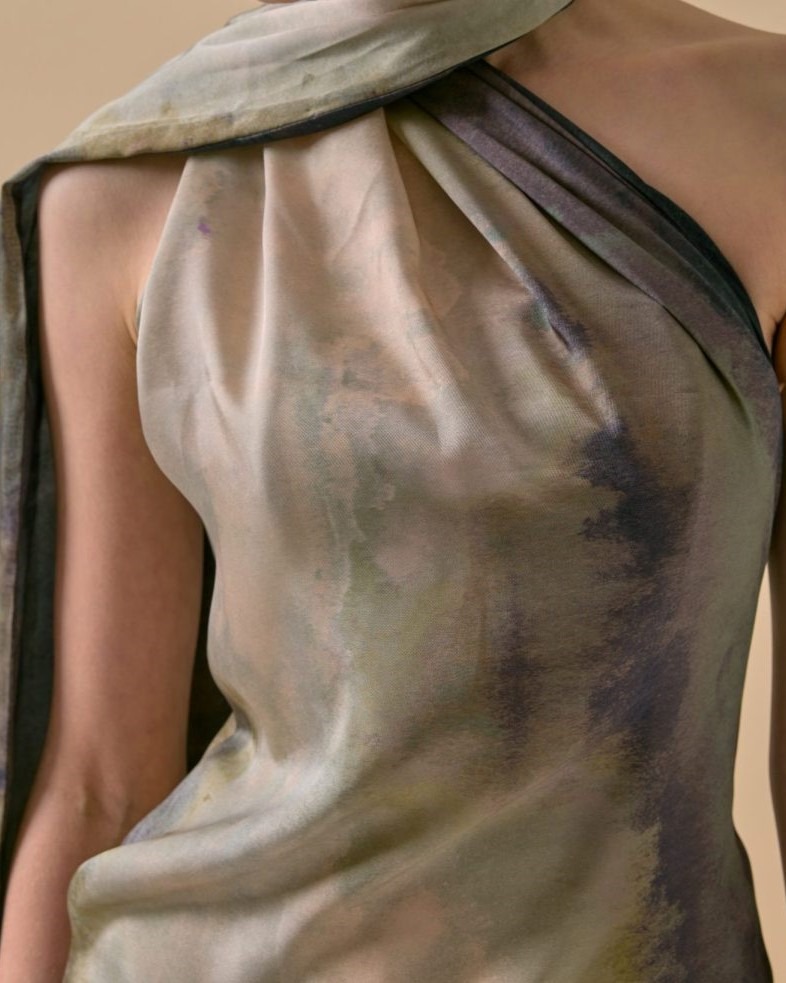
AMSilk uses biotechnology to manufacture spider-silk-inspired proteins. The material no longer comes directly from a cocoon: microorganisms produce the proteins through fermentation before they are purified and processed.
The European Investment Bank is providing €30 million to finance the company’s 2026–2028 programme, valued at approximately €94 million. According to the EIB, 65% of the costs relate to an industrial fibre-production line in the Czech Republic, while R&D remains based in Germany.

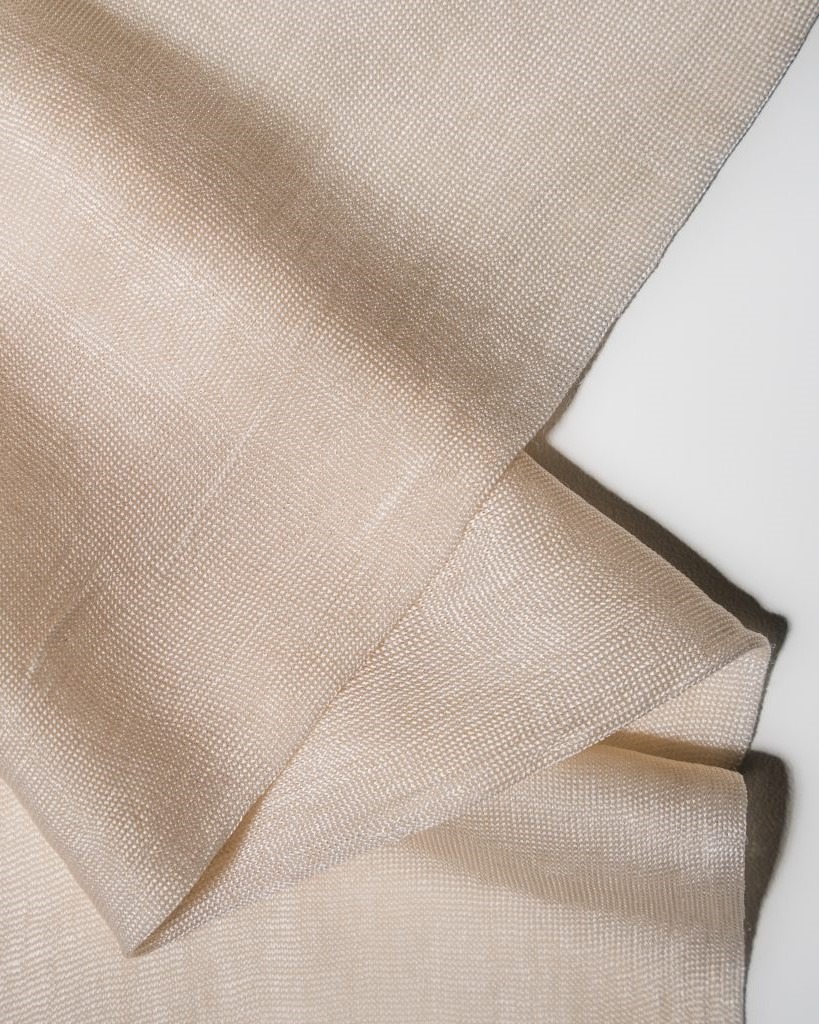

© AMSilk
In July 2026, AMSilk and Ajinomoto Foods Europe took a further step towards industrial-scale production with a dedicated line in Nesle, in the Somme department of France. BioM reports 160 m³ of fermentation capacity, complemented by downstream processing specifically designed for silk proteins.
Engineering consistency, batch by batch
Industrialisation depends above all on producing the material consistently from one batch to the next. Molecular weight, secondary structure, residual sericin, porosity, sterilisation and processing methods can all alter mechanical strength, degradation and biological behaviour. The 2026 review published in Biomacromolecules places this relationship between process, structure, properties and function at the centre of silk-protein engineering.
With Jacquard, punched cards determined which warp threads had to be lifted to form a pattern. In 2026, design reaches down to the protein chain itself, its assembly and its geometry.