

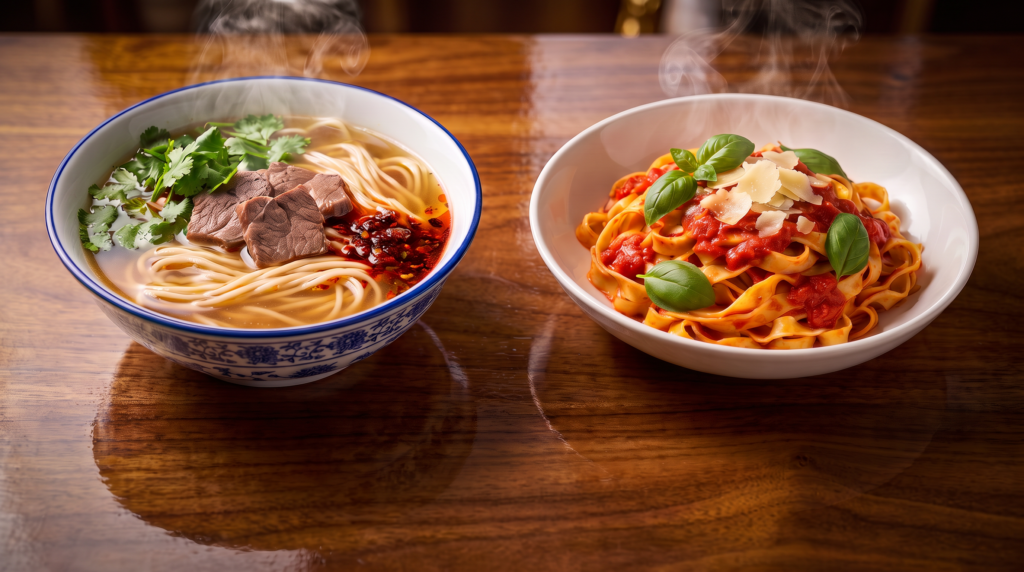
A dough shaped to hold its structure. Another stretched without breaking.
One will become pasta. The other, noodles. Between them: wheat.
In Gragnano, the dough moves through a sequence of stages before drying. In Lanzhou, it stretches between the hands until it divides into ever finer strands.
Two places. Two ways of drawing a precise behaviour from the same grain, through touch, time, air and experience.
DeepTech traces dough texture back to proteins, data and the wheat genome.
What we ask of wheat
Making pasta hold its shape
Mediterranean pasta did not wait for Marco Polo.
In 1154, Al Idrisi described itriyya in Trabia, Sicily: a thread-like pasta produced in sufficient quantities to be exported by ship. The chronology of the Museo della Pasta marks it as a key milestone: drying had already turned wheat into food that could be stored and transported.

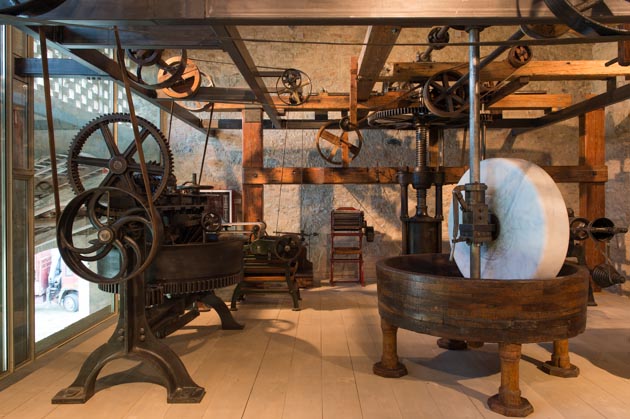
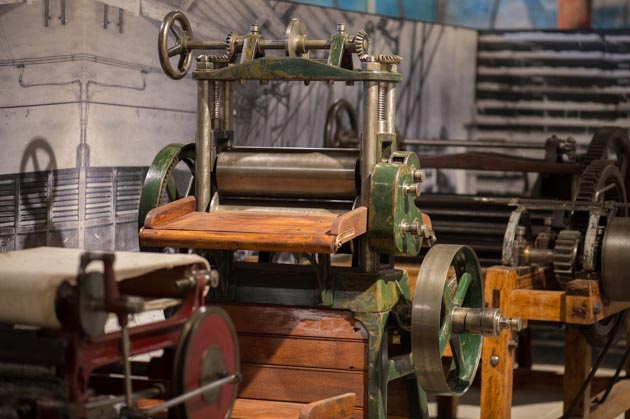


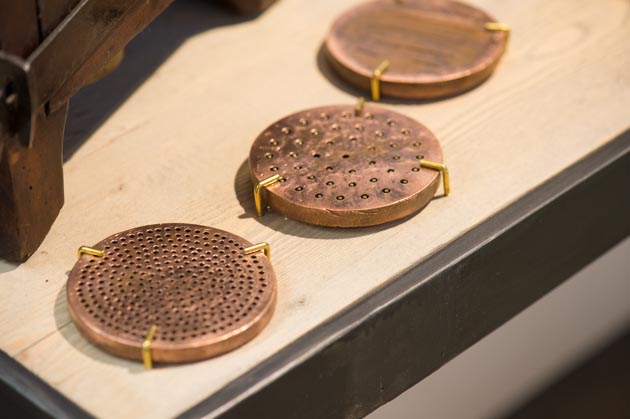
From grain to final shape: wheat varieties, flour production, machinery and utensils © Museo della Pasta
In Gragnano, this property eventually shaped the town itself. Water from the Monti Lattari powered the mills, while terrain, humidity and airflow aided the drying process. By the nineteenth century, the streets themselves had become drying spaces, their orientation and the height of the buildings helping air to circulate. This tradition is still reflected in the Pasta di Gragnano PGI specification.
Pastificio Cuomo, a historic pasta-making house, preserves a tangible trace of that history. The family has produced pasta in Gragnano since 1820 and later transformed its Via Roma palazzo into a vertical pastificio, where gravity helped move production from one stage to the next.
The Cuomo mill and pastificio in Gragnano as they stood in 1904, reconstructed in 3D from an inventory discovered in the family archives. © Pasta Cuomo
In February 2026, a study published in Cereal Chemistry compared durum wheat spaghetti dried at 50, 60 and 85°C. Drying temperature altered firmness after cooking and the proportion of slowly digestible starch. Drying does more than remove water: it helps build the pasta’s final properties.
Al dente has its metrics.
Making noodles stretch
Françoise Sabban’s work dates the arrival of wheat in the Yellow River basin to between the fourteenth and eleventh centuries BCE. By the third century, China already had a sophisticated culture of kneaded dough foods known as bing. Chinese and Mediterranean traditions developed independently.
In China, wheat dough can be rolled, cut, shaved, pressed, extruded or pulled. In Lanzhou, extensibility takes centre stage.
The dough is stretched, folded and stretched again until it divides into ever finer strands. The final quality of hand-pulled noodles, known as lamian, depends on a balance between elasticity and extensibility.
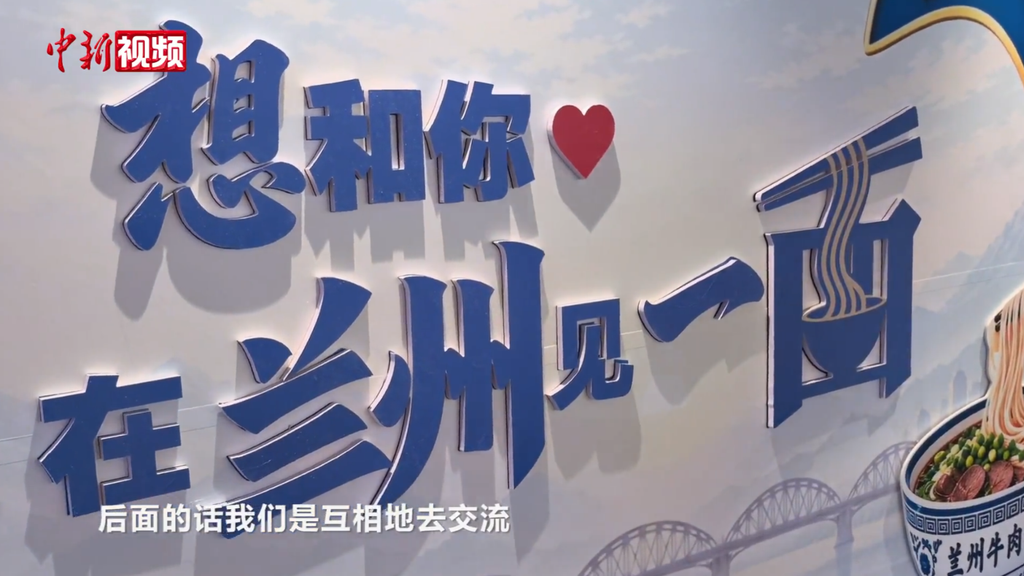
Lanzhou beef noodle-making competition, bringing together artisans from nine Chinese provinces across the Yellow River basin on 15 and 16 September 2026 in Gansu Province. © China News Service, Tian Penghe and Yan Jiao
Lanzhou beef noodles have made this technique a speciality of Gansu Province, with the craft inscribed on China’s national intangible cultural heritage list in 2021.
A regulation adopted in October 2026 seeks to preserve traditional techniques, long passed from master to apprentice, while supporting their international expansion.
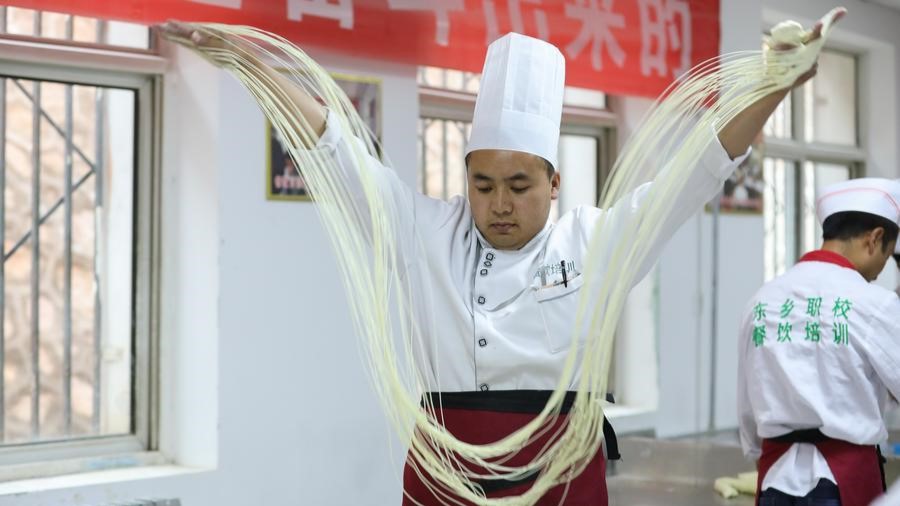
An apprentice practises making hand-pulled noodles at a vocational school in Dongxiang County, Gansu Province, China. © Xinhua, Ma Xiping
A study by Henan University of Technology compared fourteen wheat varieties intended for noodle-making and identified relationships between gluten properties, dough extensibility and final noodle texture.
At Jiangnan University, research published in Food Research International shows that resting time and dough composition alter the organisation of the protein network that enables stretching.
The master noodle-maker is not simply pulling dough. He is reshaping a polymer network. What his fingers assess, rheology measures.
The Chinese Academy of Agricultural Sciences takes this analysis down to gluten proteins and the genetic variations that modulate strength and extensibility.
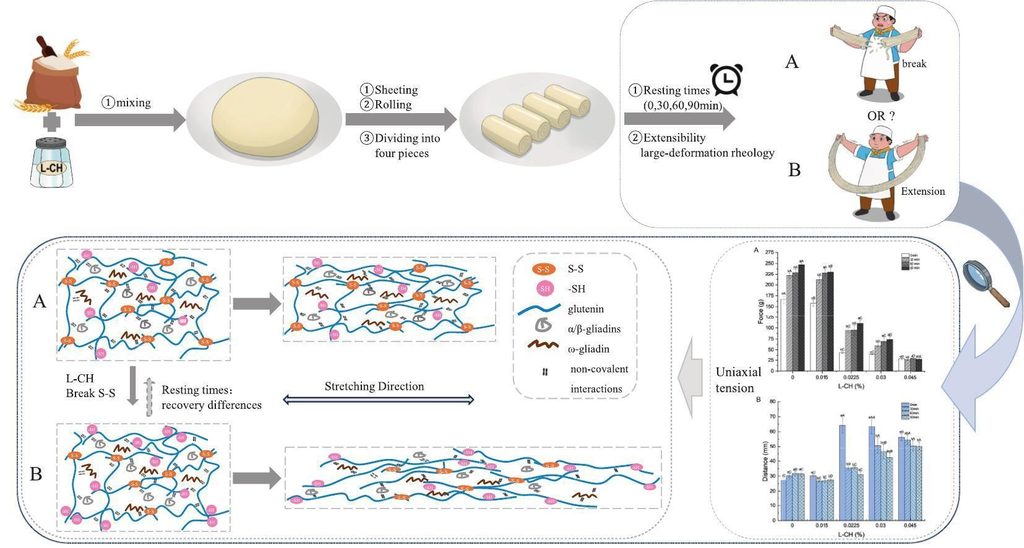
Effect of resting time and L-cysteine on the gluten network and extensibility of lamian dough: protein reorganisation directly alters its ability to stretch without breaking. © Food Research International
From hand to genome: reading the dough in the grain
Targeting the genome
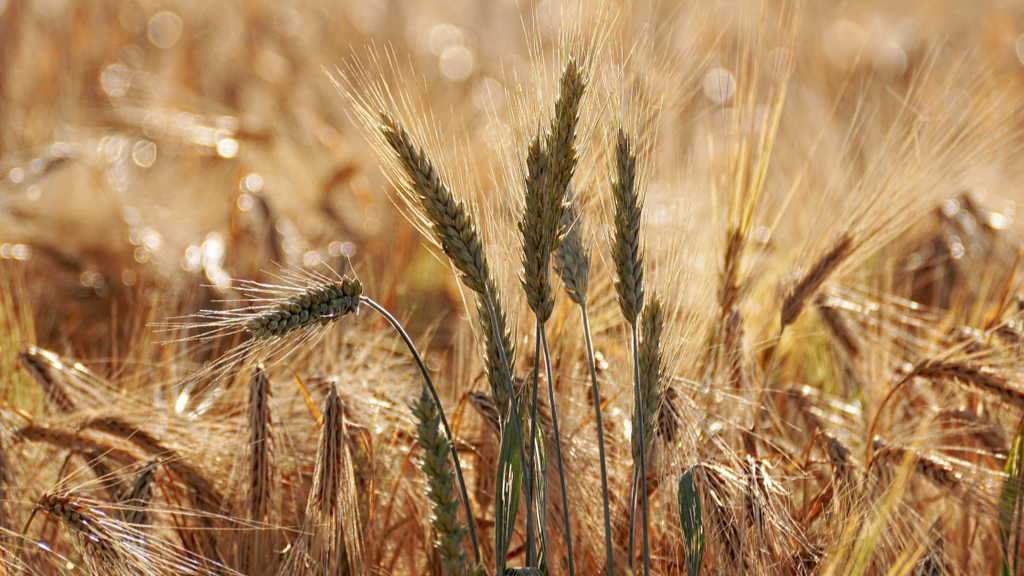
In Italy, CREA is working on durum wheat in 2026 through the TEA4IT programme. It uses assisted evolution techniques to develop varieties with greater resistance to rusts, powdery mildew and other fungal diseases.
© CREA
In Beijing, Qi Biodesign works on genome editing. A study published in Nature Biotechnology in June 2026, with the company among its contributors, describes a twin prime editing system capable of producing precise, multiplex edits in several cereal crops. In hexaploid wheat, the approach notably improves the simultaneous inactivation of all three homologous copies of certain genes.
Reading diversity
In China, the Chinese Academy of Agricultural Sciences and Shandong Jizhi Biotechnology launched iWheat in April 2026. The platform brings together genotypes from more than 30,000 germplasm accessions. More than ten algorithms support parent selection, filtering and breeding decisions.
Programmable dough
Designing pasta
In Parma, Artisia by Barilla, developed by 3D Food, applies additive manufacturing to pasta.
Its Spaghetto 3D is made from a 6.727-metre filament of fresh pasta, deposited along a calculated path to build a three-dimensional microarchitecture. The recipe remains elemental: semolina and water. Complexity shifts to geometry and to controlling material behaviour during extrusion, drying and cooking. The project received the Compasso d’Oro in May 2026.
Between deposition points, the filament did not remain perfectly straight. Under its own weight, it formed slight arcs. What might have been corrected as a manufacturing defect became part of the design.
Conventional production shapes pasta through a fixed geometry. Additive manufacturing builds form along a programmed path.
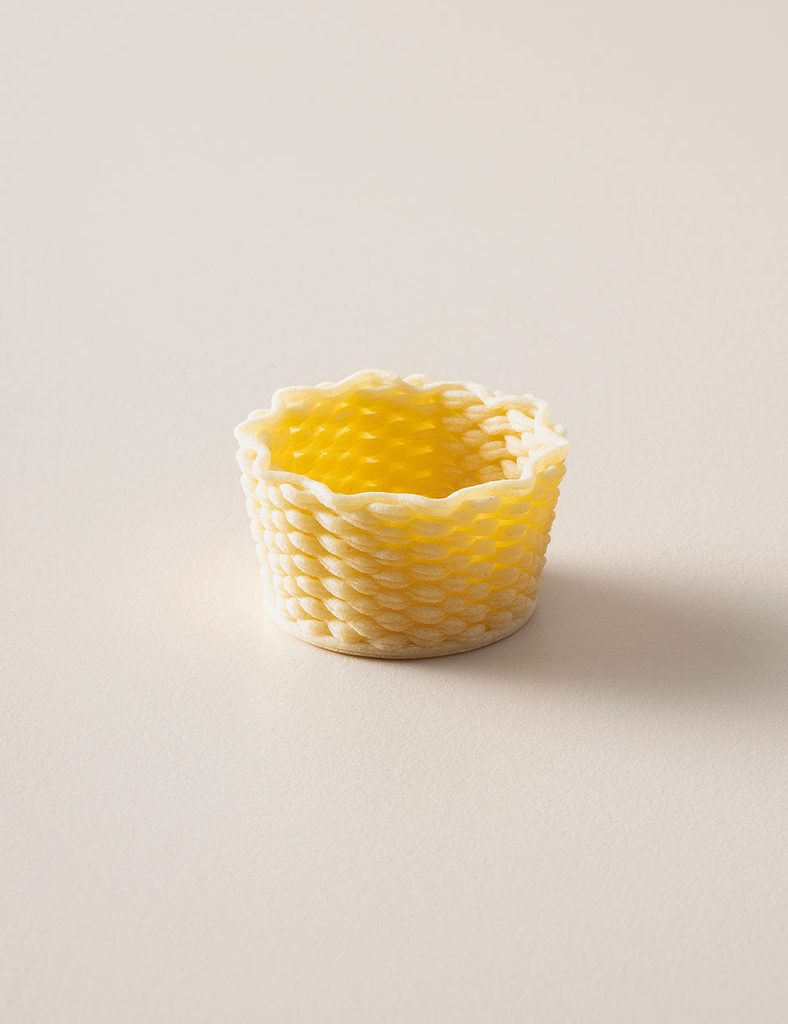
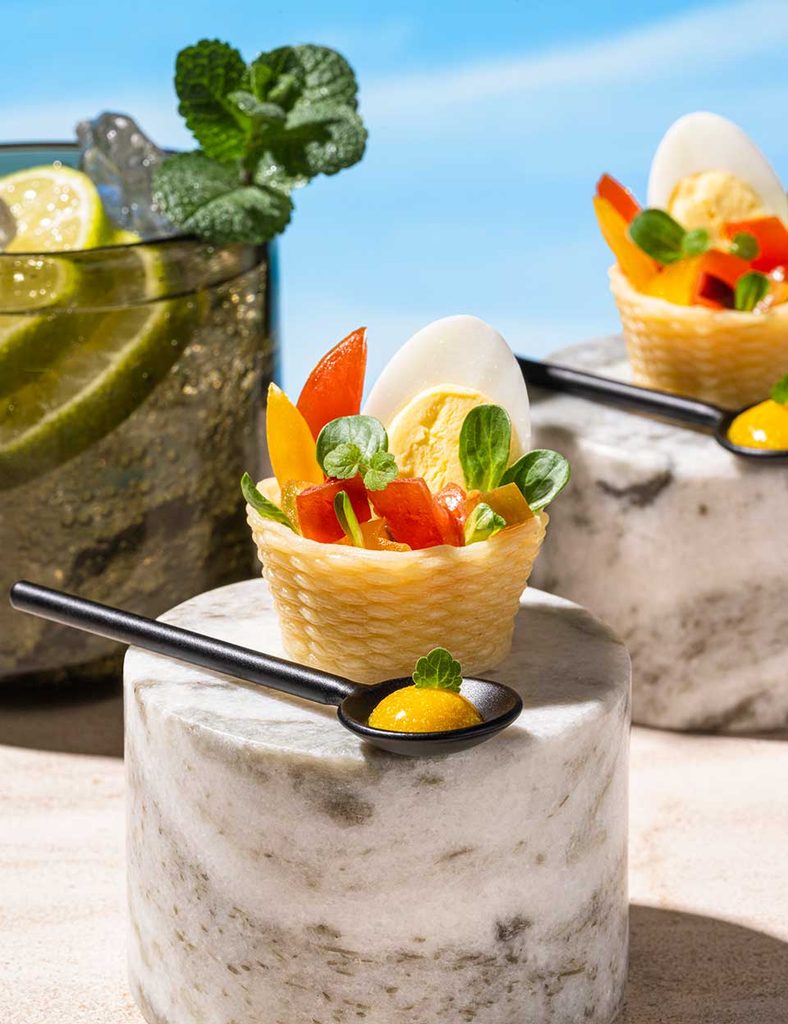
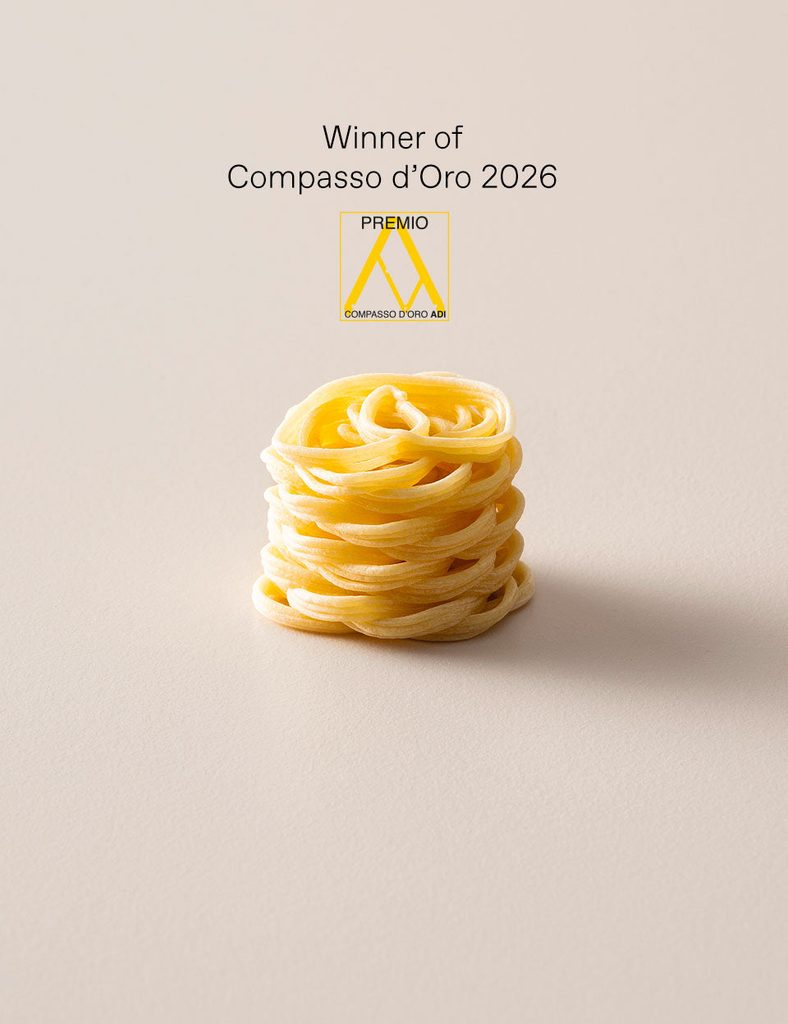
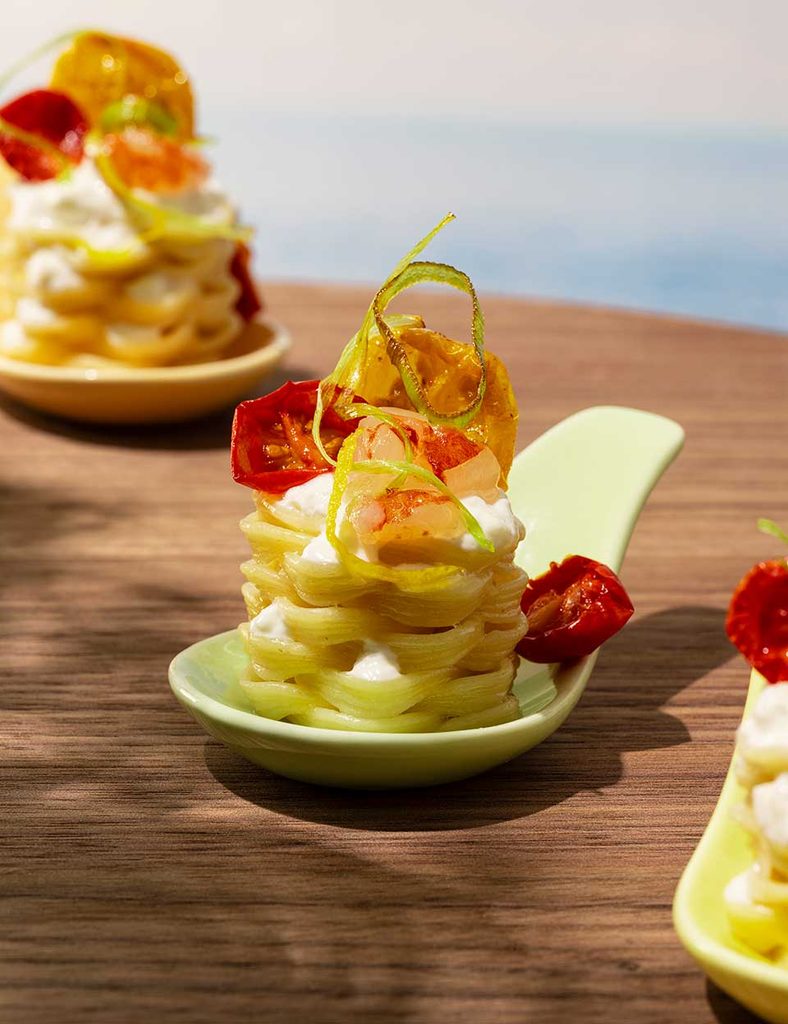
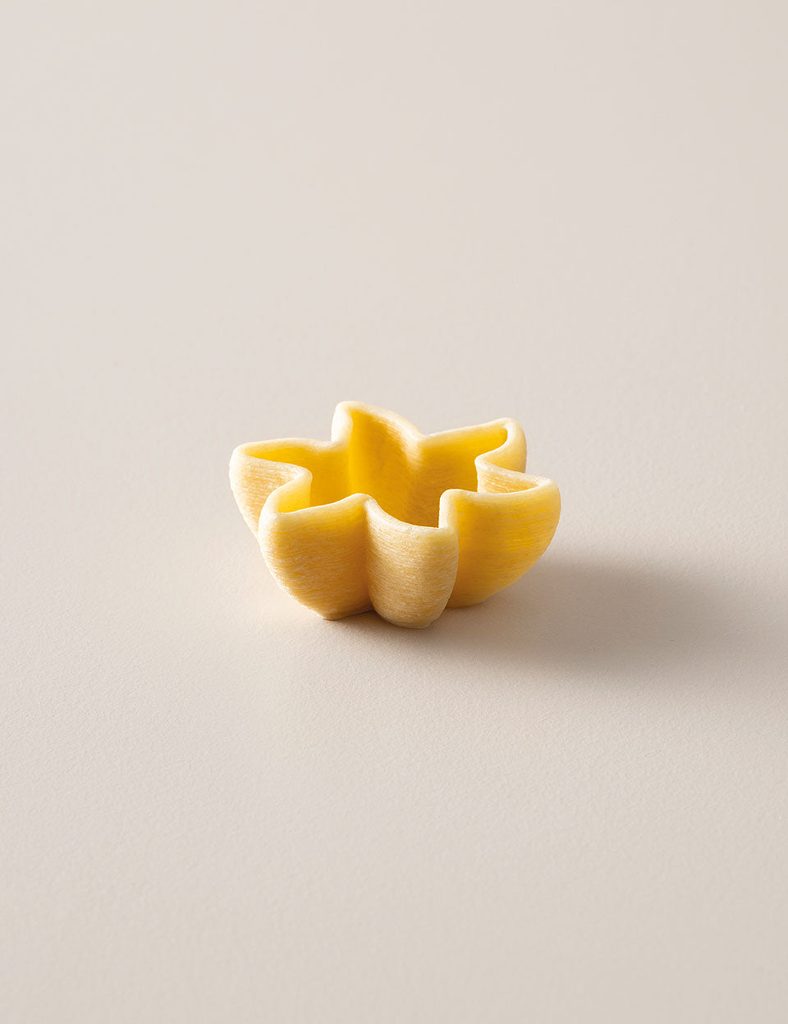
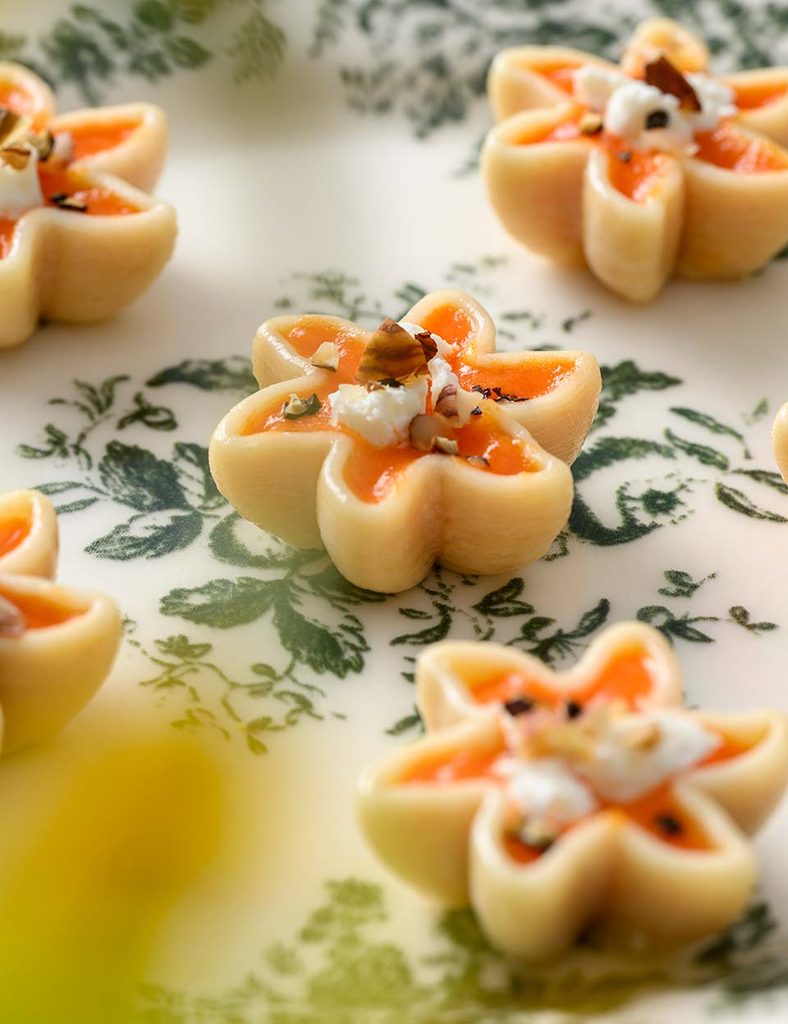
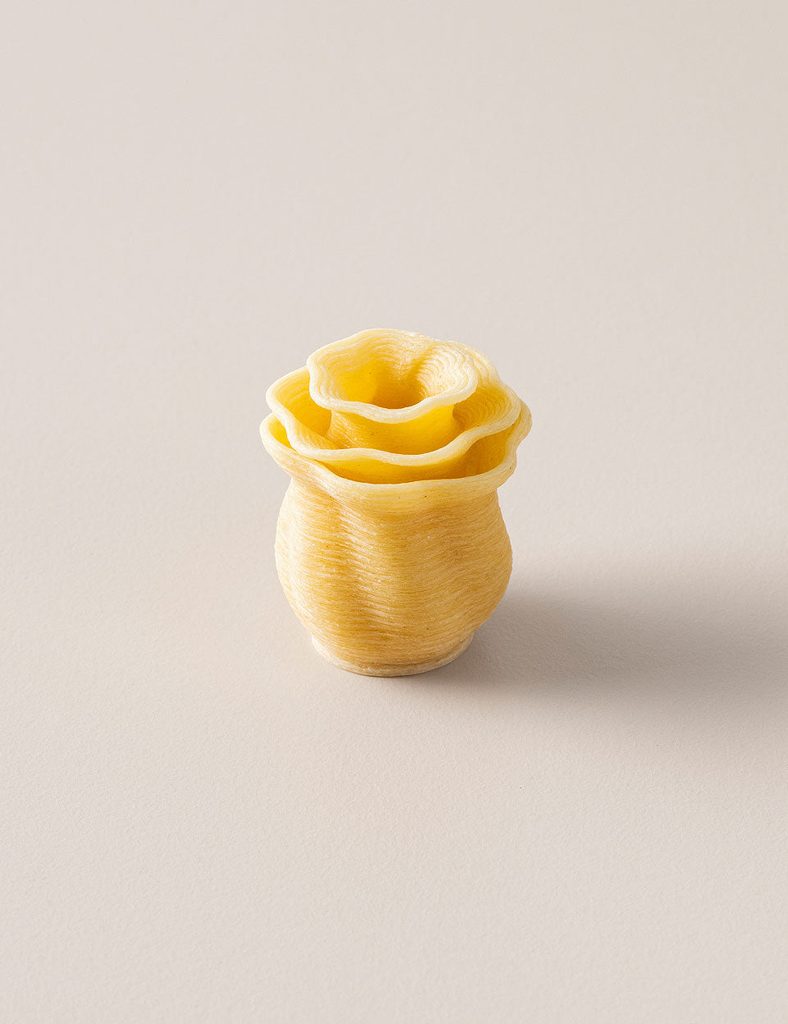
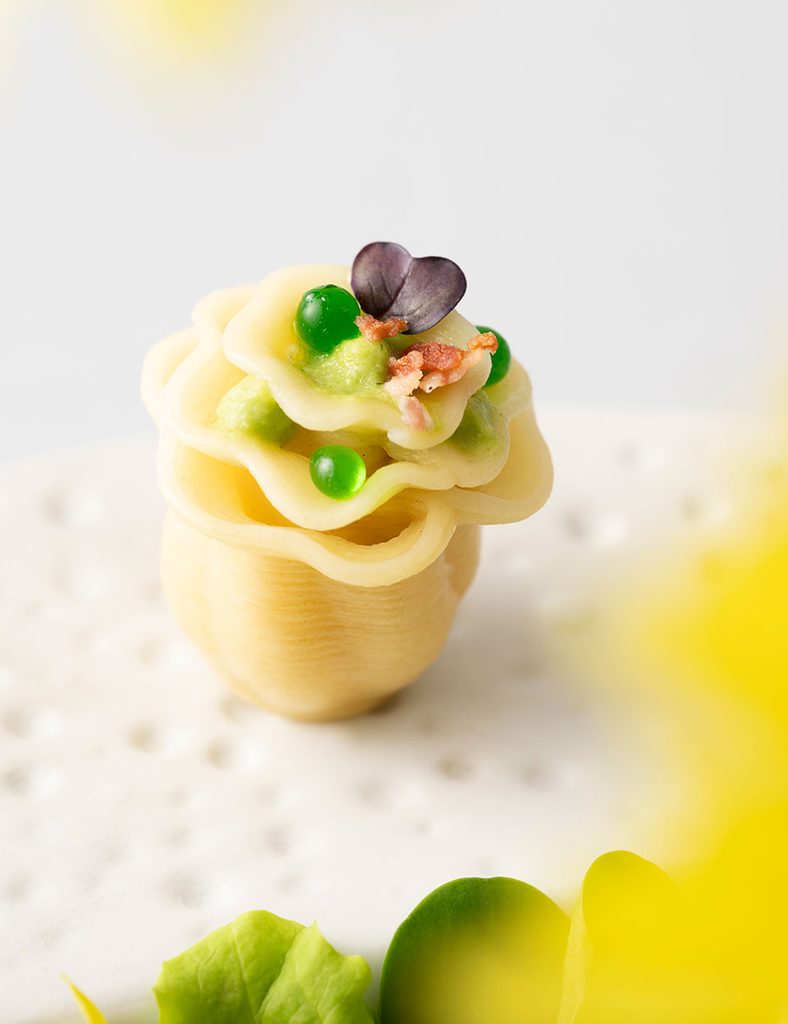
Four 3D-printed pasta creations by Artisia by Barilla, shown before and after culinary preparation. New geometries designed to combine form, texture and the eating experience. © Artisia by Barilla
Automating preparation and service
In Guangdong, Qianxi Robotics Group, a subsidiary of property giant Country Garden founded in 2019, developed a noodle-making robot occupying just 4 m² and capable of producing up to 120 portions per hour. Ingredient storage, preparation, cooking, garnishing and service are integrated into a single unit. These figures were already being cited in 2020, when the company opened its robotic restaurant complex in Shunde.
The 2,000 m² complex, which includes the Tianjiangmeishi Robotics Chinese Restaurant, brings together more than twenty types of food-service robot, a menu of nearly 200 dishes and seating for around 600 people. The robots reproduce the cooking techniques of Shunde chefs, while an overhead rail system delivers some dishes directly to the tables.
At industrial scale, Qianxi announced in 2021 an 85,000 m² factory equipped with fourteen semi-automated production lines and a theoretical annual capacity of 60,000 food-service robots.
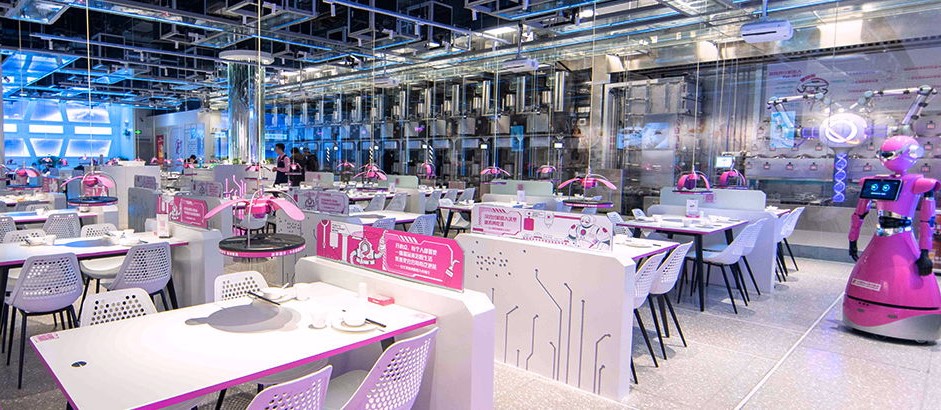
© Qianxi Robotics Group
At the table
Italy: from Gragnano to fine dining
Traditional trattoria at Pastificio Cuomo · Since 1820 · Gragnano · Premio Speciale Tradizione ed Eccellenza Italiana, Italy Food Awards 2024
Within the very walls where the family has made pasta since the nineteenth century, Pasta Cuomo brings together pastificio, museum and restaurant.
On the menu: Spaghettoni alla Nerano, Pasta Mista Pasta Cuomo with potatoes, pancetta and provola, and Pacchero alla Puttanesca di Baccalà.
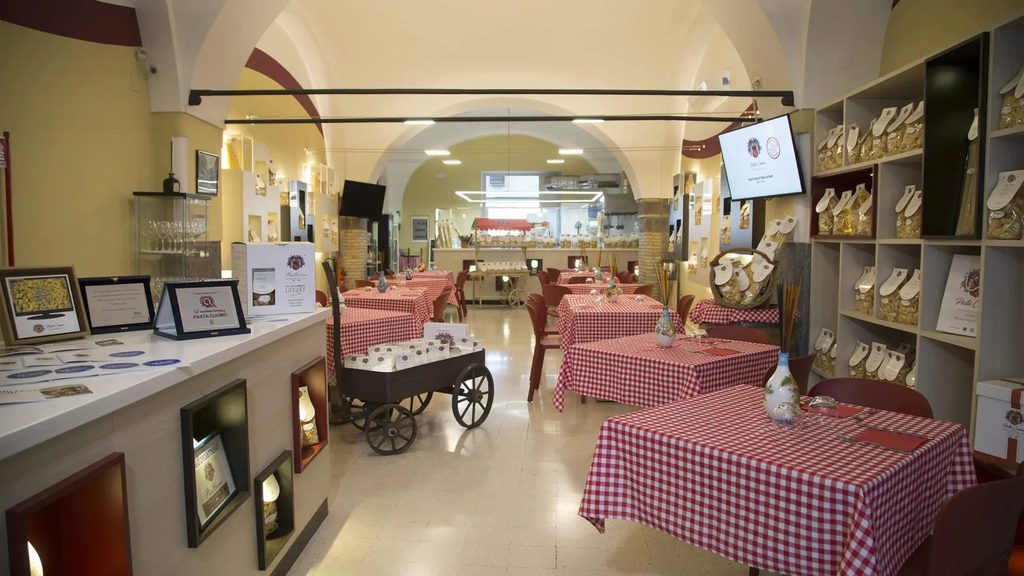
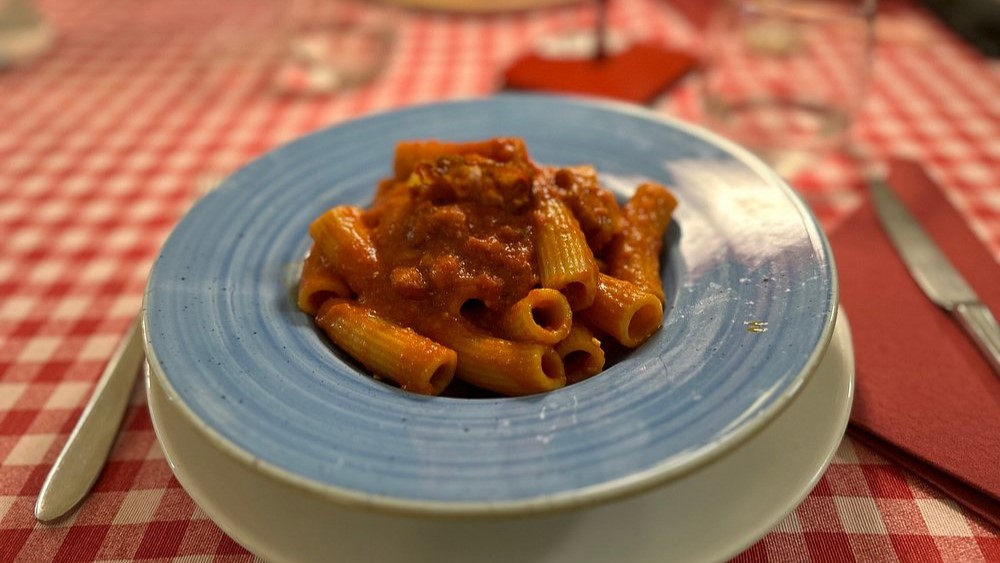
The trattoria at Pastificio Cuomo, relaunched in 2015 by Amelia and Alfonso Cuomo, continues the family story within its historic Gragnano premises. © Pasta Cuomo
Hosteria Grappolo d’Oro · Rome · Michelin Bib Gourmand
Just steps from Campo de’ Fiori, the restaurant serves the Roman classics of amatriciana, carbonara and cacio e pepe.
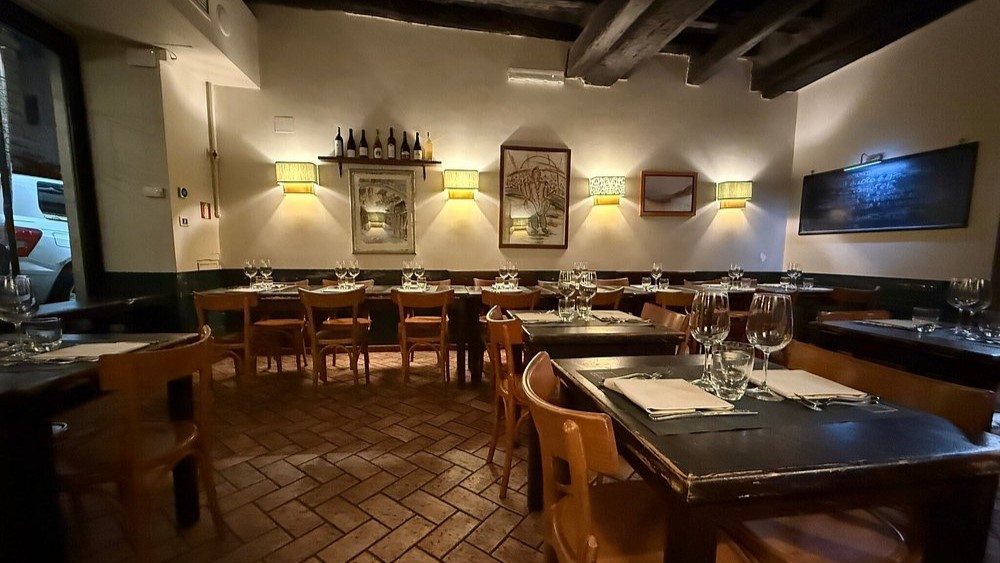
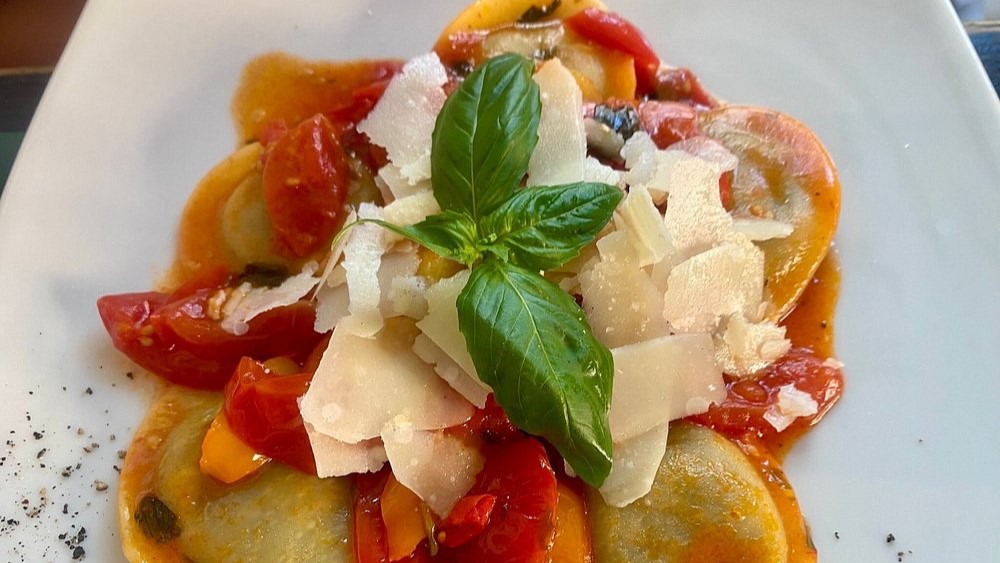
Hosteria Grappolo d’Oro in Rome celebrates traditional Roman cooking and local producers. Its signature dishes include spaghetti carbonara, rigatoni all’amatriciana and tonnarelli cacio e pepe. © Hosteria Grappolo d’Oro
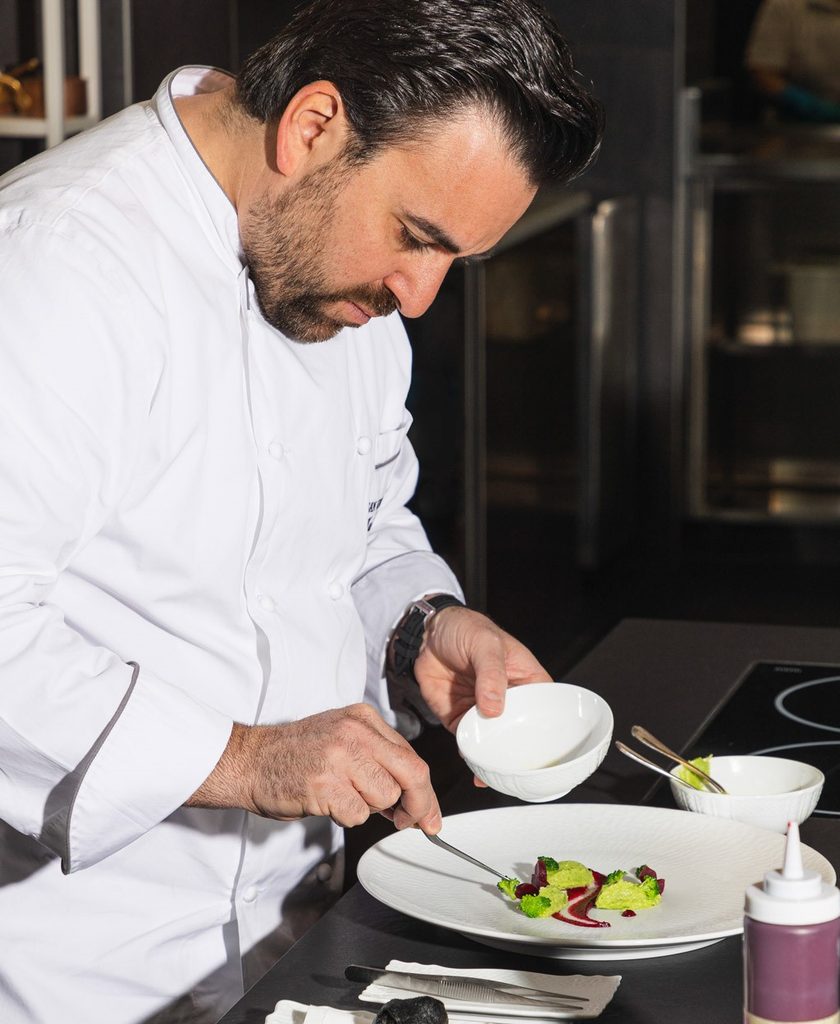
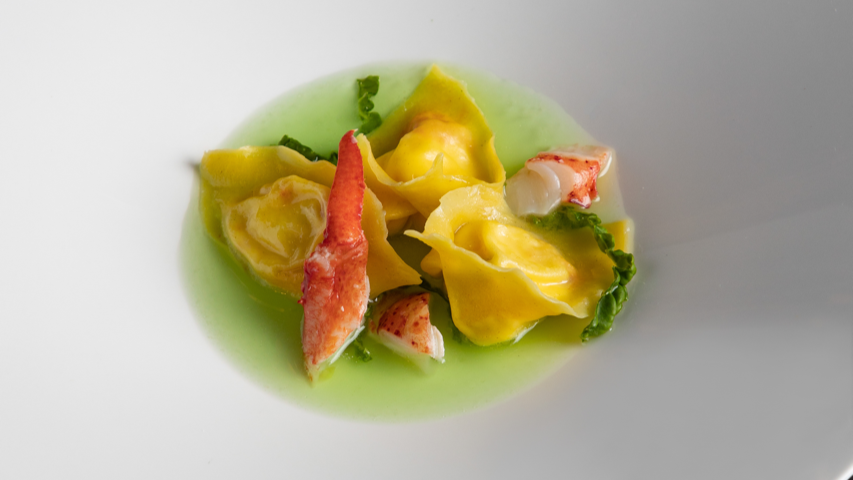
San Domenico · Since 1970 · Imola · Two Michelin stars 2026
The Uovo in raviolo San Domenico encloses an intact egg yolk in an almost translucent sheet of pasta, with butter, Parmigiano and seasonal truffle: thin enough to almost disappear, precise enough to hold its shape through cooking.
Max Mascia, chef at San Domenico in Imola, joined the restaurant at the age of 14 and now leads its brigade. Heir to the spirit of the Marcattilii brothers, he embodies the continuity of this two-Michelin-starred institution. © San Domenico
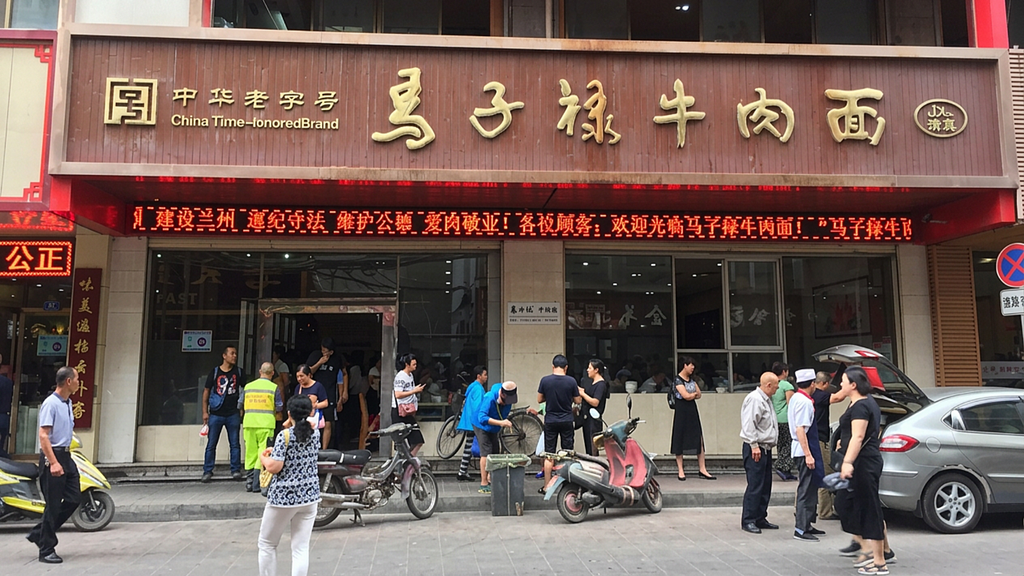
China: from Lanzhou to Shanghai, three urban expressions of noodle culture
Ma Zilu · Since 1912 · Lanzhou · China Time-Honored Brand
This family-run institution takes its name from Ma Zilu, son of Ma Fude, whose beef broth recipe has been passed down through generations. The restaurant is renowned for its hand-pulled noodles and clear, aromatic broth.
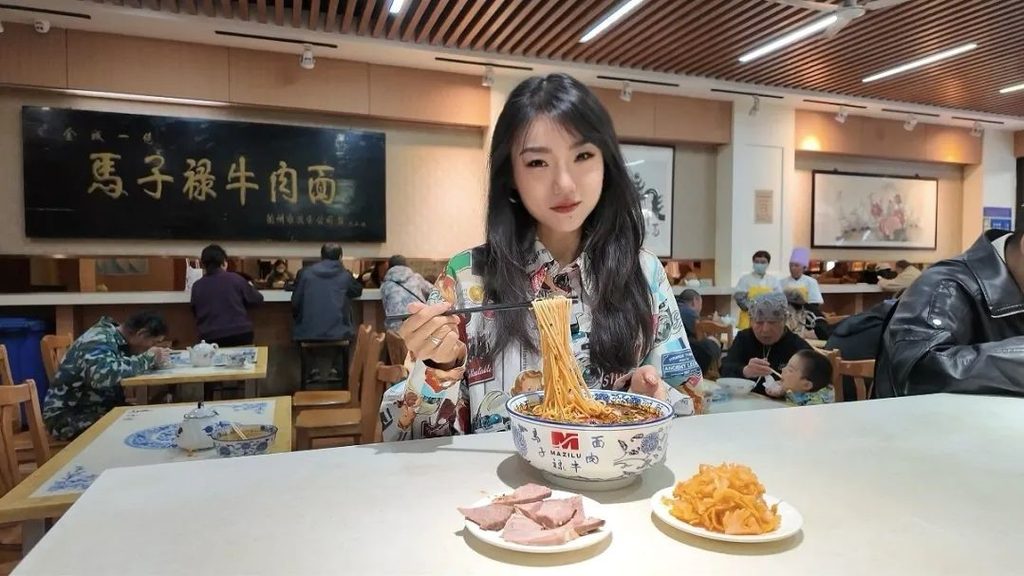
Beef noodles served in a broth simmered with beef bones, herbs and spices. The noodles are topped with white radish, coriander, spring onion and chilli oil. © Ma Zilu
No. 69 Fangzhuanchang Zhajiangmian · Beijing · Michelin Bib Gourmand
The restaurant centres its menu on zhajiangmian: noodles coated in a fermented soybean sauce slowly cooked with pork, then served with fresh vegetables.
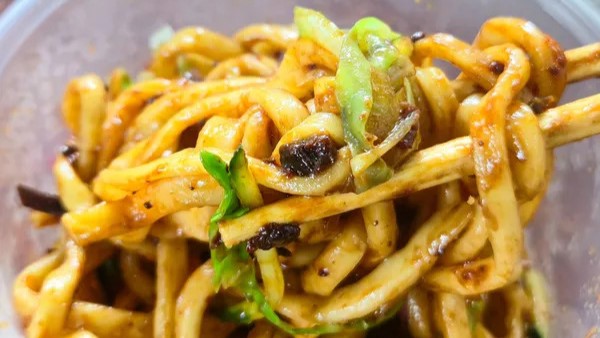
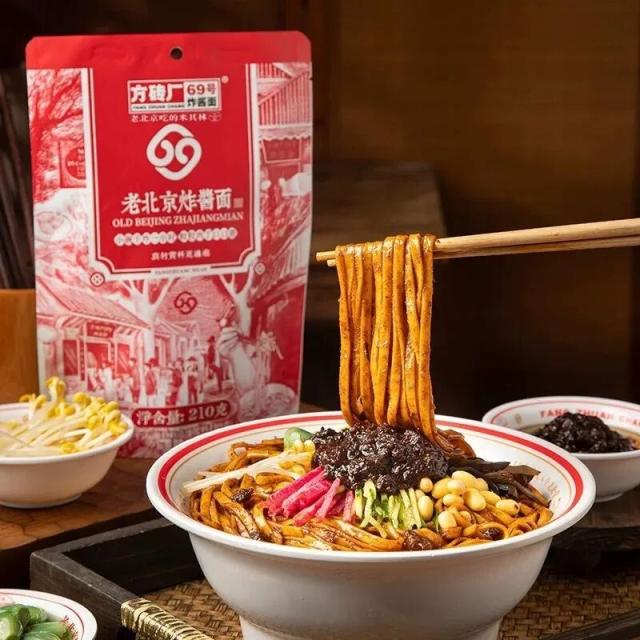
Zhajiangmian © No. 69 Fangzhuanchang Zhajiangmian
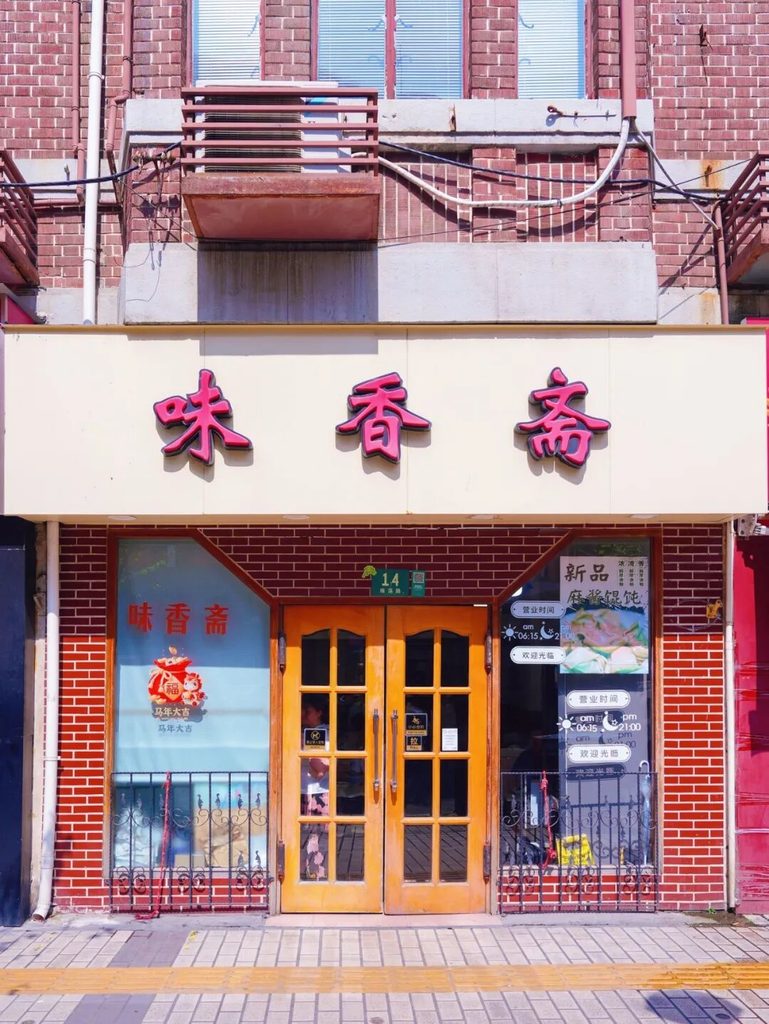
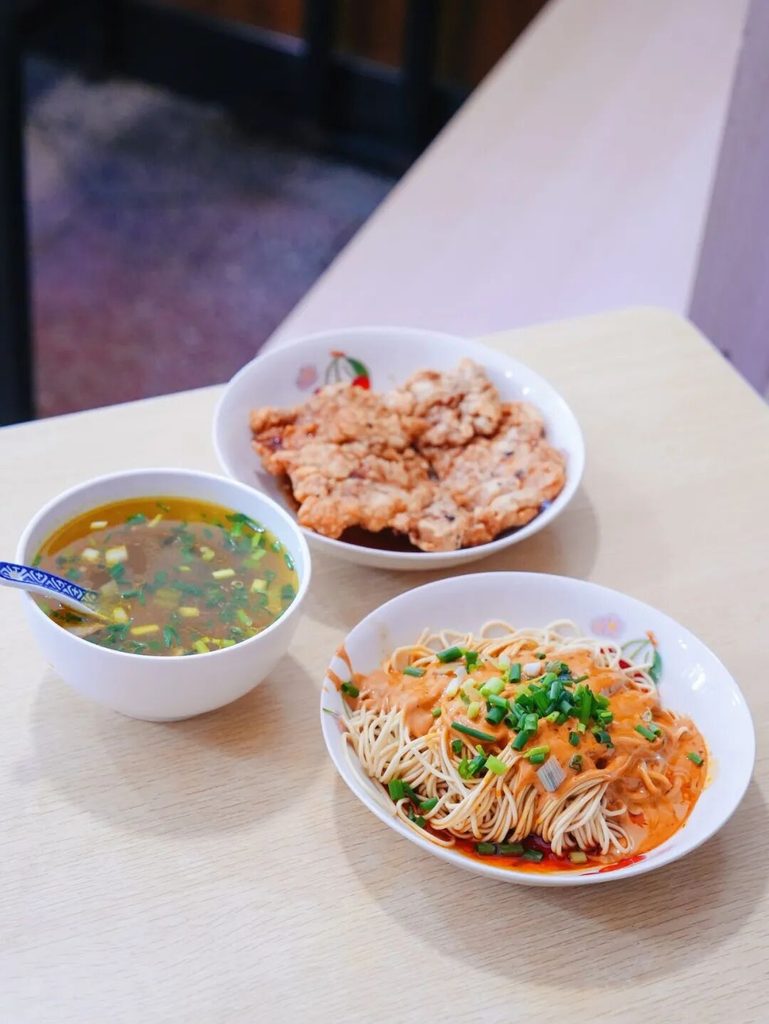
Wei Xiang Zhai · More than 80 years · Shanghai · Michelin Selected
In a dining room of just 37 m², this Shanghai institution keeps alive a form of everyday cooking that has become emblematic. Its speciality is noodles coated in sesame and peanut sauce, sharpened with chilli oil and spring onion, and served with a curried beef soup.

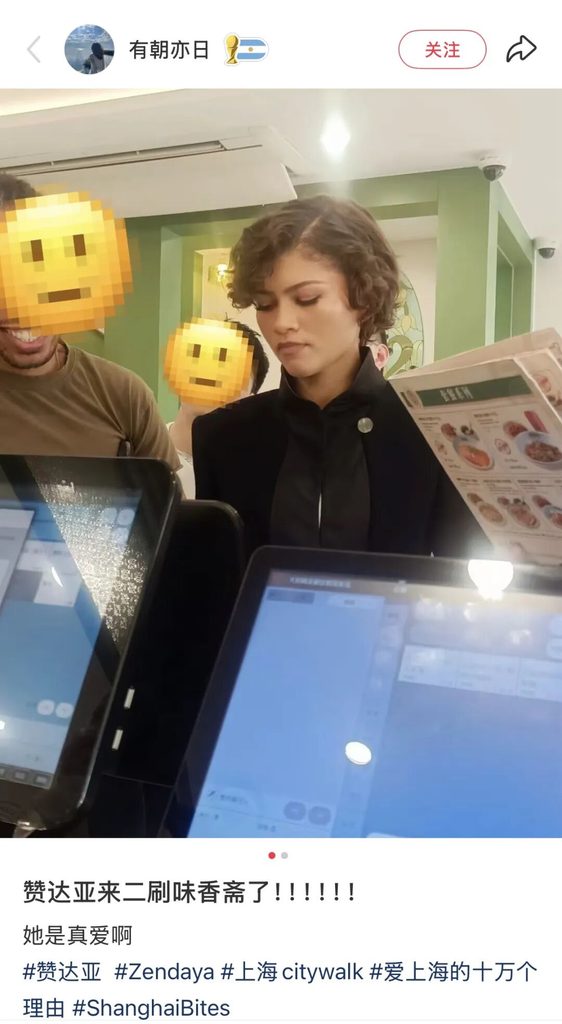
The historic frontage of Wei Xiang Zhai, its signature sesame-sauce noodles, and Zendaya and Tom Holland during their visit in July 2026, which brought renewed attention to this popular Shanghai institution. © Shanghai Observer
Events 2026
Italy
In Parma, World Pasta Day 2026, held on 27 and 28 October as part of Cibus Tec, revealed another face of pasta: its industry. In 2025, Italy produced 4.18 million tonnes of pasta, worth €8.6 billion.
Nearly 59% of output was exported. Producers and food-technology specialists discussed biodiversity, sustainability and industrial innovation.
China
Launched in late July, the 2026 Intangible Cultural Heritage Noodle Summit in Shanxi brought together artisans, businesses and representatives from several provinces around traditional noodle-making techniques. Demonstrations, competitions and forums linked intangible heritage with skills transmission and industrialisation.
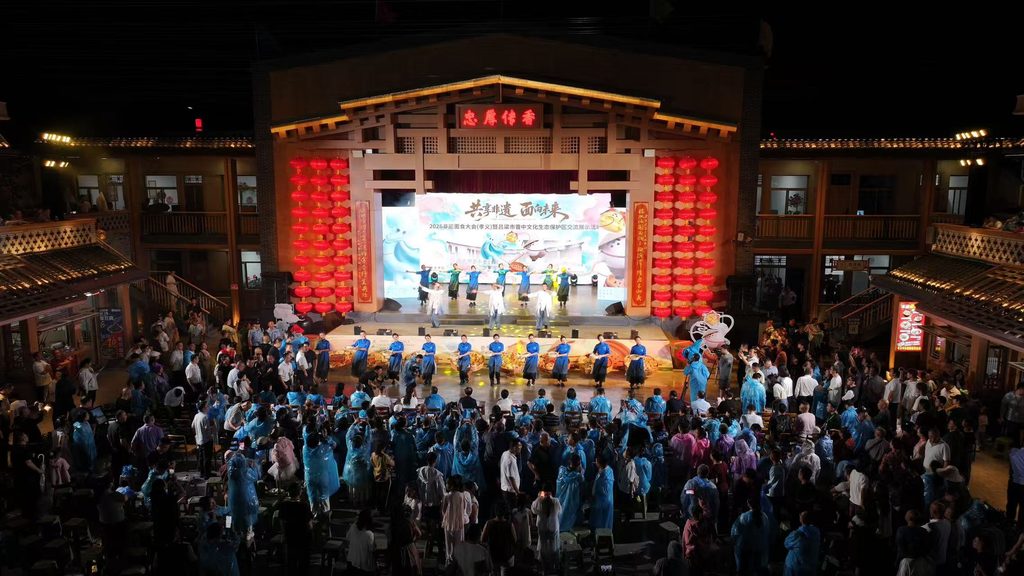

Opening of the 2026 Intangible Cultural Heritage Noodle Conference in Xiaoyi, Shanxi, under the theme “Sharing intangible heritage, looking to the future”. © Xinhua Finance
The Lanzhou Beef Noodle Industry Promotion Regulation comes into force on 1 November. It covers production, traceability and skills transmission.
In Gragnano and Lanzhou alike, artisans learnt to read the material through touch. DeepTech now probes that same material at the scale of proteins, genomes and machines.