

In yachting, a few millimetres can alter drag, a few degrees can shift the thermal balance, and a few lines of code can change a decision at sea.
A yacht is one of the industrial products in which precision translates directly into user value.
Hydrodynamics, composite materials, propulsion, energy storage, sensors, onboard intelligence and automation: the most advanced technologies must coexist within a compact, mobile environment exposed to vibration, salt, humidity and exceptionally demanding reliability requirements.
This concentration of constraints makes yachting a distinctive testing ground for DeepTech.
Digitally controlled hydrofoils, electric propulsion, fuel cells, advanced materials, AI-assisted perception and energy management are among the technologies reshaping the marine industry. In 2026, the Yacht Club de Monaco devoted a conference to New technologies era beckons for yachting sector, while Metstrade brought together 24 startups across two spaces dedicated to marine innovation, including one focused on superyachts.
In Cannes, the Cannes Yachting Festival also places innovation at the heart of the visitor experience through its Innovation Route, showcasing emerging solutions across several categories.
The Yacht as a Technology Integration Laboratory
Precision as a Design Variable
A contemporary yacht is a complex technical system.
Each function interacts with the others: propulsion, energy, materials, water treatment and sensors all contribute to the same overall architecture.
Performance is determined by the relationships between different subsystems. A solution may be technologically outstanding yet lose some of its value if its integration compromises another function of the vessel.
A Full-Scale Integration Platform
A laboratory is the first stage in assessing an innovation. On board, however, a technology must operate in its final environment, subject to physical, energy, human and regulatory constraints.
The yacht provides a distinctive testing ground: a single project can combine electric propulsion, hydrofoils, energy recovery, sensors, advanced control systems and new materials within the same highly customised platform.
This configuration makes it possible to observe interactions between technologies and assess their integration under real-world conditions. A relatively small number of deployments can therefore generate particularly valuable operational feedback.
The America’s Cup pushes foils, aerodynamics, simulation, real-time control and data analysis to their limits.
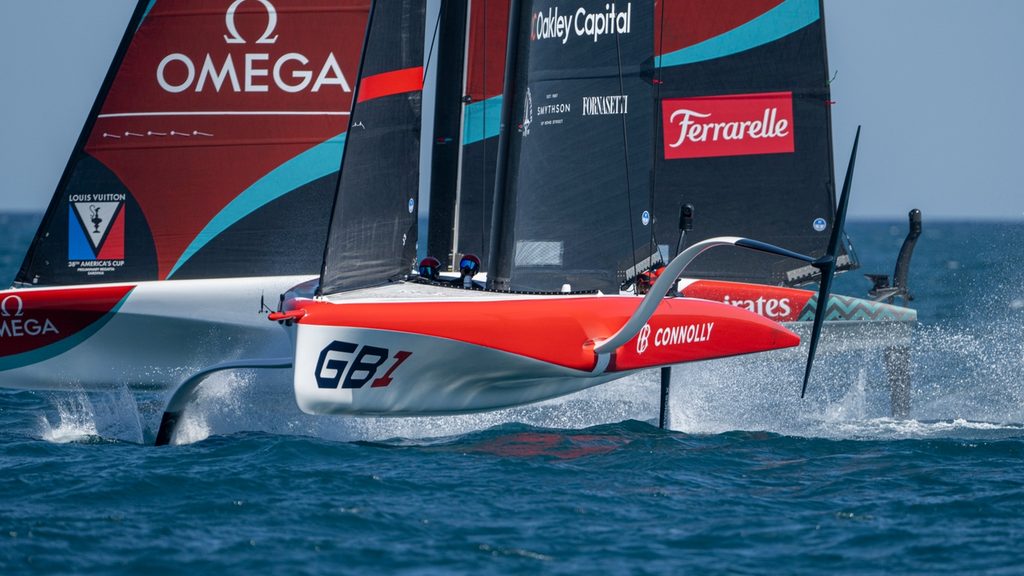
24 August 2026 — Luna Rossa AC40 race, ahead of the Louis Vuitton 38th America’s Cup Preliminary Regatta in Naples: foiling at the intersection of performance, engineering and design © America’s Cup
Hydrodynamics in the Digital Age
The hull remains one of the primary points at which physics and computation converge.
Drag, stability, lift and behaviour in waves result from complex interactions that numerical simulation can now model with increasing precision.
Foils add another dimension.
By lifting part of the vessel above the water, they reduce the wetted surface area and, consequently, part of the hydrodynamic resistance. Their operation, however, requires precise control of trim, speed and lift.
Software therefore becomes a component of naval architecture.
Navier illustrates this convergence. Its N30 combines electric propulsion, hydrofoils and digital control to lift a 30-foot yacht above the water.
In June 2026, Navier and JIH Global Investment announced a $100 million partnership, approximately €86 million, aimed at deploying up to 100 N30s in the Maldives.
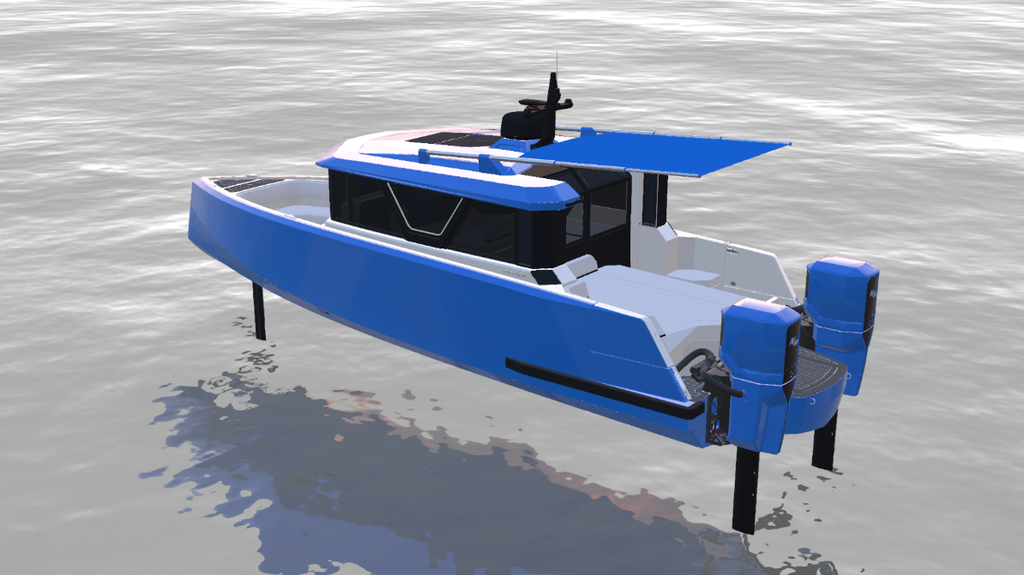
Inside Navier N30 — The Longest-Range
Electric Boat Ever Built!
Sampriti Bhattacharyya, Founder & CEO of Navier, discusses the transition from concept to deployment of the N30 and the ambition to turn hydrofoil innovation into a new form of maritime mobility infrastructure © Navier
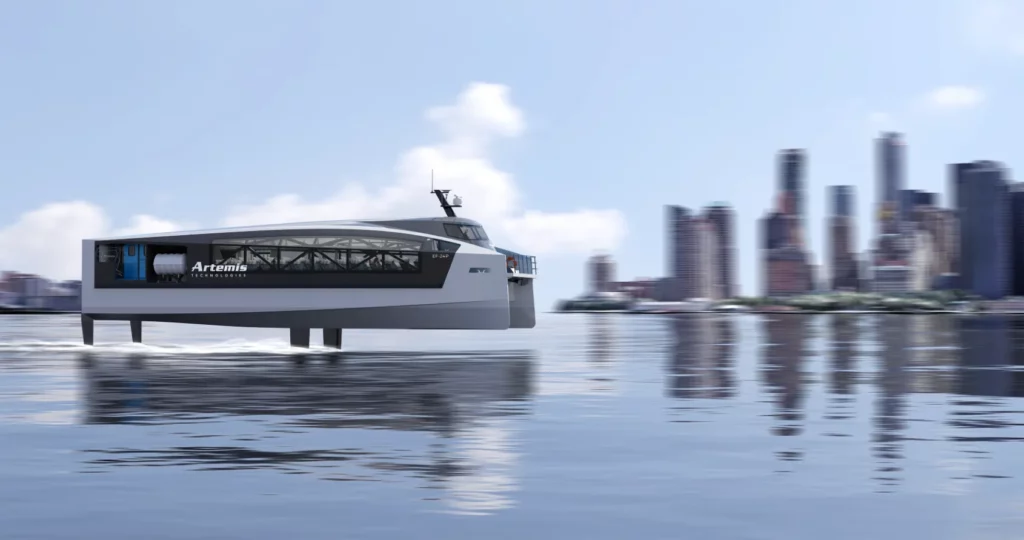
The momentum extends beyond Navier. Candela is also developing electric hydrofoil vessels, while Artemis Technologies is developing its eFoiler platform, combining electric propulsion, hydrofoil technology and digital control.
These developments illustrate how hydrodynamics, power electronics and software are increasingly converging within a single naval architecture.
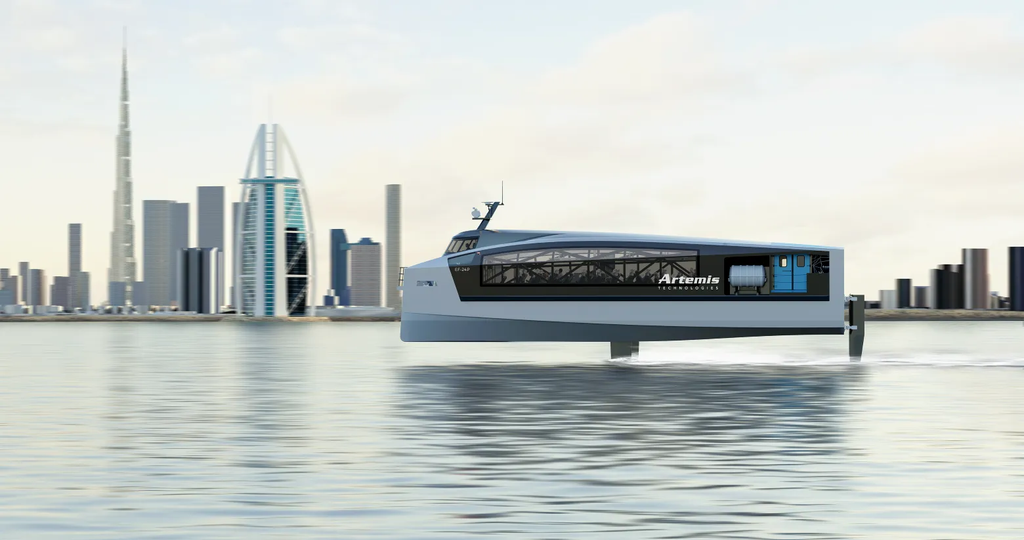
eFoiler®: electric propulsion and autonomous hydrofoil control © Artemis Technologies
Mass as a Design Variable
On a boat, every additional kilogram has consequences for energy consumption, speed, stability, payload capacity and, in some cases, the sizing of the equipment required to operate the vessel.
Composite materials therefore play a strategic role in marine projects.
Carbon fibre, high-performance fibres, advanced resins, sandwich structures and automated manufacturing processes make it possible to optimise mass, stiffness and geometry simultaneously.
Gurit develops composite materials and structural solutions for luxury yachting, notably through its Corecell structural foams. The objective is to reduce weight while maintaining stiffness, strength and finish quality — parameters that are particularly critical in high-end yachts.
From Energy to Onboard Intelligence
Energy as a System
Propulsion, air conditioning, desalination, batteries, electronics, computing, comfort and safety systems all draw on the same energy resources. Their optimisation can therefore no longer be considered in isolation: each energy-related decision affects other functions of the vessel.
The task is to manage flows between generation, storage, distribution and consumption according to the vessel’s requirements and operating conditions.
This evolution is driving hybrid architectures, high-density batteries, new energy sources and software capable of balancing energy consumption in real time. ABB is developing superyacht architectures that integrate electric propulsion, energy storage and energy management within a single system. On a 100-meter-plus superyacht, its system combines Azipod® propulsion, a DC electrical network, 500 kWh of batteries and an energy management system.
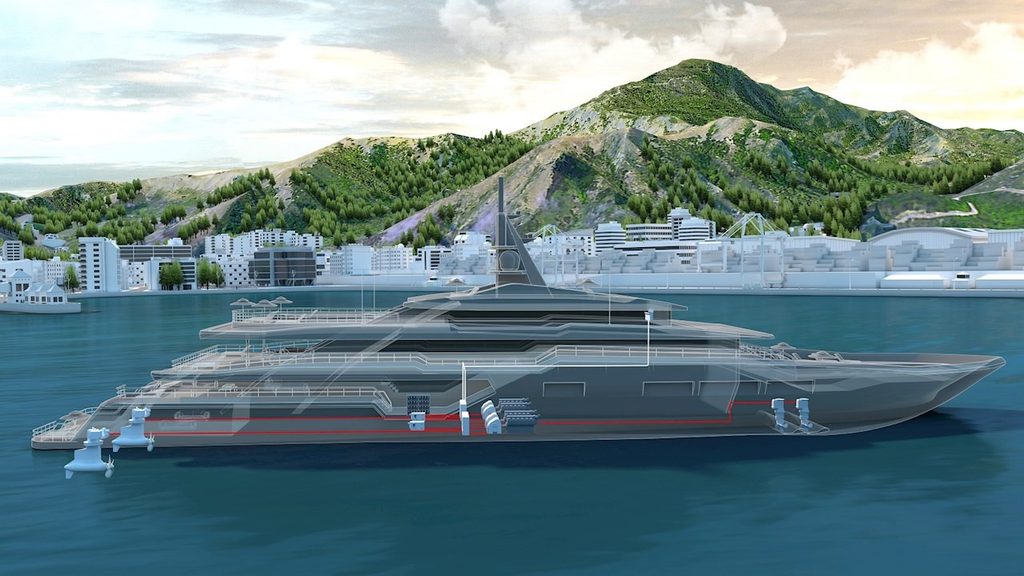
Conceptual illustration of a hybrid yacht incorporating an intelligent energy architecture © ABB
Perceiving Before Deciding
Onboard intelligence is transforming another essential capability of the vessel: its ability to perceive its surroundings.
Optical cameras, thermal imaging, radar, AIS, GPS, inertial sensors and weather data can be combined to create a richer representation of the maritime environment.
The value, however, does not lie in accumulating data. It lies in the ability to turn that data into actionable information.
WATCHIT Eye illustrates this evolution. Developed specifically for recreational boating in collaboration with the R&D department of the Azimut|Benetti group, the system combines 4D imaging radar with AI capable of cross-referencing data from multiple onboard sensors. It can detect unmapped obstacles — small craft, buoys or floating objects — and assess their level of risk in real time.
WATCHIT Eye analyses the navigation environment, prioritises risks and transmits alerts to the captain when they are deemed genuinely actionable. The system is installed, among others, on the Azimut Fly 82 and Seadeck 7.
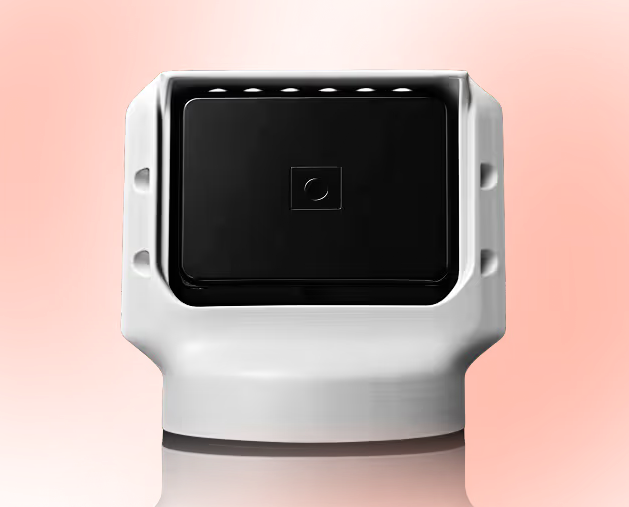
WATCHIT Eye : une nouvelle génération de systèmes d’aide à la navigation pour le yachting © WATCHIT
Azimut Seadeck 7, one of the yachts incorporating WATCHIT Eye technology to enhance navigation assistance © Azimut | WATCHIT
The robustness of this chain is therefore critical: perception must be sufficiently reliable to support human decision-making and, subsequently, selected automated functions.
When Technology Transforms the Object
The evolution concerns more than individual yacht components. It is beginning to change the very way vessels can be designed.
The Pegasus 88M, developed by Forakis Design, offers a prospective vision of this shift. This 88-metre superyacht concept combines solar-electric propulsion, hydrogen, advanced materials and robotic 3D manufacturing.
The project remains a concept, but it illustrates an important evolution: when several technologies advance simultaneously, they can lead to a fundamental rethinking of the yacht’s architecture.
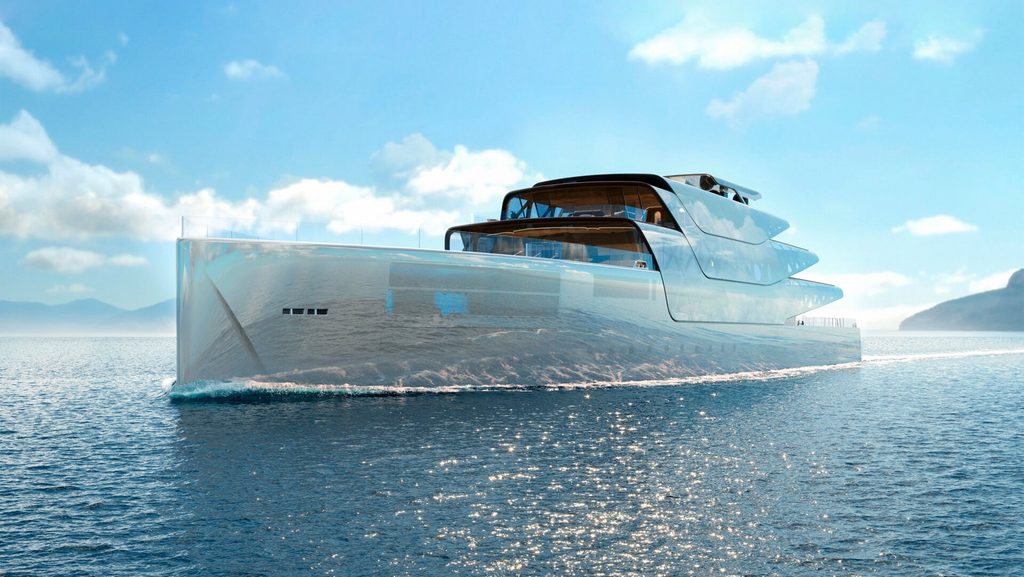
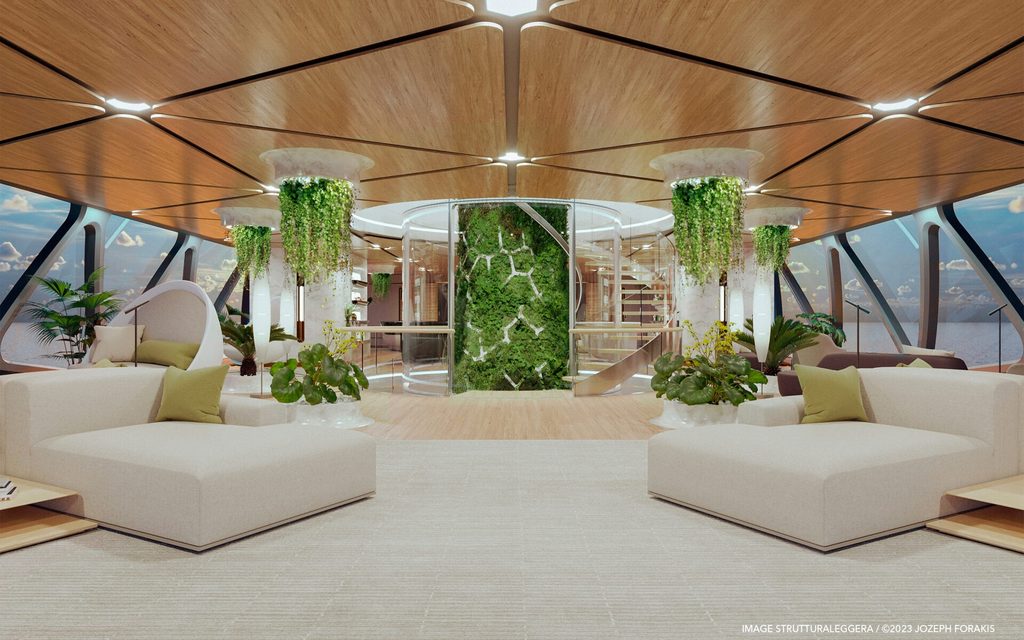
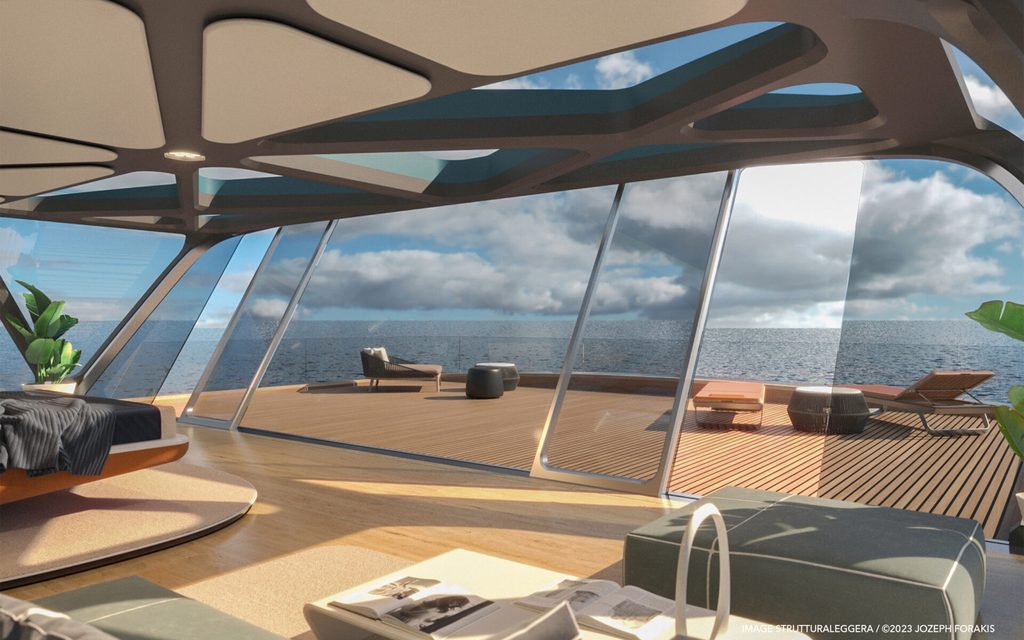
Pegasus 88M: an 88-metre superyacht concept combining solar-electric propulsion, hydrogen, a 3D-printed structure and robotic manufacturing processes © Forakis Design
From Technology to Industrial Qualification
Certification as an Engineering Stage
At this level of sophistication, innovation must operate within a framework of safety, classification and accountability.
Regulatory developments in 2026 provide a clear illustration.
The International Maritime Organisation (IMO) adopted the first international safety code for Maritime Autonomous Surface Ships (MASS Code) in May 2026. Entering into force in a non-mandatory form on 1 July 2026, it establishes a framework covering the design, operation, safety, cybersecurity and certification of autonomous or remotely operated vessels. A mandatory framework is to be adopted by 2030 at the latest, with entry into force envisaged for 2032.
For a DeepTech company, certification is an integral part of the transition from technology to industrial product. Characterising, testing, documenting and validating a new solution — whether energy-related, autonomous or material-based — therefore becomes an integral part of the development process.
The Yacht as a Qualification Market
The level of technical requirements makes it possible to test a technology against real-world constraints involving integration, reliability, maintenance and use. A limited number of deployments can be sufficient to generate operational data and establish an initial industrial reference.
In this context, the first yacht can become a genuine qualification market: a technology demonstrates its ability to operate in a complex environment, meet regulatory requirements and maintain its performance over time.
That first installation can then generate three valuable assets: industrial validation, commercial proof and a reference for other markets.
A technology validated on board can subsequently be considered for applications in other maritime environments or sectors subject to comparable requirements.
Engineering to the Millimetre
The Feadship Breakthrough, delivered in 2025, provides a concrete illustration. This 118.80-metre superyacht incorporates 16 PowerCell fuel-cell systems delivering 3 MW. Feadship states that the installation can provide up to one week of silent operation at anchor, or support certain phases of navigation without fossil fuel.
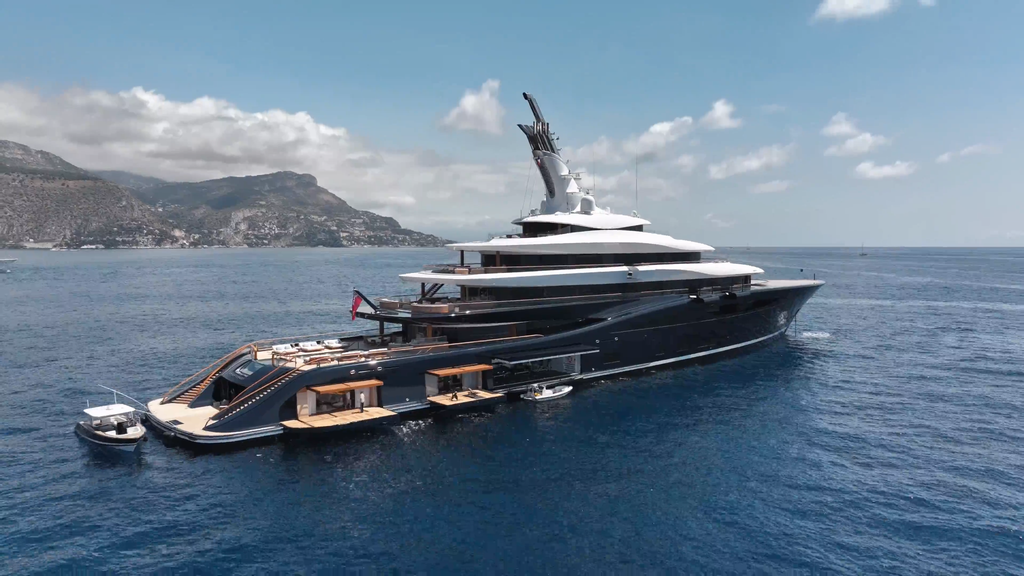
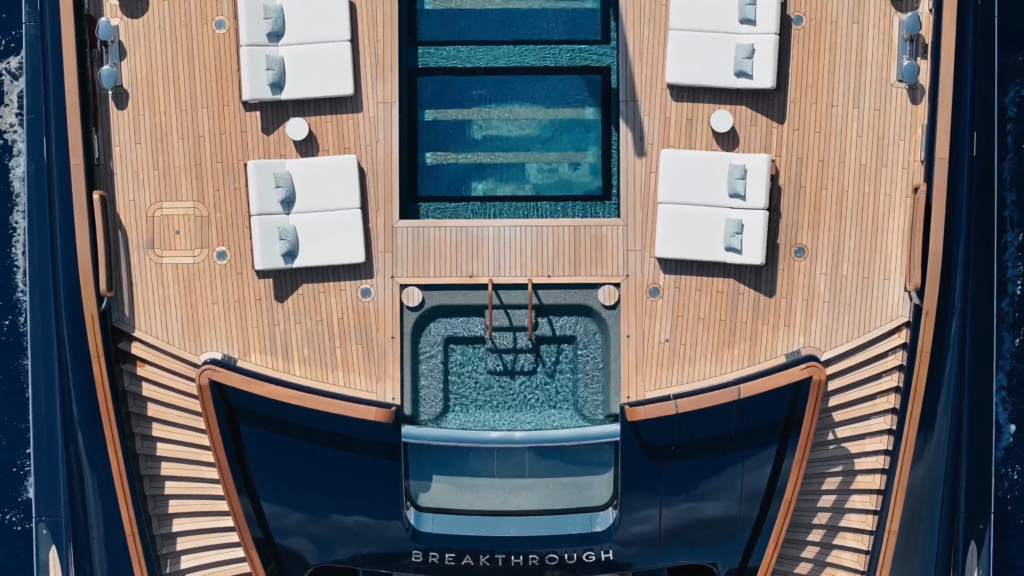
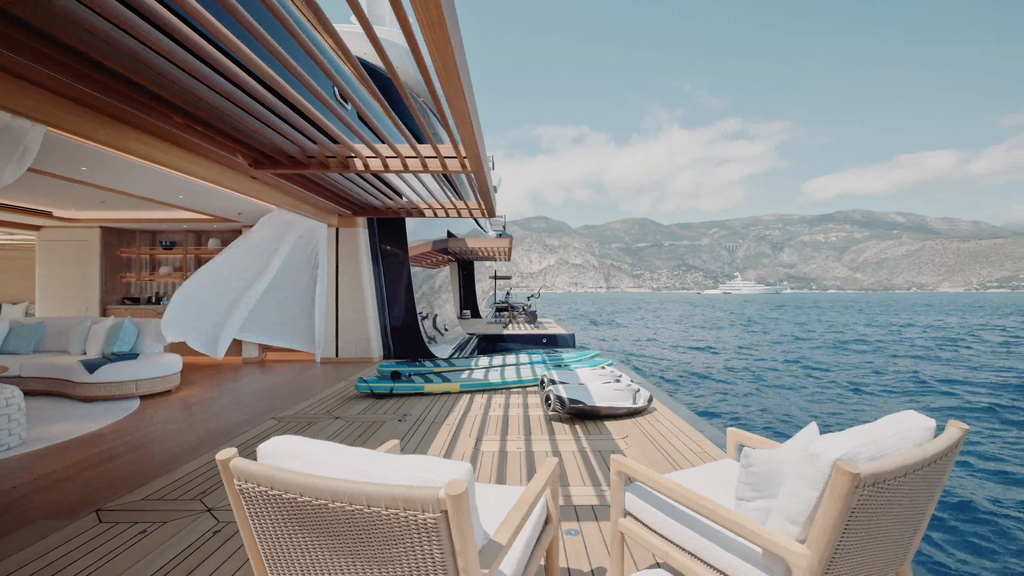
Breakthrough — a demonstration of the integration of green hydrogen into a superyacht’s energy architecture. © Feadship
This integration forms part of a broader trajectory. In 2023, Lloyd’s Register granted Feadship an Approval in Principle (AiP) for a multi-fuel architecture designed for large yachts.
The fuel-cell system therefore does not exist independently of the vessel: it must fit within the available space, interact with the vessel’s energy systems, comply with safety requirements and remain operational over the long term.
This is where excellence in yachting is ultimately defined: in the ability to turn complex technology into an industrial solution. For some DeepTech companies, the yacht can therefore serve simultaneously as a qualification environment, an initial commercial reference and a gateway to other markets.