

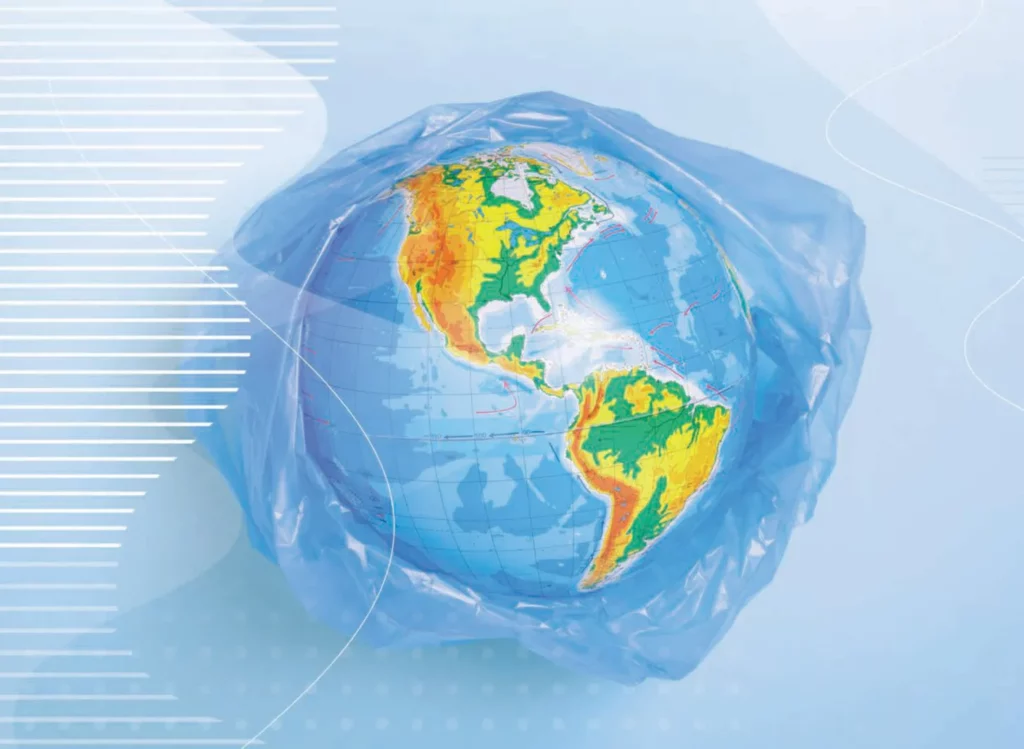
From mycelium to enzymes: an overview of biological responses to a plastics economy that is still not circular enough
Plastic was designed to last. Yet many of its uses last only a few days, or sometimes just a few minutes.
Packaging, synthetic textiles, household items, toys, low-cost products and flexible coatings fuel a flow of material that still exceeds global capacity for collection, sorting and processing. In 2025, the United Nations Environment Programme estimated that global plastic consumption would reach 516 million tonnes. The latest data compiled by the OECD indicated that in 2019, 460 million tonnes of plastic were used, 353 million tonnes of plastic waste were generated, and only 9 per cent was actually recycled after accounting for processing losses.
Every year, between 19 and 23 million tonnes of plastic waste end up in lakes, rivers and seas, according to the UNEP.
In response to this situation, two approaches are being developed in parallel. The first seeks to replace certain fossil-based plastics with renewable, reusable, recyclable or biodegradable materials under defined conditions. The second utilises enzymes, bacteria and fungi to recycle, transform or break down polymers that conventional methods struggle to process.
This overview follows a life-cycle approach: design, substitution, recycling, biological treatment, environmental dispersion, health, textiles and regulation. It does not seek to identify a single solution. Instead, it distinguishes between possible levels of intervention: reducing usage, redesigning products, substituting certain materials, recycling compatible waste streams, treating complex waste and regulating production through legislation.
Biomimicry opens up real avenues for progress. It does not alter the order of priorities: produce less, use items for longer, reuse more, recycle what can be recycled, and then treat what still falls outside the scope of existing systems.
A sustainable material trapped in a throwaway economy
Plastic is not a single material.
Polyethylene, polypropylene, PET, PVC, polystyrene, polyurethane, polyamide and other polymers have different compositions, properties and processing methods. This diversity explains their industrial success. It also complicates their circularity.
Multi-layer packaging, blended textiles, adhesives, pigments, mineral fillers, additives and surface treatments often make separation difficult, costly or insufficiently attractive for recycling streams.
Nearly two-thirds of global plastic waste comes from products used for less than five years. Packaging accounts for around 40 per cent of the total, ahead of consumer goods and textiles, according to the OECD.
Mechanical recycling remains essential when waste streams are clean, homogeneous and properly collected. However, it quickly reaches its limits when materials are contaminated, degraded, coloured, mixed or combined with other components. Each recycling cycle can also reduce certain mechanical or optical properties, depending on the polymer and the end use.
The transition cannot, therefore, rely solely on improving collection. It begins earlier: in product design, the choice of polymer, the product’s lifespan, reparability, compatibility between layers, and the actual ability to reintegrate the material into an industrial cycle.
‘Biodegradable’ does not mean disposable
The term ‘bioplastic’ covers a range of different realities.
A plastic can be bio-based without being biodegradable. It can be biodegradable whilst still being partly made from fossil resources. It may only be compostable in an industrial facility maintaining suitable temperature, humidity, oxygenation and microbial activity.
PLA, for example, can be composted in certain industrial facilities. Its behaviour in ordinary soil, a river or the ocean is much slower and depends heavily on environmental conditions.
The label ‘biodegradable’ therefore guarantees neither rapid breakdown in the natural environment nor the absence of intermediate fragments. Actual behaviour depends on the polymer, its thickness, its additives, temperature, humidity, oxygen levels and the microorganisms present.
The European Commission recommends that biodegradable or compostable plastics be reserved for uses where they provide a demonstrable environmental benefit, particularly where reduction, reuse or recycling are not realistic options.
Substitution becomes relevant when it addresses a specific need: packaging that is difficult to reuse, a flexible coating without a well-established recycling stream, a use presenting a high risk of leakage into the environment, or a product whose end-of-life can be managed within a dedicated recycling stream.
Replacing a fossil-based plastic with a bio-based material without clarifying its end-of-life simply shifts the problem. The decisive factor remains the product’s overall design, not the origin of an individual component.
Growing packaging
Polystyrene foams provide effective protection for fragile items. They are also lightweight, bulky, unattractive to collect and easy to disperse. Once fragmented, they become difficult to recover.
Mycelium – the network of filaments that forms the vegetative body of fungi – can bind agricultural fibres, wood residues or other organic substrates to form a lightweight, insulating and mouldable material.
PermaFungi: growing the material rather than moulding it
In Brussels, PermaFungi develops packaging and objects made from mycelium, using organic waste and wood residues. The fibres are placed in a mould, colonised by the fungus, and then dried to halt growth and stabilise the material.
The benefit is clear: a material can be ‘grown’ to closely match a specific shape, using raw materials derived from waste and with the potential to be composted at the end of its life.
PermaFungi states that its packaging is biodegradable and compostable. However, claims regarding biodegradation times should be treated with caution: they depend on actual conditions of temperature, humidity, thickness, aeration and biological activity.
The technology is particularly well-suited to moulded protective packaging, cases, customised fillers and production runs where the shape adds practical value. It does, however, face a classic industrial challenge: polystyrene benefits from decades of optimisation, high production rates, established supply chains and low costs.
Cultivated materials will need to demonstrate that they can scale up production without compromising their consistency, strength, environmental benefits or economic viability.
Mycelium will not replace all packaging. It could become a credible alternative to certain fossil-based foams where reuse is not possible and organic end-of-life management is properly organised.
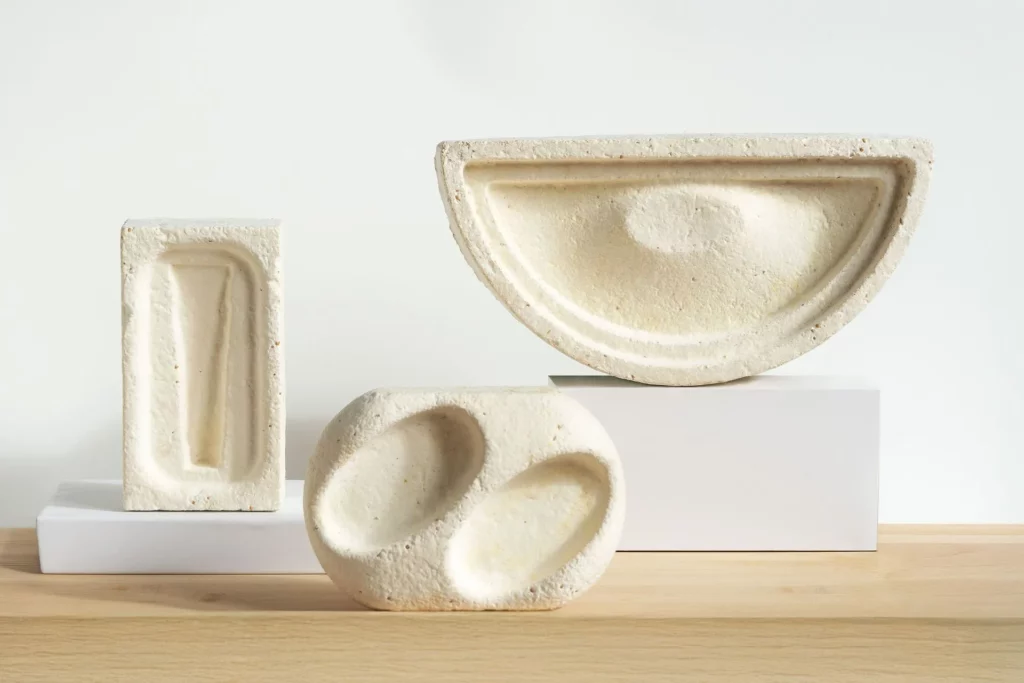
Reinventing conventional packaging with an innovative material, inspired by biomimicry: myco-material. This combines both performance and elegance while caring for the planet. © PermaFungi
Producing the polymer using bacteria
Certain bacteria naturally produce polyhydroxyalkanoates, or PHAs, which they use as a carbon and energy reserve.
These polyesters can be rigid, flexible or elastic, depending on their composition. Their appeal lies in the possibility of producing them from renewable resources or organic waste, and then biodegrading them through the action of suitable microorganisms.
Dionymer: converting bio-waste into PHA
The French company Dionymer is developing a fermentation process designed to convert organic waste into PHA polymers.
In 2026, the company announced that it had raised seven million euros to accelerate its industrialisation. Having increased its capacity from around ten kilograms to one tonne per year, it is now preparing an industrial demonstrator with an annual capacity of 100 tonnes. It then aims to establish a French plant capable of producing at least 1,000 tonnes per year by 2030.
PHAs can biodegrade in various environments, including certain marine environments. However, this property does not correspond to a universal timeframe. The type of PHA, its crystallinity, its thickness, the temperature and the microbial populations present all strongly influence degradation.
A biodegradable PHA should therefore not be regarded as a material that can simply be discarded in the natural environment. Its value lies in its potentially lower persistence where collection fails, and in the possibility of recycling certain organic waste streams – not in legitimising single-use products.
The industrial question then becomes specific: which applications justify the use of PHA, with which raw material, what performance characteristics, what end-of-life options and what cost compared to existing solutions?
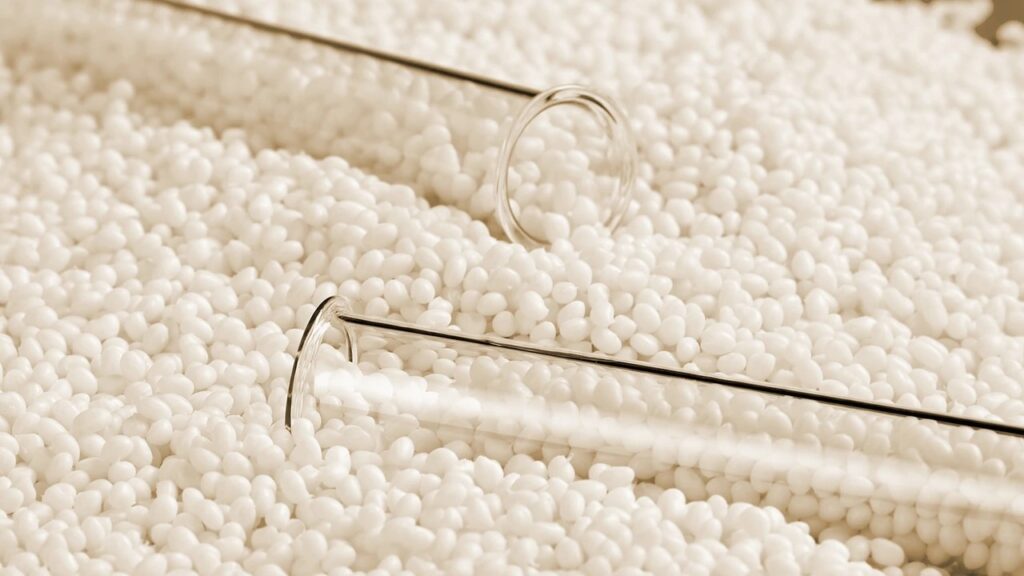
The first alternative to petroleum-based polymers derived from biowaste : PHBV – poly(hydroxybutyrate-co-hydroxyvalerate) in France. © Dionymer
Removing oil from flexible surfaces
PVC and polyurethane are widely used in coated textiles, footwear, leather goods, transport and furnishings. They provide flexibility, strength, water resistance and surface durability.
Recycling them remains complicated due to material mixtures, successive layers, surface treatments, adhesives, pigments and certain additives.
Alterskin®, a bio-resin for coated textiles
Developed by the French company Alternative Innovation, Alterskin® is a bio-resin designed to replace certain PVC or polyurethane coatings. The company presents it as a bio-based, recyclable technology free from petroleum-based plastics, particularly suited to coated textiles, alternative leather, footwear, packaging, transport and furnishings.
One of the challenges is to ensure the resin is compatible with existing industrial equipment to avoid having to completely replace production lines. This factor is just as important as the formulation: an alternative that requires the reconstruction of an entire industrial supply chain may lose some of its economic and environmental benefits.
However, performance must be assessed at the level of the finished product. A recyclable resin may lose this advantage when bonded to several incompatible layers or combined with a textile that is difficult to separate.
Eco-design therefore depends on the object as a whole: substrate, coating, adhesive, dye, stitching, disassembly, use, repair and end-of-life management.
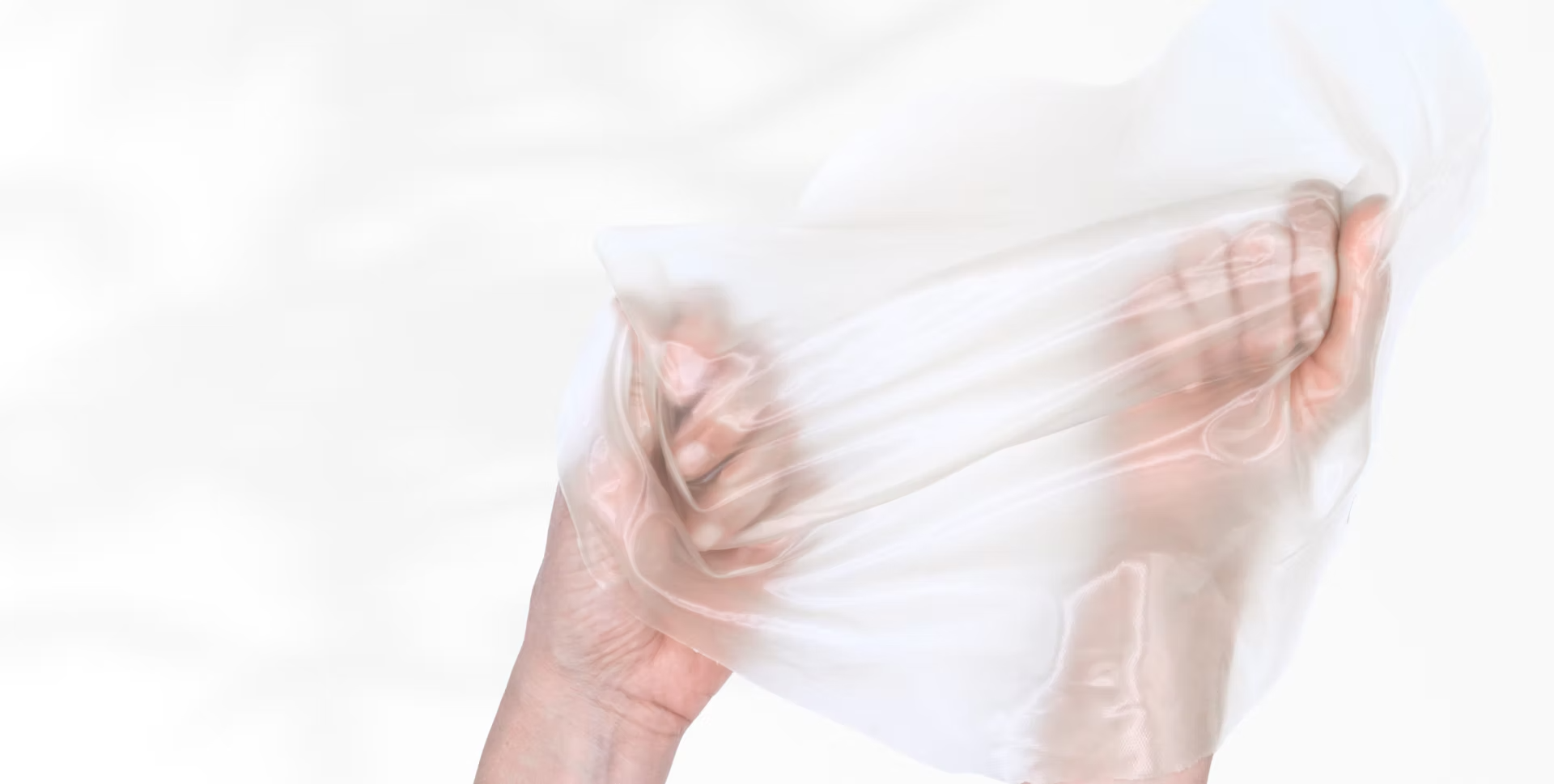
Alterskin® is a high-value-added plant-based bioresin, free from petroleum-based plastics and recyclable, designed for coated textiles and coatings. © Alternative Innovation
Removing what floats, preventing what drifts
The North Pacific ‘plastic continent’ is not a solid island. It is a shifting area where ocean currents concentrate floating waste across approximately 1.6 million square kilometres.
A study published in Scientific Reports estimated that it contained around 1,800 billion fragments. Microplastics accounted for the vast majority of the number of pieces, but only a small proportion of the mass. Conversely, most of the mass came from objects larger than five centimetres. Nets, ropes and other fishing gear accounted for a considerable proportion of the total weight.
This distinction changes our understanding of marine clean-up operations.
Mechanical devices can remove ghost nets, crates, bulky fragments and floating objects that are likely to trap animals or break down. However, they remain unsuitable for microplastics and nanoplastics that have already dispersed into the water, sediments and organisms.
Marine clean-ups can therefore reduce part of the floating stock. They are no substitute for preventing discards, onshore collection, port management, interception in rivers and the reduction of single-use plastics.
The more plastic fragments, the more technically difficult, costly and environmentally risky its recovery becomes.
The solution is simple: remove large items before they break up, prevent new waste from entering natural environments, and avoid presenting clean-up efforts as sufficient compensation for ongoing production.
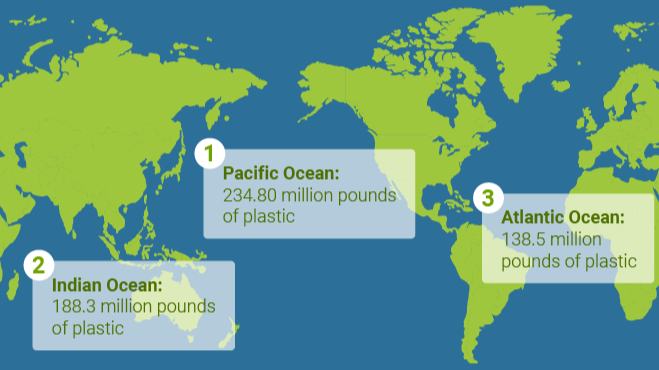
Most polluted oceans © GreenMatch
Breaking down PET molecule by molecule
Mechanical recycling of PET works effectively for certain streams of clear, clean and homogeneous bottles. It becomes more complex when dealing with polyester textiles, trays, pigments, degraded materials or mixed materials.
Enzymatic recycling aims to break down the long polymer chains to recover their basic building blocks, and then produce new PET.
Carbios: breaking down the polymer into its components
The French company Carbios is developing an enzyme optimised to depolymerise PET. The process breaks the polymer down into terephthalic acid and ethylene glycol. After purification, these components can be reused to manufacture PET.
This approach is aimed in particular at coloured waste, food trays and certain polyester textiles that are difficult to mechanically recycle into material of comparable quality.
Carbios remains committed to building a PET biorecycling plant in Longlaville, having adjusted its industrial timetable. The project is designed to process PET waste on a large scale, with an announced capacity of 50,000 tonnes per year.
This scale-up would be a significant step. However, it concerns only a specific family of polymers. It requires collection, sorting, feedstock preparation, enzymes, water, energy, purification and industrial outlets for the regenerated PET.
Enzymatic recycling therefore complements mechanical recycling processes. It does not address multi-layer packaging, complex mixtures or the general increase in plastic volumes.
Its strategic value lies elsewhere: in broadening the scope of technically recyclable PET waste, reducing quality loss in certain waste streams and creating a more robust circular economy for targeted polymers.
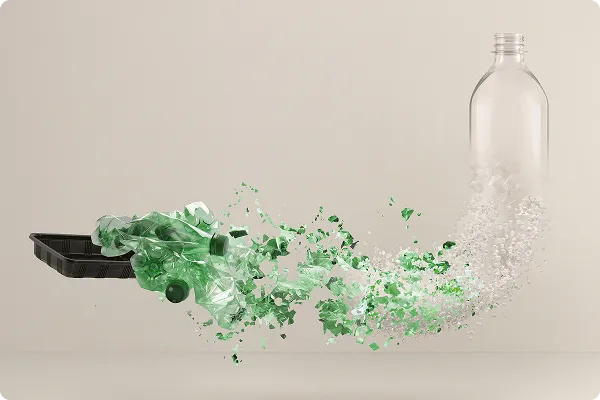
Food, beverage, and cosmetic packaging : same transparency, safety, and quality as virgin PET. © Carbios
Fungi are capable of breaking down certain polymers
The ability of certain fungi to degrade plastics has, for several years, fuelled the idea of using mycoremediation to treat waste.
In 2011, researchers demonstrated that certain strains of Pestalotiopsis microspora could utilise a polyester-polyurethane as a carbon source under both aerobic and anaerobic conditions. In 2017, another team described the degradation of polyester-polyurethane by Aspergillus tubingensis, isolated from a landfill site in Pakistan.
These results are genuine. However, media coverage has sometimes oversimplified them.
The experiments focus on specific polymers, under controlled conditions, with defined temperatures, nutrient media, pre-treatments and durations. A fungus capable of breaking down a polyurethane film in the laboratory cannot be released directly into a landfill, a river or the ocean.
Mycoremediation appears better suited to confined reactors, where pH, oxygen, temperature, by-products and biomass can be monitored.
The challenge is no longer simply to identify an organism capable of attacking a polymer. It must be demonstrated that it breaks it down quickly enough, without leaving hazardous residues, at a cost compatible with industrial-scale treatment, and within a controlled safety framework.
Living organisms thus become a process, not a magic formula.
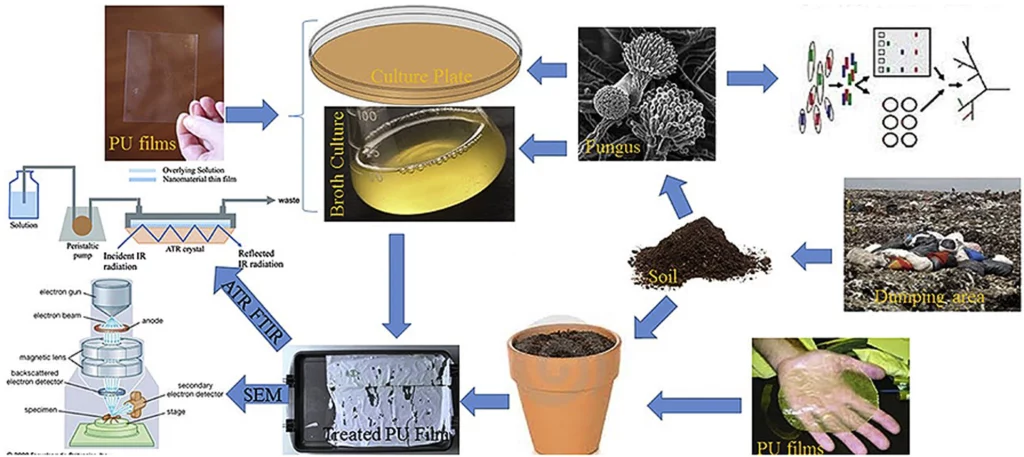
Aspergillus tubingensis, a fungus capable of degrading certain polyurethane plastics. © Khan et al., Environmental Pollution, 2017 / Elsevier.
Programming the end of life into the material
Another approach involves incorporating the degradation mechanism right from the material’s manufacture.
Researchers at the Shenzhen Institute of Advanced Technology have incorporated Bacillus subtilis spores into polycaprolactone. The spores, which have been modified to produce an enzyme capable of breaking down the polymer, remain dormant whilst the material is in use. Following surface erosion and cell activation, the enzyme causes advanced depolymerisation of the material under the conditions tested.
At the University of California, San Diego, another team has incorporated spores into a thermoplastic polyurethane. The material achieved approximately 90 per cent degradation within five months under the composting conditions studied.
These ‘living plastics’ remain at the laboratory demonstration stage. Their stability during use, safety, industrialisation, regulatory status and the fate of all their components still need to be investigated.
Their conceptual significance is nevertheless considerable: rather than relying on an external infrastructure to identify and then process the waste, the material carries part of its end-of-life mechanism within it.
This approach shifts the focus to the design stage. In the future, a plastic could be designed not only for its functional performance, but also for its programmed ability to enter a controlled degradation process.
The condition remains strict: programming an end-of-life does not justify treating littering in the environment as a trivial matter.
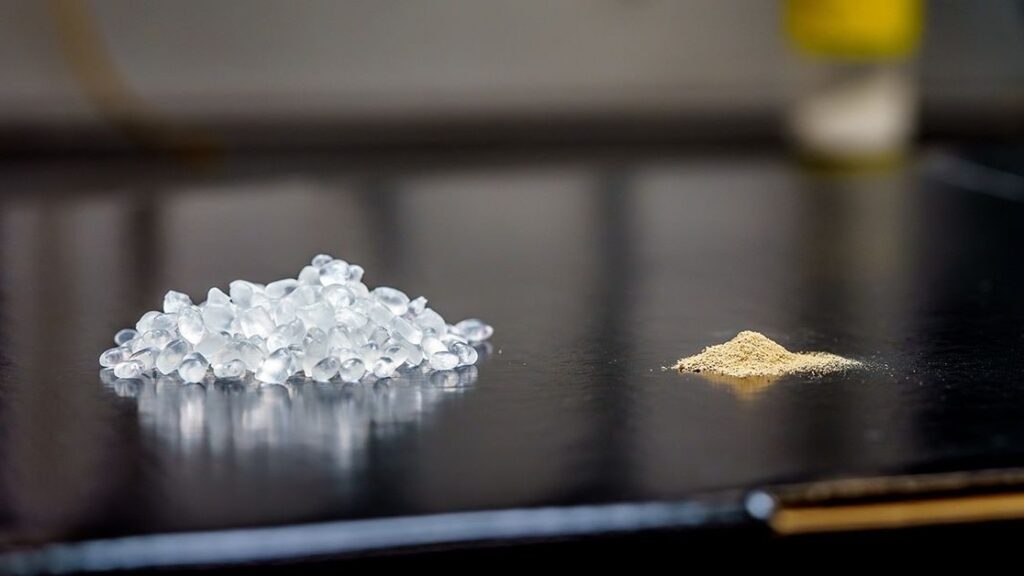
A biodegradable “living plastic” is made by combining thermoplastic polyurethane pellets (left) and Bacillus subtilis spores (right) that have been engineered to survive the high temperatures used to produce the plastic. © David Baillot / UC San Diego Jacobs School of Engineering
Nanoplastics: presence confirmed, risk still difficult to assess
Microplastics measure less than five millimetres. Nanoplastics are on an even smaller scale, generally less than one micrometre depending on the definitions used.
Their presence has been documented in water, air, food and various human tissues. However, this presence alone is not sufficient to quantify a specific clinical risk.
The World Health Organisation highlights concerns regarding particles and chemicals present throughout the life cycle of plastic. It also calls for improvements in measurement methods, toxicological data and the assessment of actual exposure levels.
The contamination levels reported in studies are not always comparable: protocols do not necessarily examine the same matrices, the same organs, the same particle sizes or the same polymers.
A high detection rate therefore does not automatically constitute a measure of risk to the consumer. It highlights a need for more robust research, analytical standards and prevention policies.
A bacterium found in kimchi capable of binding nanoplastics
In 2026, researchers at the World Institute of Kimchi studied a specific strain of Leuconostoc mesenteroides, isolated from kimchi.
The bacterium adsorbed up to 87 per cent of polystyrene nanoplastics under certain laboratory conditions, and 57 per cent in an environment more closely simulating the gut. In mice, animals given the strain excreted more than twice as many nanoplastics as the control group, according to the study published in Bioresource Technology.
This result does not prove that consuming kimchi helps eliminate nanoplastics from the human body. The effect depends on a specific strain, dose, animal model and precise experimental conditions.
This research opens up a new avenue of inquiry into the interactions between gut bacteria and plastic particles. It will need to be confirmed in humans before any health-related conclusions can be drawn.
The editorial significance of this case lies in its caution: living organisms can interact with plastic particles in a measurable way, but how this translates to human use remains uncertain.
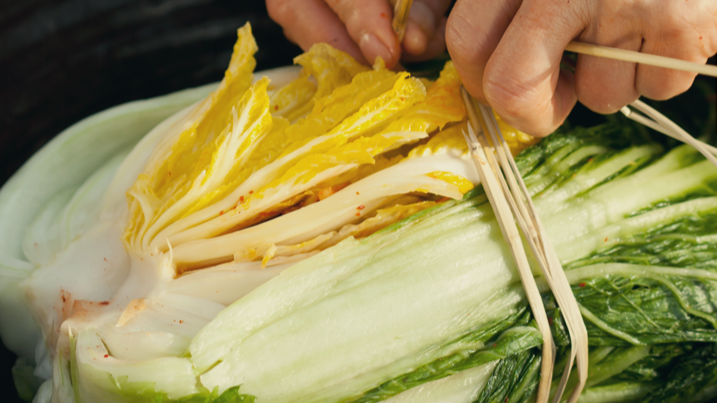
Leuconostoc mesenteroides, a bacterium isolated from kimchi, is being studied for its ability to bind polystyrene nanoplastics under experimental conditions. © Kimchikan Museum
Textiles: a hidden source of plastic pollution
Plastic does not only come in the form of bottles, cling film and packaging. Polyester, nylon and acrylic make up a significant proportion of the fibres used in clothing.
Synthetic textiles release microfibres during their manufacture, use, drying and washing. The UNEP estimates that laundry discharges around half a million tonnes of plastic microfibres into the ocean every year.
Some of this is captured by sewage treatment works. The rest ends up in rivers, coastal waters or sewage sludge used on certain types of soil.
Textile pollution also has a geographical and social dimension.
In Accra, Ghana, the Kantamanto market reportedly receives, according to The Or Foundation, around 15 million second-hand garments per week. The organisation estimates that around 40 per cent of the contents of these bales quickly become waste. These figures come from an organisation working on the ground and should be treated as rough estimates to be verified, but they illustrate a shift in costs: part of the textile overproduction ends up being managed by importing countries, local traders and local authorities.
High-quality second-hand clothing supports a significant economy based on repair, resale and upcycling. The problem arises when declining quality and rising volumes turn a reuse sector into a waste sector.
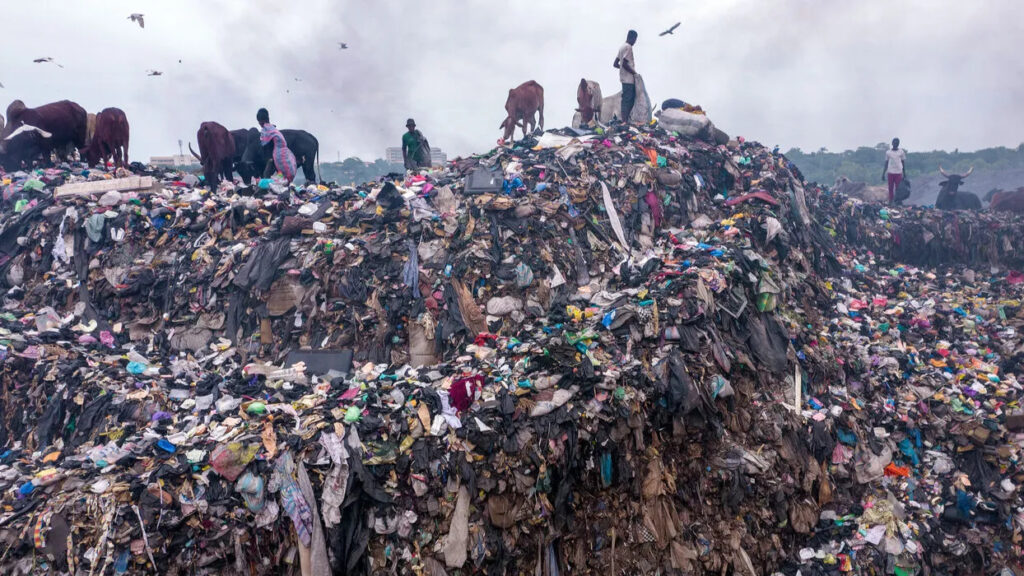
Far from all being recycled, second-hand clothes are sold by the thousands of tonnes in poor countries. In Ghana, those that cannot be sold – because they are unsuitable or too damaged – pile up in rubbish tips, polluting both land and sea. © Le Parisien
Microfibre filters: a requirement yet to be fully implemented
In France, Article 79 of the AGEC Act stipulates that, from 1 January 2025, new washing machines must be fitted with a plastic microfibre filter or an equivalent solution.
On 8 May 2026, however, a written question in the Senate noted that the decree necessary for the effective implementation of the measure had not yet been published.
Filters can reduce some of the emissions. Their effectiveness depends on their design, maintenance and the treatment of the fibres collected. They operate at the end of the process and are no substitute for improving fabric quality, reducing the use of synthetic garments with a very short lifespan, or designing more durable textiles.
At European level, exports of plastic waste to non-OECD countries will be banned from 21 November 2026. Other rules governing waste exports will come into force gradually, notably from 21 May 2027.
This is not an automatic ban on all textile exports, but a tightening of the waste control regime. The political message is clear: exporting material complexity can no longer be used as a management strategy.
Global treaty stalls over production
The fight against plastic pollution pits two visions against each other.
The first prioritises collection, recycling, eco-design and improvements to waste management systems. The second takes the view that these measures will remain insufficient without limiting the production of virgin polymers and certain single-use products.
In August 2025, negotiations held in Geneva to establish a legally binding global treaty on plastic pollution concluded without consensus. A session held on 7 February 2026 was mainly devoted to electing a new chair for the Intergovernmental Negotiating Committee, with no substantive negotiations on the substance of the treaty.
The disagreement centres in particular on the weight to be given to production, chemicals of concern, financing, obligations covering the entire life cycle, and the degree of constraints imposed on states.
This impasse highlights a key limitation: no substitute material, no enzyme and no collection system will be able to absorb ever-increasing production indefinitely.
The issue of plastic therefore goes beyond the material itself. It touches on economic models, infrastructure, extended producer responsibility, trade policies, the chemistry of additives, repair, reuse and the ability of governments to establish common rules.
Living organisms can improve certain links in the chain. They cannot act as arbiters in place of institutions, industry and consumers.
What living organisms change — and what they do not change
Not all biological or bio-based solutions play the same role. They do not come into play at the same stage of the life cycle, nor do they have the same level of industrial maturity.
| Solution | Intended use | Maturity level | Main limitation |
| Mycelium | Spacers, moulded protective fittings, enclosures | Targeted marketing | Throughput, cost, standardisation, actual end of life |
| PHA | Replacement of certain plastics | Emerging industrialisation | Cost, volumes, availability of waste streams, biodegradation conditions |
| Bioresins | Flexible coverings, coated textiles, alternative leather | Industrial roll-out to be confirmed depending on usage | Compatibility with the finished multilayer product |
| Enzymatic recycling of PET | Coloured PET, trays, polyester textiles | Scaling up to industrial scale | PET only; collection and preparation required |
| Degrading fungi | Speciality polyurethanes | Laboratory / controlled reactors | Speed, control, residues, industrial costs |
| Living plastics | Materials designed for specific end-of-life applications | Laboratory demonstrator | Safety, stability, regulation, industrialisation |
| Bacteria and nanoplastics | Biological interaction with particles | Preclinical | No conclusions regarding human health |
This framework helps to avoid two pitfalls. The first would be to directly compare a solution already on the market with a laboratory result. The second would be to treat biodegradation as a general property, when in fact it always depends on the specific polymer, the environment, the contact time and the recycling stream.
The issue is therefore not to ask which technology will replace plastic. It is to determine which technology is suitable for which application, at which stage of the life cycle, and under what conditions regarding collection, cost, safety and liability.
Living organisms do not exempt us from the need to produce less
Mycelium can replace certain protective foams. Bacteria produce PHAs from organic waste. Enzymes can depolymerise PET. Fungi break down certain polyurethanes. Spores incorporated into materials could one day be used to programme certain end-of-life processes. Gut bacteria may interact with nanoplastic particles, although this is still at an experimental stage.
These technologies are neither at the same stage of maturity nor at the same point in the life cycle.
Mycelium-based packaging is already on the market, but still faces challenges regarding costs, production rates and the organisation of its end-of-life management. PHAs are entering a phase of industrialisation that is still limited in scope. Enzymatic recycling of PET is preparing for upscaling. Mycoremediation, living plastics and the intestinal adsorption of nanoplastics remain largely experimental.
The correct approach is to eliminate unnecessary uses, promote reuse where logistics permit, simplify products to make them easier to repair and recycle, substitute fossil-based materials where an alternative has a credible end-of-life, mechanically recycling clean, homogeneous waste streams, using enzymatic or biological processes for difficult-to-treat waste, and reserving bioremediation for situations where conventional recovery is no longer possible.
Plastic is not merely waste to be disposed of. It is the result of a system of design, production, consumption and responsibility.
The breakthrough is unlikely to come from an organism capable of ‘eating’ all polymers. It will depend on our ability to link frugality, materials, collection, industry, regulation and biology within a single chain.
Produce less. Use for longer. Recover more. Treat without shifting the pollution elsewhere.
It is on this condition that living organisms can become a serious solution to plastic: not an after-the-fact fix, but a carefully managed link in an economy finally designed to reclaim what it produces.