

Keeping data for several decades still requires regular migration to new storage media. As those media age, each migration consumes hardware, computing resources and energy. Glass storage aims to extend the intervals between migrations by encoding information in a chemically and thermally stable material.
Once written, the data need no power to remain stored in the glass. Writing within the material also allows hundreds of layers to be stacked.
In 2026, a study published in Nature showed that a glass plate measuring 12 centimetres square and 2 millimetres thick could hold 4.84 terabytes across 301 layers. A second method using borosilicate glass reached 2.02 terabytes across 258 layers, with accelerated-ageing tests projecting stability beyond 10,000 years at room temperature.
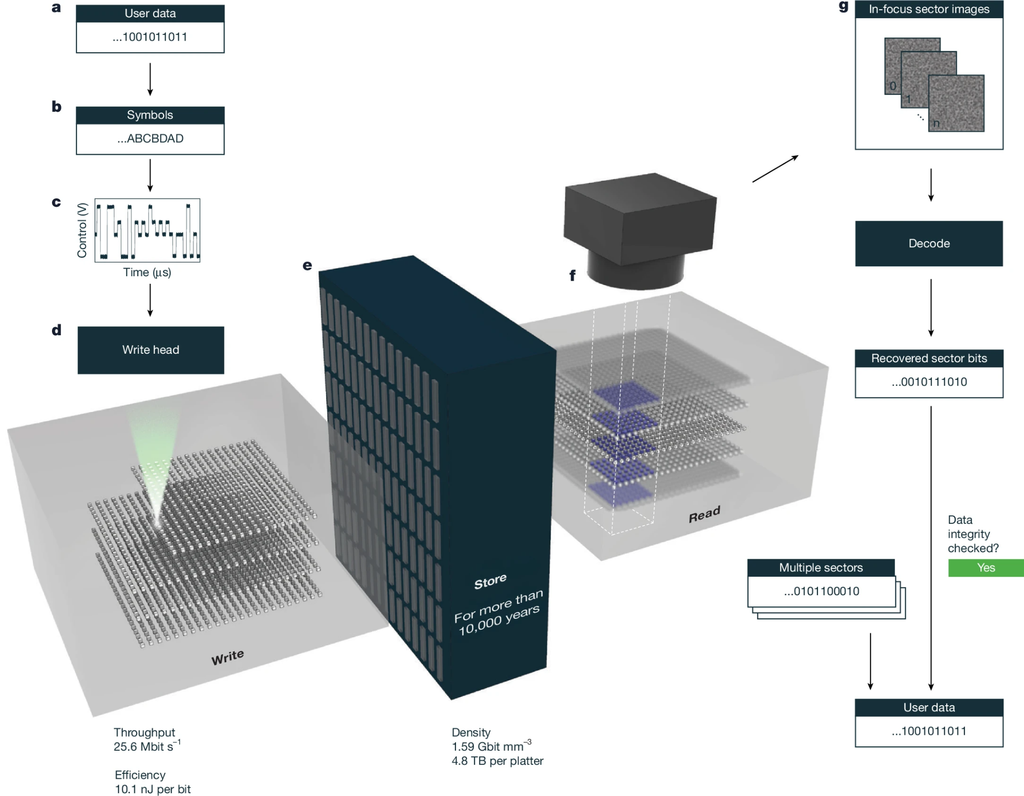
The Silica system writes data layer by layer through the depth of the glass, then reads them using automated microscopy before decoding. © Nature, 2026
These results build on several decades of research into laser writing inside transparent materials. Harvard demonstrated three-dimensional storage as early as 1996. Southampton later developed 5D optical memory. SPhotonix is turning that research into writing and reading equipment. Cerabyte encodes data in a ceramic nanolayer deposited on glass, a technology now being evaluated by CERN.
Writing more data into the material
Harvard demonstrates three-dimensional writing
In 1996, Eric Mazur‘s team at Harvard published in Optics Letters a method for three-dimensional optical storage in transparent materials.
Laser pulses are focused inside the material, locally altering its refractive index within sub-micrometre regions. The researchers write and read binary information across multiple stacked planes, with structural modifications confined to areas approximately 200 nanometres in diameter.
Southampton develops five-dimensional optical memory
At the University of Southampton, Peter Kazansky‘s team develops data writing in nanostructured quartz.
The encoding combines three spatial coordinates with two optical properties of the nanostructures. The university reports capacities of up to 360 terabytes in its largest crystals, together with resistance to temperatures of up to 1,000°C.
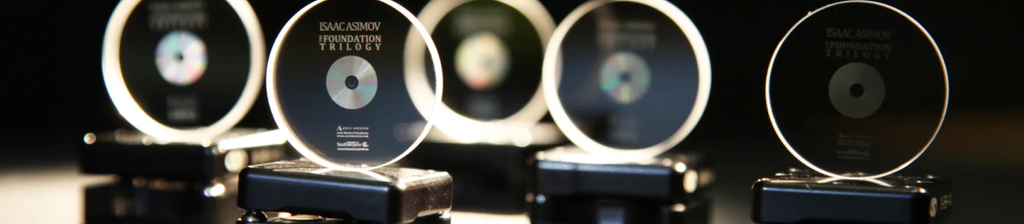
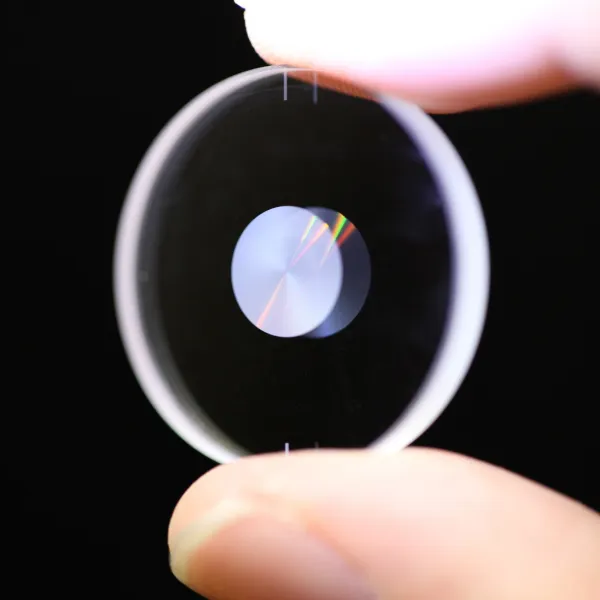
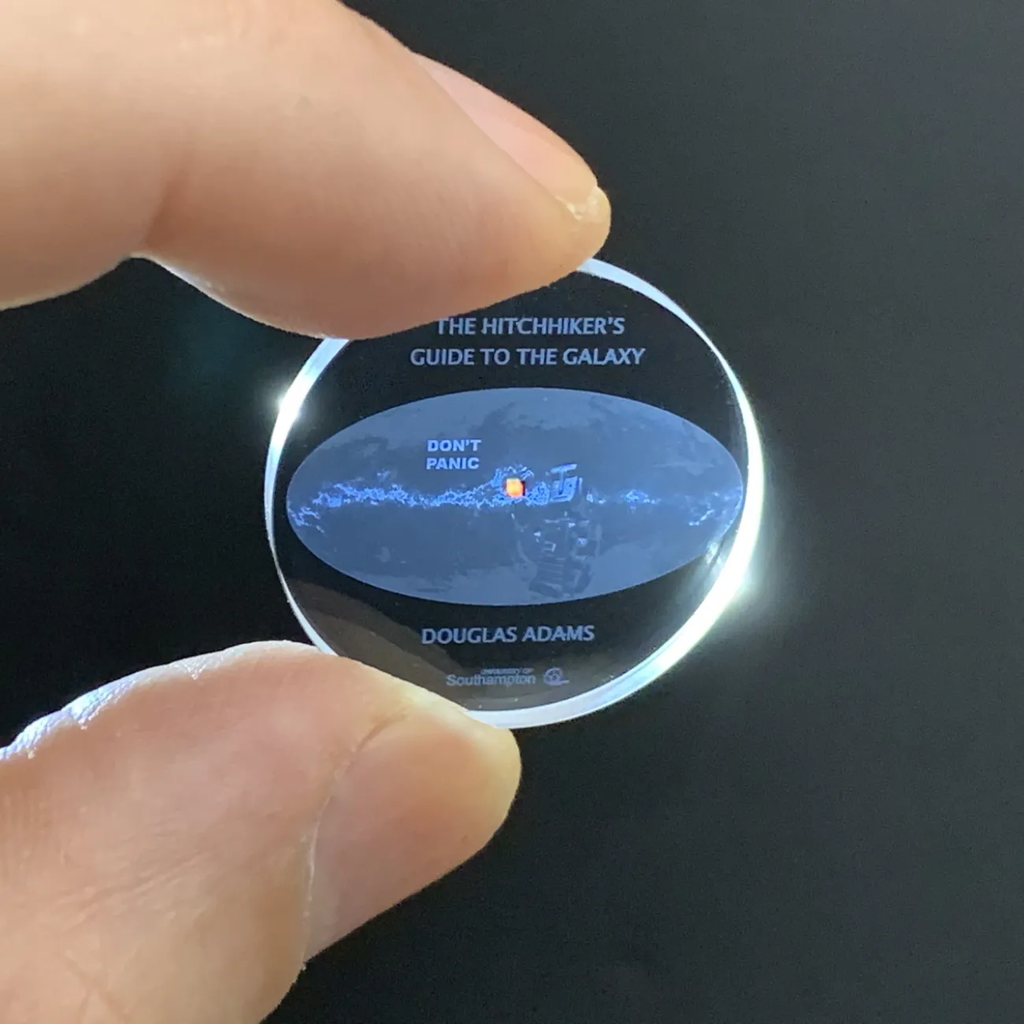
Quartz crystals capable of holding volumes of data that once required entire libraries. © University of Southampton
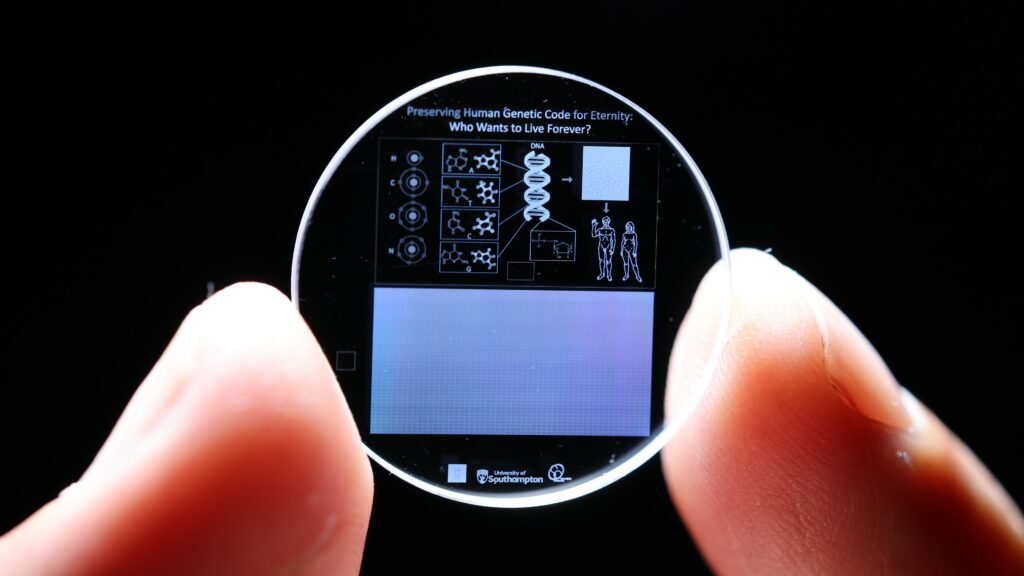
In September 2024, the team encoded the complete human genome in a 5D crystal. A visual key etched onto its surface describes the DNA bases, their molecular structure and their organisation within the double helix and chromosomes.
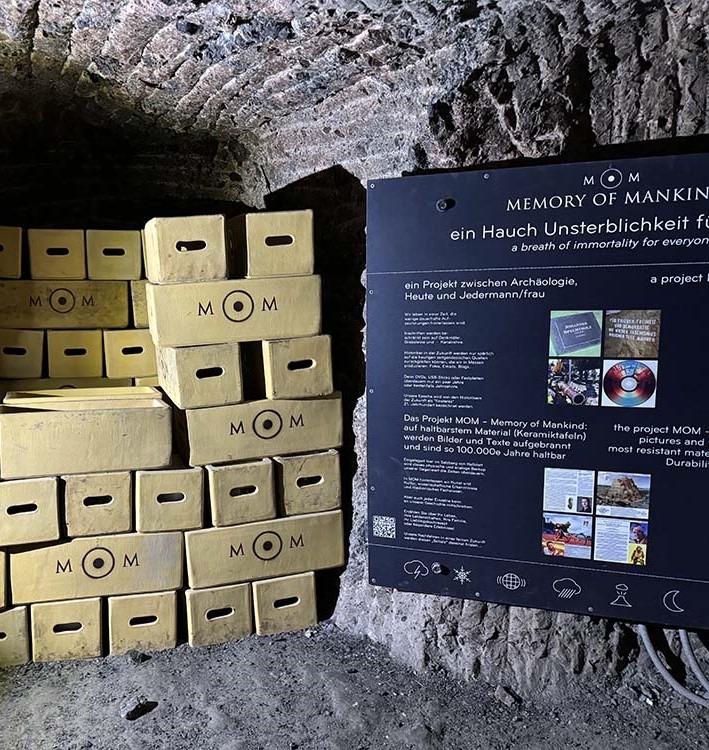
The crystal pictured at the beginning of this article is held by Memory of Mankind, a long-term archive inside the Hallstatt salt mine in Austria.
The Natural History Museum Vienna describes Hallstatt as the world’s oldest salt mine still in operation. Prehistoric remains have been studied there since the nineteenth century, giving the contemporary archive a physical setting that already spans millennia.
Hallstatt salt mine, Memory of Mankind. © University of Southampton
SPhotonix builds the writing and reading tools
Built around Peter Kazansky’s research, SPhotonix is developing the equipment required to take this form of optical memory beyond the laboratory.
The company states that it has reached TRL 5 and reproduced several semi-automated writing and reading systems in the laboratory. Its current work focuses on transfer rates, storage density and integration with existing storage infrastructure.
In November 2025, SPhotonix raised $4.5 million in a pre-seed round led by Creator Fund and XTX Ventures. The funding supports the expansion of its photonics and engineering teams and the industrialisation of its data-storage and optical applications.
SPhotonix’s founder and CTO discuss their 5D optical storage technology and the industrial applications they are targeting beyond the laboratory. © Banana Swift
Extending storage life without powering the medium
Research published in Nature in February 2026 integrates writing, storage, automated reading and decoding in a single experimental system.
In fused silica, writing reaches 25.6 megabits per second per beam. The process has also been transferred to borosilicate glass, which is less costly than fused silica. The 2026 demonstration reaches 18.4 megabits per second with a single beam and 65.9 megabits per second with four beams writing simultaneously, with no thermal damage observed in the material.
Accelerated-ageing tests project stability beyond 10,000 years at room temperature. This figure is an experimental extrapolation, not an observed operating lifetime.
Once written, voxels, the three-dimensional counterparts of pixels, require no power to retain their state. Energy is still required to write the data, move and read the plates, and operate the data-centre equipment.
A longer-lived medium could also reduce the frequency of migrations caused by ageing storage media. The Nature paper identifies these migrations as a recurring cost of current archival storage in time, hardware and energy.
Borosilicate lowers the cost of the medium
The Nature authors describe borosilicate as less expensive than fused silica and capable of simplifying both writing and reading. Each phase voxel is created through a local change in refractive index using a single laser pulse.
SCHOTT: composition shapes writing efficiency
An April 2026 study published in Optica compares 30 commercially available glass compositions under femtosecond laser writing.
Thermal diffusivity is the property most closely associated with voxel quality. Among the materials tested, SCHOTT K10 delivers the highest writing efficiency, while BOROFLOAT® 33 de SCHOTT achieves the highest encoding quality.
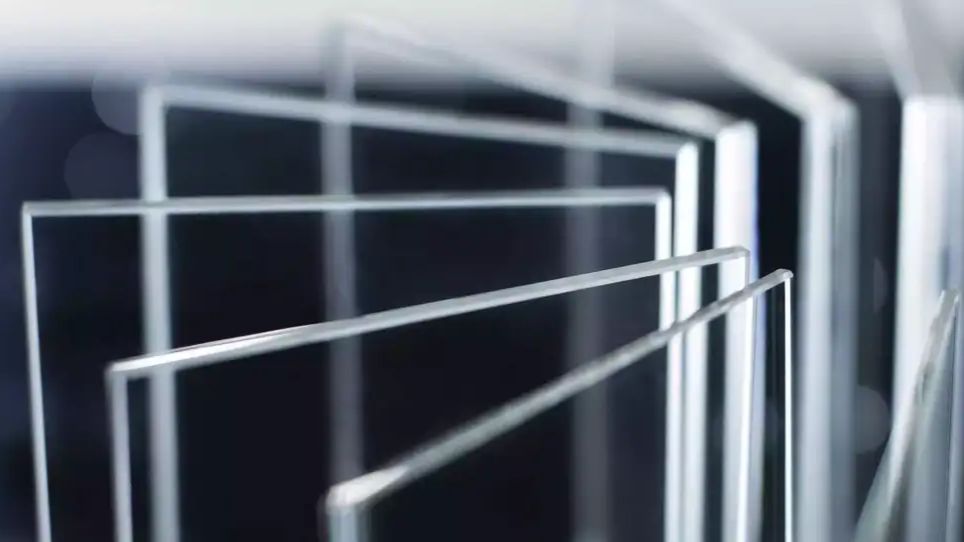
BOROFLOAT® 33 combines optical transparency with thermal and chemical resistance, properties that underpin its use in demanding scientific and technological applications. © SCHOTT
Integrating glass into archival infrastructure
Cerabyte writes to a ceramic layer
Cerabyte writes data into a ceramic layer deposited on ultra-thin glass.
Its technical white paper describes sheets measuring 9 centimetres by 9 centimetres, coated on both sides with a ceramic layer approximately 10 nanometres thick.
An ultrashort-pulse laser combined with a digital micromirror device selectively removes the coating to form binary patterns. Cerabyte claims that up to two million bits can be written in parallel with each laser pulse.
The sheets are grouped into cartridges handled by robotic storage libraries. The medium is designed to be handled within automated archival systems.
The European Commission’s CORDIS project page states that Cerabyte reached TRL 6 with a functional demonstrator launched in Aachen in October 2023.
The project received €2,499,999 in EU funding through the European Innovation Council (EIC). CORDIS also reports the subsequent integration of a pilot laser module, the development of an automated media-handling system and racks capable of holding more than 1,100 storage units each.
From data encoding to laser writing, robotic storage and optical reading, the Ceramic-on-Glass medium is designed to operate as part of an automated archival infrastructure. © Cerabyte
CERN tests the medium under archival conditions
CERN openlab is assessing Cerabyte as a candidate medium for scientific archives, currently stored primarily on magnetic tape.
In 2025, CERN received its first ceramic-on-glass samples. The data were encoded as matrix codes. After initial reading with a digital microscope, GPU optimisation increased decoding performance to approximately 18,000 QR-code detections per second.
The next phase will focus on the reliability of the write-read cycle, the recording of CERN data and the creation of an open, self-describing format. The two organisations have agreed to extend their collaboration by 24 months, subject to the legal framework being finalised.
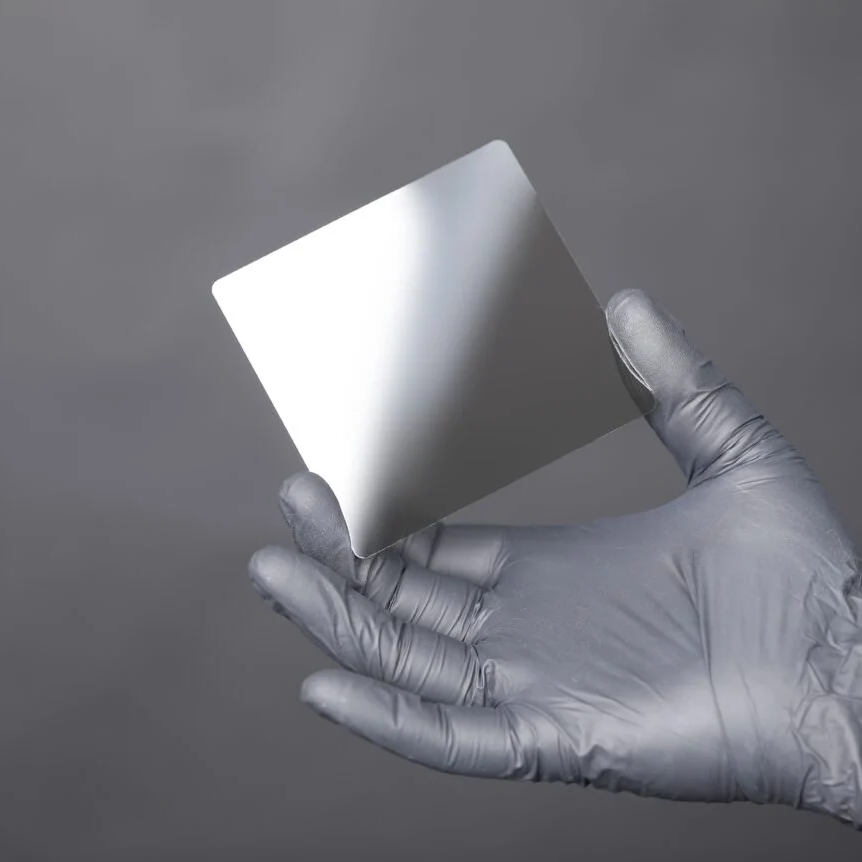
Cerabyte’s Ceramic-on-Glass medium combines a thin ceramic layer with glass to preserve data in a passive, durable medium. © Cerabyte
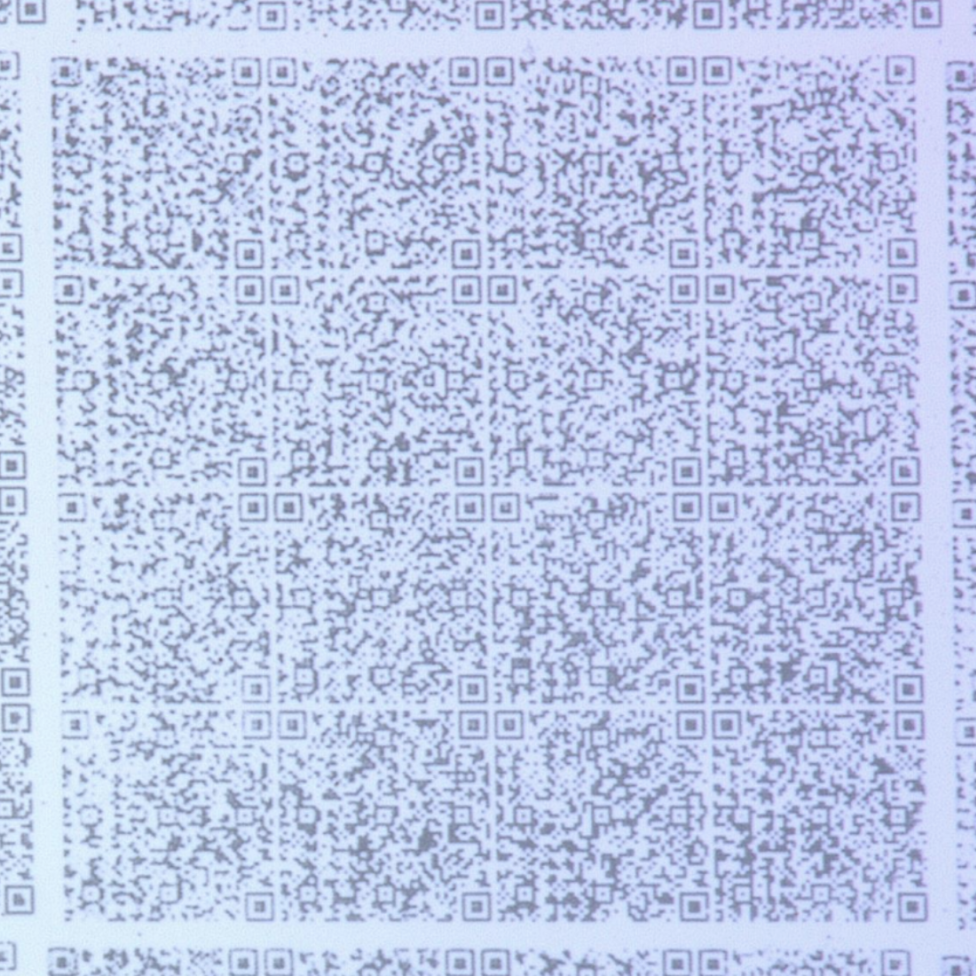
Cerabyte’s Ceramic-on-Glass carriers were examined at 500× magnification before GPU optimisation increased QR-code detection to around 18,000 per second. © CERN
Adoption of a new archival medium also depends on its ability to integrate with existing storage, readout and data-management infrastructure. © CERN
When storage media outlast formats
Data can remain physically intact yet become unusable if the format, software or decoding method disappears.Une donnée peut rester physiquement intacte tout en devenant inutilisable si le format, le logiciel ou la méthode de décodage disparaissent.
Southampton’s human-genome crystal carries a visual key describing the nature of the encoded information. CERN, meanwhile, is developing a self-describing format for Cerabyte so that the organisation of the data can be reconstructed independently of the tools that originally produced it.
At these timescales, the weak point shifts from the material to the conventions required to read it. An archive’s longevity depends as much on preserving the rules needed to interpret its contents as on the lifetime of the storage medium itself.