

When engineering disappears behind the experience
On a yacht, the most sophisticated solutions are often those no one notices.
The quiet of a cabin, the thermal stability of a saloon, air quality, ambient lighting, the absence of vibration and sleep quality are the result of an engineering architecture integrating naval architecture, acoustics, HVAC, automation, electronics, AI and energy management.
These systems occupy physical space, consume power and represent substantial capital investment. Yet their integration determines an experience the owner ultimately takes for granted: effortless ease of use.
Comfort is no longer an amenity; it is a core engineering specification embedded in the vessel’s architecture.
This level of sophistication sits within a substantial industrial market. As of 1 July 2026, 936 yachts over 24 metres were under construction globally, representing an average gross tonnage of 578 GT. Italy alone accounted for 519 units, ahead of Turkey with 106 and the Netherlands with 59 (Northrop & Johnson — Q2 2026 Superyacht Market Report). Northrop & Johnson — Q2 2026 Superyacht Market Report
Onboard technologies: the invisible engineering of comfort
Engineering silence from day one
Noise and vibration illustrate this reality particularly well.
Engines, generators, pumps, ventilation systems and hydraulic equipment generate vibration and structure-borne noise that can travel through the vessel into living spaces. Controlling them begins at the drawing board: equipment positioning, foundation design, acoustic insulation, structural decoupling, interface treatment and noise attenuation.
Silence is also subject to precise technical standards.
RINA, the international classification society, maintains dedicated comfort notation for yachts. Its approach combines numerical modelling, prediction and onboard measurement to address noise and vibration from the design stage.
For its Comfort Class, RINA specifies noise thresholds of 40 to 50 dB(A) at anchor and 50 to 60 dB(A) underway, alongside vibration levels of 1 to 3 mm/s RMS at anchor and 1 to 4 mm/s RMS underway. These thresholds are associated with its COMF-NOISE et COMF-VIB requirements.
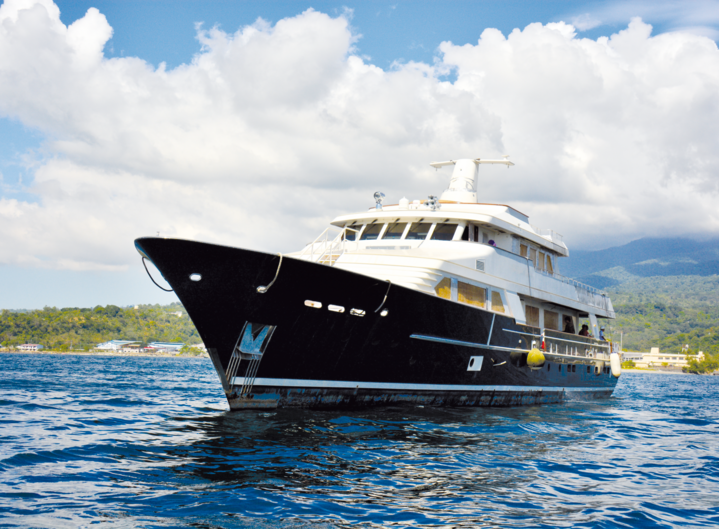
Getzner Sylomer®: a vibration-isolation solution decoupling the inner hull from the outer hull on M.Y. Excellence © Getzner
Acoustic comfort thus becomes a core design specification.
Structural vibration isolation adds another layer. Getzner provides a concrete example with M.Y. Excellence, a 40-metre motor yacht built by Feadship in 1986 and refitted in 2013.
To suppress vibration and secondary airborne noise, the company lined approximately 60 m² of the hull and bulkheads with Sylomer® strips, decoupling the inner accommodation shell from the outer structural hull.
The case is particularly compelling for its longevity. Getzner states that it originally supplied this solution during the yacht’s construction in 1986 and reports that, after nearly three decades, the material’s elastic properties and damping performance remained virtually unchanged. A comfort solution must sustain its performance over decades.
Stabilisation: another dimension of comfort
Roll and wave-induced motion can disrupt sleep, movement on board and the overall perception of stability.
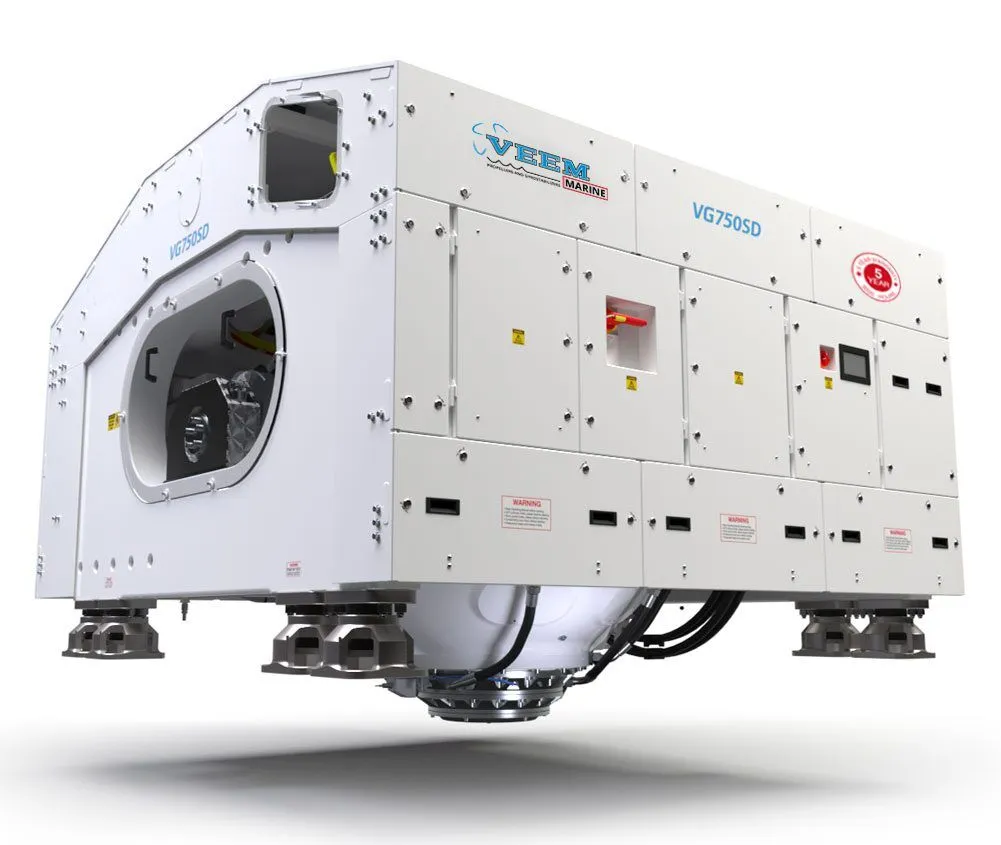
VEEM engineers high-capacity gyrostabilisers tailored for superyachts.
The technology relies on a high-speed flywheel whose precessional torque directly opposes the vessel’s roll.
The result is a direct improvement in onboard comfort: reduced roll and greater perceived stability.
VG750 : a high-capacity gyrostabiliser designed to reduce yacht roll by up to 95% for vessels up to 3,000 tonnes © VEEM Marine
Air quality and indoor climate
Indoor climate management follows the same engineering logic.
On board a superyacht, HVAC (Heating, Ventilation, and Air Conditioning) systems must simultaneously balance temperature, humidity, air turnover, filtration, airflow distribution and acoustic dampening — all while fitting into strictly constrained machinery spaces.
Heinen & Hopman develops HVAC architectures specifically for luxury marine applications, incorporating specialised acoustic insulation, sound-absorption baffles, silencers, airflow-velocity management and multi-stage filtration.
The system must perform its function without compromising the quiet of guest suites.
HVAC therefore becomes an invisible pillar of yacht architecture.
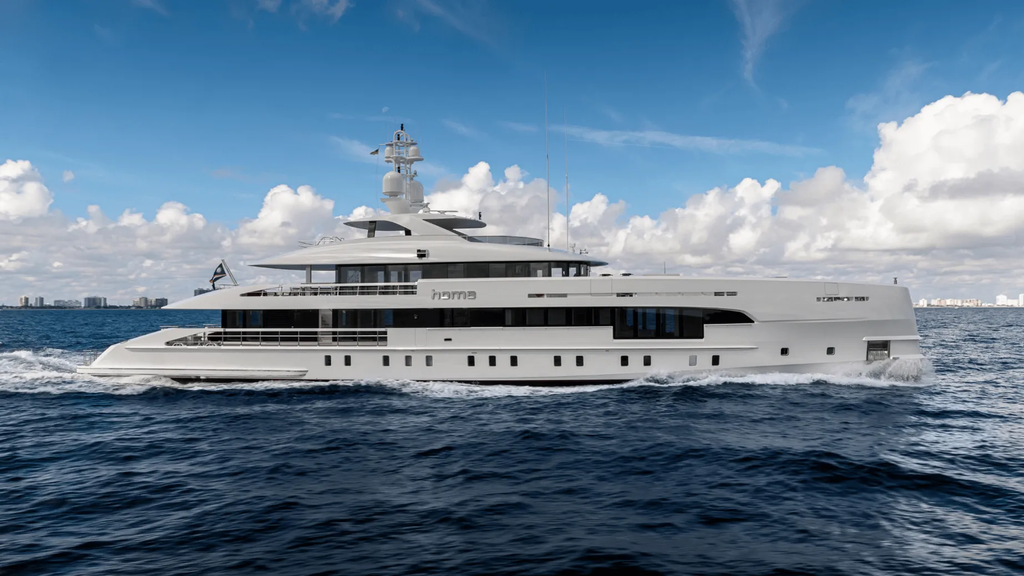
MY Home, built by Heesen Yachts, features an HVAC architecture engineered to complement its hybrid propulsion and silent cruising mode © Heesen Yachts – Heinen & Hopman
Energy management and onboard performance
This technical architecture also carries a substantial energy demand.
Climate control, ventilation, domestic hot water, watermaking and hotel loads place heavy demands on power generation and distribution systems. Their efficiency directly influences the sizing and performance of the power plant.
Heinen & Hopman notes that its chillers fitted with Danfoss Turbocor oil-free compressors can reduce electrical energy consumption by up to 50% compared with conventional compressor units.
While the figure depends on operating conditions, it illustrates a broader shift: energy efficiency is becoming an important component of onboard performance and operational endurance.
Smart yacht
automation and integrated systems
Automation extends this integration across shipboard functions. Lighting, automated blinds, climate control, AV/IT, security networks, energy monitoring and auxiliary systems can be unified within a common control architecture.
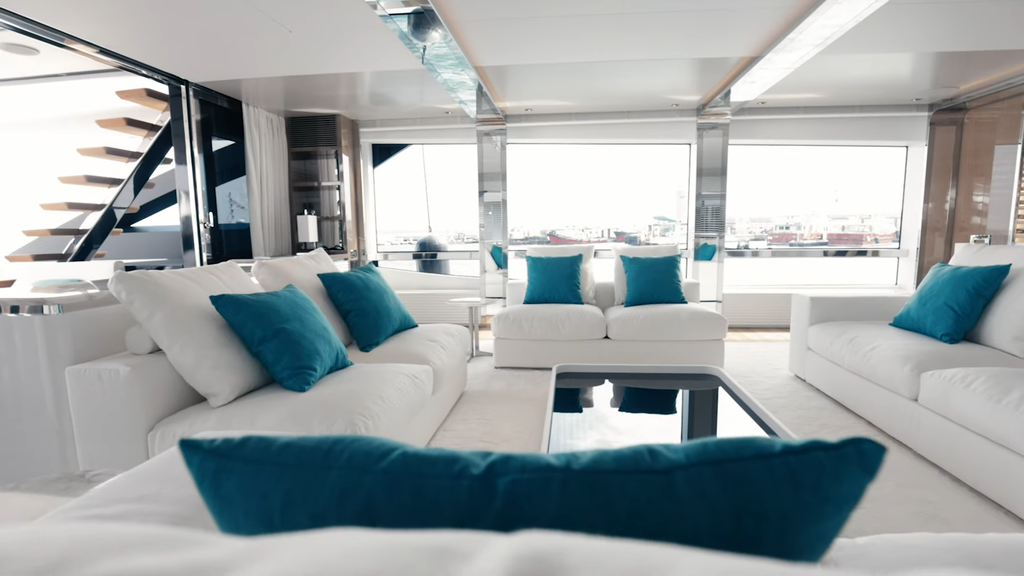
Crestron Marine Teaser © Crestron
Crestron Marine exemplifies this digital convergence. Designed for high-end marine environments, the platform centralises audio-visual systems, lighting scenes, window treatments, climate control and shipboard monitoring. On board MY Gioia, Crestron serves as a digital backbone, bringing together control, monitoring, guest entertainment and key operational metrics.
The value lies not in the proliferation of features, but in their orchestration. Onboard hardware can also transmit telemetry for condition monitoring and predictive maintenance.
Digital systems increasingly act as a coordination layer for the physical vessel, moving the connected yacht towards a Smart Yacht in which systems interact around real-time operating conditions.
AI and onboard intelligence
Artificial intelligence adds a predictive layer by using data generated across this infrastructure to identify operating patterns, anticipate requirements and optimise equipment loads.
D.gree, developed by SailADV, reflects this evolution. Its edge platform aggregates data from disparate onboard systems to create an intelligence layer capable of supporting predictive maintenance, energy optimisation and automated system control.
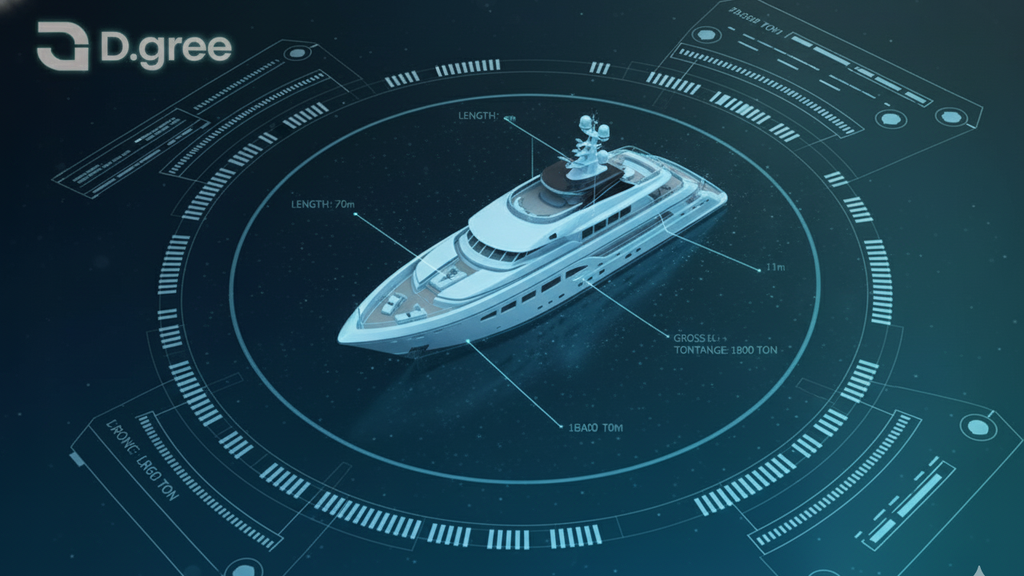
The company positions the technology as a move towards onboard physical intelligence, in which AI interprets the yacht’s immediate operational context.
The objective is not simply to add AI to a vessel, but to create a digital environment capable of interpreting real-time conditions.
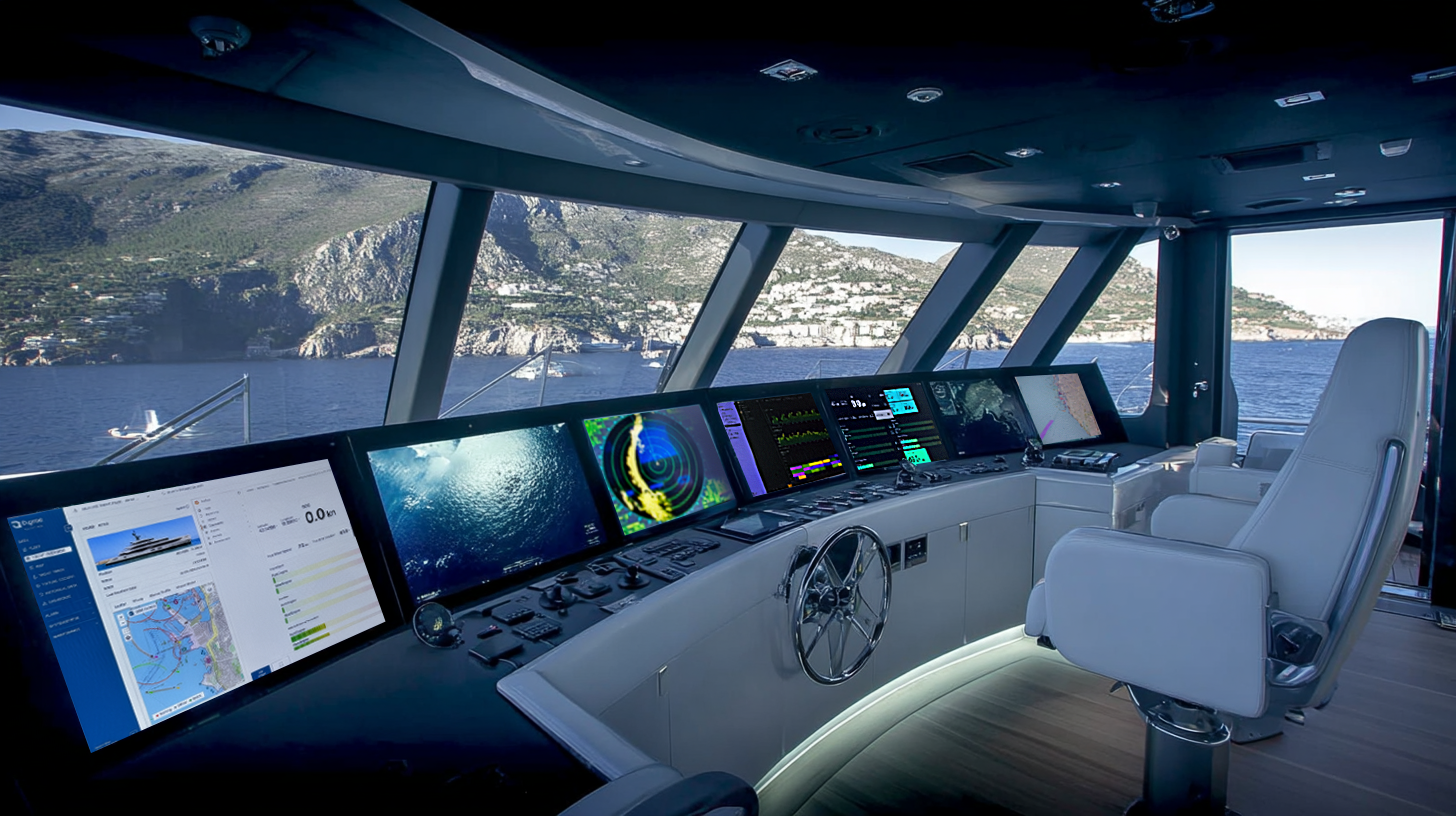
Data integrity, network architecture and system reliability therefore become critical.
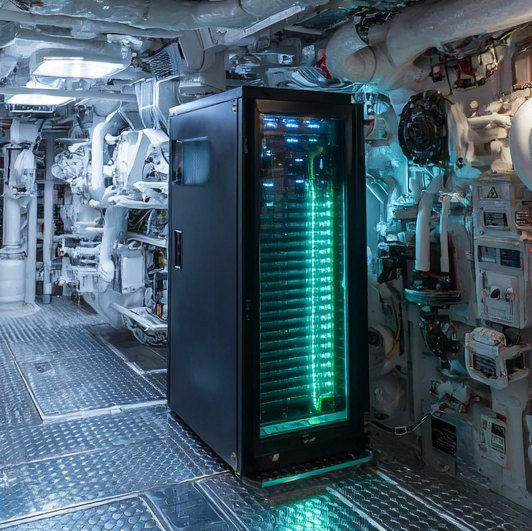
D.gree ONE Compact Edge Node et D.gree PRO Large – Rack: two form factors for onboard AI © D.gree
Distributed processing embedded across the vessel gives this intelligence a physical dimension, allowing systems to respond to changing operating conditions.
The objective is to make underlying technical complexity largely invisible to the user.
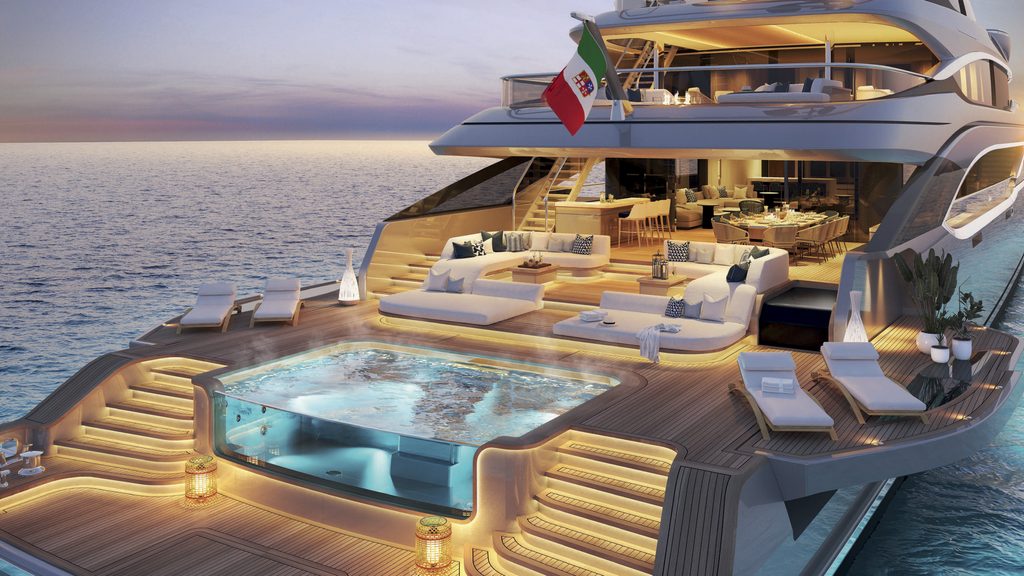
Benetti FB287: AI at the core of the yacht’s digital architecture © Benetti – D.gree
Comfort as an integrated system
Thermal control, lighting, acoustics, vibration damping, air quality, humidity and water purity collectively define the living environment. Their interaction must be considered in naval architecture from the earliest stages of the project. Every solution consumes power, occupies volume, requires maintenance and can introduce dependencies on specific suppliers or platforms.
An innovation capable of managing several parameters through a shared infrastructure can therefore deliver greater systemic value than a standalone improvement.
From luxury yachting to the innovation market
Coordination as an industrial advantage
This approach is transforming the yachting value chain. While the shipyard orchestrates the build, final performance depends on a specialised ecosystem of HVAC engineers, acousticians, control-system providers, vibration-isolation specialists, engine manufacturers, sensor developers, digital integrators and power-management specialists.
System choices must be made early enough to be incorporated into the vessel’s primary naval architecture. Technology is no longer an afterthought added to a project; it has to earn its place within an interconnected framework.
Integration itself has become a core industrial capability.
Feadship Project 710 provides a case in point: its design integrates electric propulsion, optimised hydrodynamics, waste-heat recovery, heat pumps and energy storage from the initial naval-architecture stage.
Its hybrid architecture includes substantially increased electrical storage, electric propulsion and heat recovery from generators and chillers.
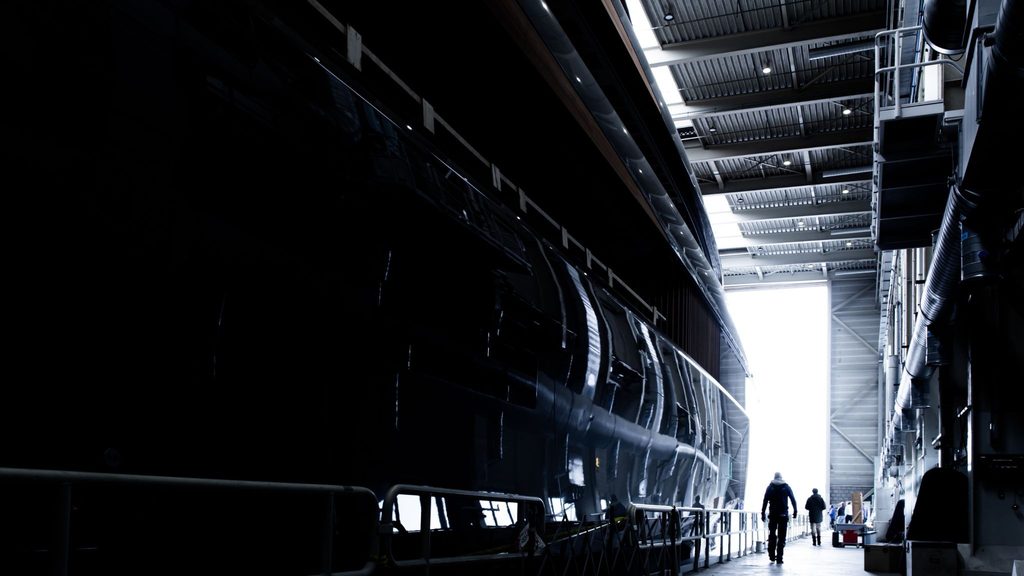
Project 710: system integration and engineering in superyacht construction © Feadship
Luxury as a proving ground
This dynamic reflects a broader phenomenon: the role of luxury as a driver of technological innovation.
In a study published Innovations, economist Dominique Foray analyses the luxury sector as a contributor to the knowledge economy. He highlights the positive knowledge and technology spillovers generated by luxury industries, which can extend beyond their original markets and contribute to wider innovation.
This perspective is consistent with research from the French Academy of technologies, which emphasises the links between high-end craftsmanship, technological innovation and industrial competitiveness.
Luxury can serve as a demanding testbed for technologies subjected to high standards of performance, reliability, bespoke customisation and user experience.
Technology transfer to broader commercial markets, however, is neither automatic nor immediate. It depends on technological maturity, unit cost, robustness and industrial scalability.
Yachting concentrates these requirements within a particularly constrained environment. Every innovation must prove its value where space, power, maintenance access and system integration are tightly managed. It cannot simply function; it must integrate without disturbing the vessel’s operational balance.
This gives yachting a distinctive role as a testing ground: technology is confronted simultaneously with engineering constraints and the realities of daily use. Once sufficiently mature, a solution may find applications well beyond the luxury marine sector.
Yachting as a laboratory for DeepTech
For a DeepTech company, yachting offers a demanding validation environment.
An innovation may be tested simultaneously against mechanical stress, energy constraints, cybersecurity requirements, maintenance protocols, regulatory certification, operational reliability and premium service expectations.
The yacht becomes a rigorous proving ground: technology must perform, endure, remain serviceable and deliver measurable value without intruding on the user experience.
This can provide a compelling real-world proof point, provided the technology has reached sufficient maturity and its business model supports scale.
Applications may subsequently extend into luxury hospitality, high-end residential real estate, private aviation, premium automotive or other sectors where sophisticated infrastructure can support a high level of service.
Technology becomes infrastructure
The implications extend beyond marine applications. The same requirements are reshaping luxury real estate, hospitality, private aviation and premium automotive: indoor environmental quality, energy efficiency, automated control, personalisation and predictive maintenance.
On board a yacht, these requirements converge within a tightly constrained physical environment. They share the same volumes, energy systems, data networks and operational context. As a result, an innovation’s value is no longer determined solely by what it does independently, but by how effectively it integrates with the systems around it.
Value is moving from individual components to integrated systems — and from integrated systems to the architecture that coordinates them.
For the owner, the result is deliberately simple: everything works without demanding attention.
Yachting therefore illustrates a broader transformation in technological luxury. As onboard systems communicate, data becomes actionable and AI increasingly coordinates operations, intelligence is moving away from isolated devices and into the vessel’s core infrastructure.
The real measure of technological sophistication is no longer the number of systems installed on board, but the quality of their integration.