

“No water, no life. No blue, no green.” — Dr. Sylvia Earle , oceanographer
In Cannes, maritime innovation is taking centre stage as a global showcase. Electric propulsion, desalination, onboard intelligence and advanced materials point to a broader question: can technologies developed for yachting find durable applications across the wider ocean economy?
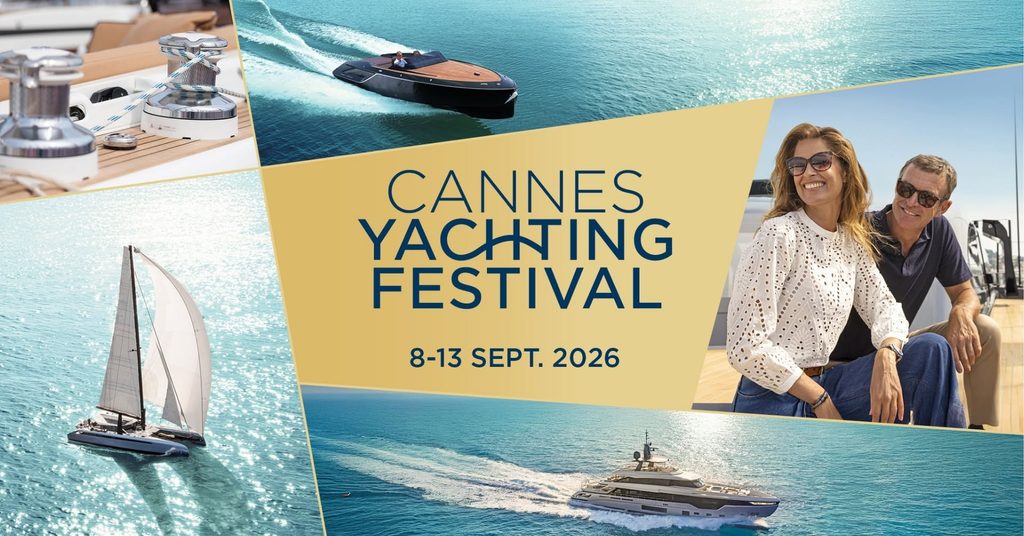
Every year, the Cannes Yachting Festival brings together leading marine players at the Vieux Port and Port Canto. From 8 to 13 September 2026, more than 680 exhibitors and 710 vessels, from day boats to superyachts, are expected across the two sites.
The Innovation Route provides a focused view of this technological landscape, highlighting sustainable and emerging solutions through a dedicated programme, awards and an on-site TV Studio. In 2025, 120 applications produced 42 selected innovations. For 2026, the Innovation Route Awards are organised around four categories: navigation-enhancing equipment, sustainable products, innovative boats and CSR initiatives.
Behind these categories sit some of the most practical questions facing the marine industry: how to store more energy, produce fresh water onboard, improve perception of the marine environment, reduce pressure on ecosystems and extend the useful life of high-value assets.
These questions lead beyond yachting. According to the OECD, the global ocean economy generated approximately €2.4 trillion in value added and supported 102 million full-time jobs in 2020.
Constraints drive innovation
A yacht concentrates a remarkable number of technical requirements within a tightly constrained environment. Limited space, weight, energy availability, noise, vibration, safety and reliability all shape system design.
This makes yachting a demanding environment in which technologies can be developed, integrated and tested under real operating conditions. It is also a useful market for solutions where compactness, performance and reliability matter.
Energy: optimising every kilowatt
Electrification is progressively reshaping vessel energy architectures.
Batteries, electric and hybrid propulsion, solar generation, heat recovery, hydrogeneration and energy-management software must work together to support an increasing number of onboard functions within tightly constrained energy budgets.
BlueNav operates at the intersection of propulsion, energy management and navigation. The company develops electric and hybrid systems for vessels from 7 to 22 metres. In March 2026, it unveiled its Virtual Anchor Packs, designed to maintain a vessel’s position for hours without deploying an anchor by automatically compensating for wind and current.
Propulsion is therefore becoming part of a wider digital and energy architecture, supported onshore by charging, power-supply and energy-storage infrastructure.
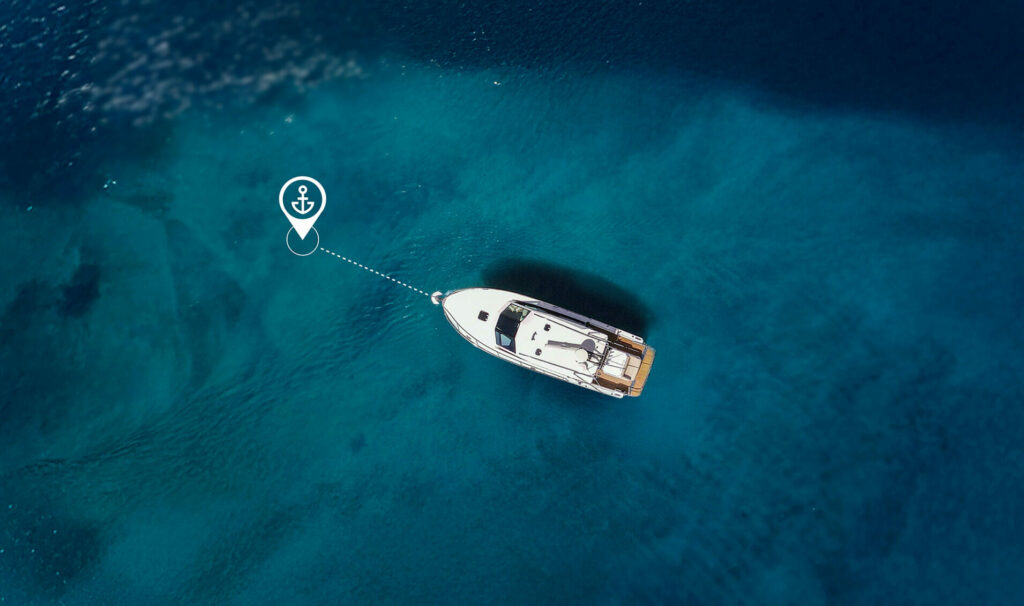
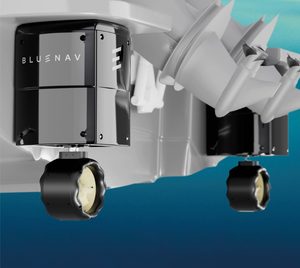
BlueNav virtual anchoring. The system maintains the vessel’s position without anchoring, reducing both noise and seabed disturbance. © BlueNav
The BlueSpin retractable motors combine electric propulsion, manoeuvrability and energy management within a single architecture. Their design reduces drag when the vessel is cruising under conventional propulsion. © BlueNav
This evolution also concerns larger yachts, where energy choices are now increasingly integrated into the vessel’s architecture. Azimut Yachts will be present at the Cannes Yachting Festival 2026 with the new Grande 44M, presented in Cannes for the first time. At 43.6 metres in length, it illustrates this growing integration of the vessel’s functions.
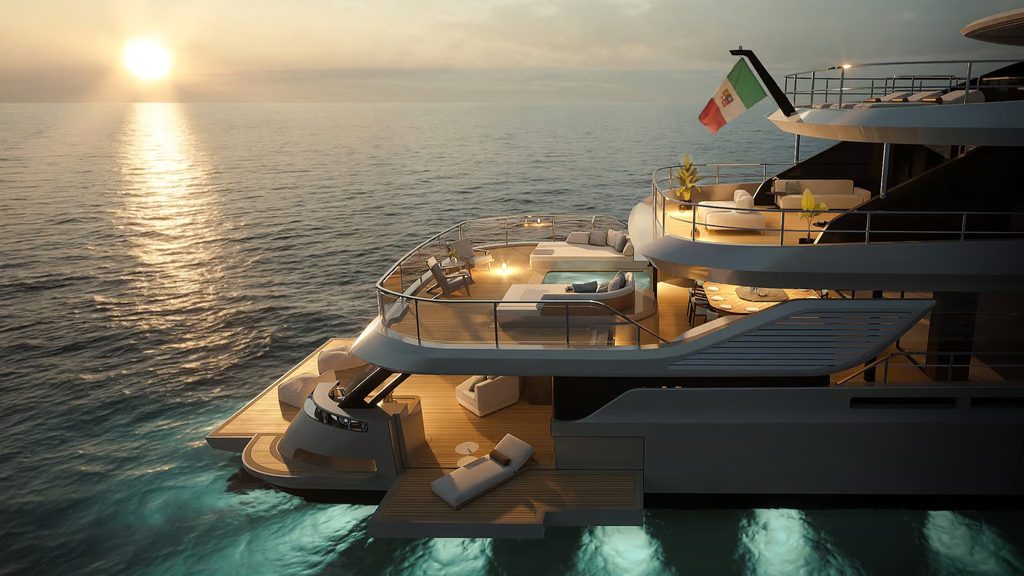
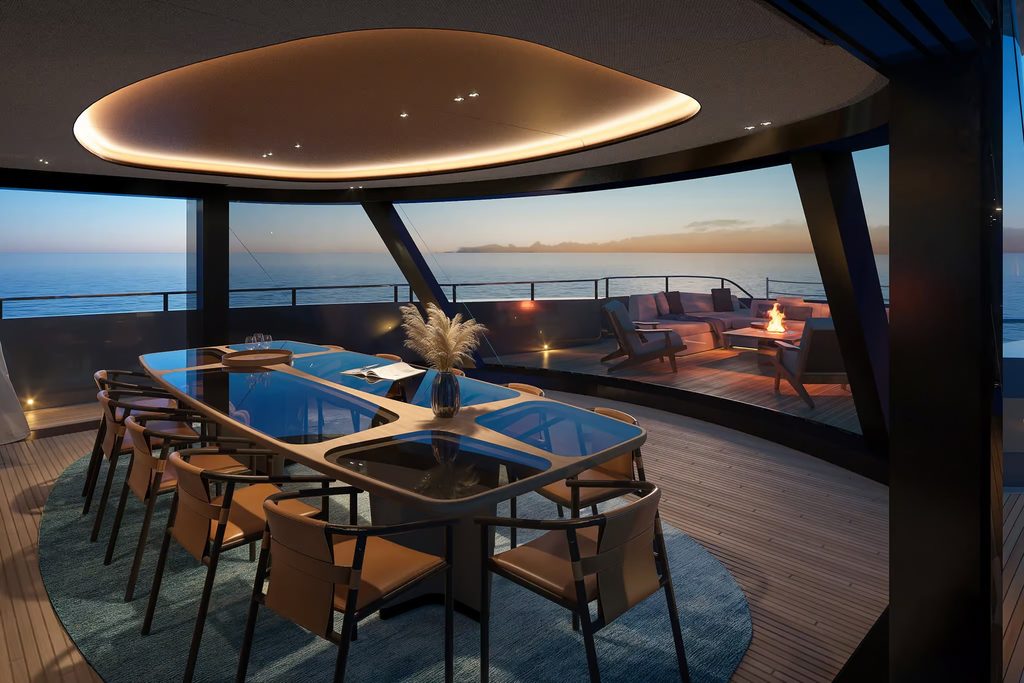
The shipyard will also present the Seadeck 9, engineered around a Volvo Penta hybrid propulsion system and extending the energy strategy developed for the Seadeck range.
© Azimut Yachts
Generating fresh water at sea
Desalination turns seawater into an onboard resource, but its performance depends on a demanding combination of flow rate, energy consumption, footprint, maintenance requirements and long-term reliability.
Dessalator® has spent more than 45 years developing desalination systems for the marine sector. Its current range covers capacities from 30 to 2,000 litres per hour, serving applications from sailing yachts and motor yachts to superyachts and commercial vessels.
The requirements are straightforward but demanding: produce sufficient fresh water, minimise space and energy consumption, and maintain reliable operation over time.
Onboard intelligence: sensing and deciding
Maritime data becomes valuable when it supports decisions.
Navigation, weather, propulsion parameters, battery status and safety systems increasingly feed digital platforms capable of continuous, real-time processing.
SEA.AI develops maritime perception systems combining optical vision, thermal imaging and artificial intelligence to detect and classify objects on the water. Its Watchkeeper system received the 2025 Innovation Route Award in the Navigation Enhancement category, selected from more than 120 entries.
The ability to detect, identify and alert has applications well beyond yachting, although transferring these technologies to other maritime sectors also depends on operating conditions, certification and regulatory requirements.
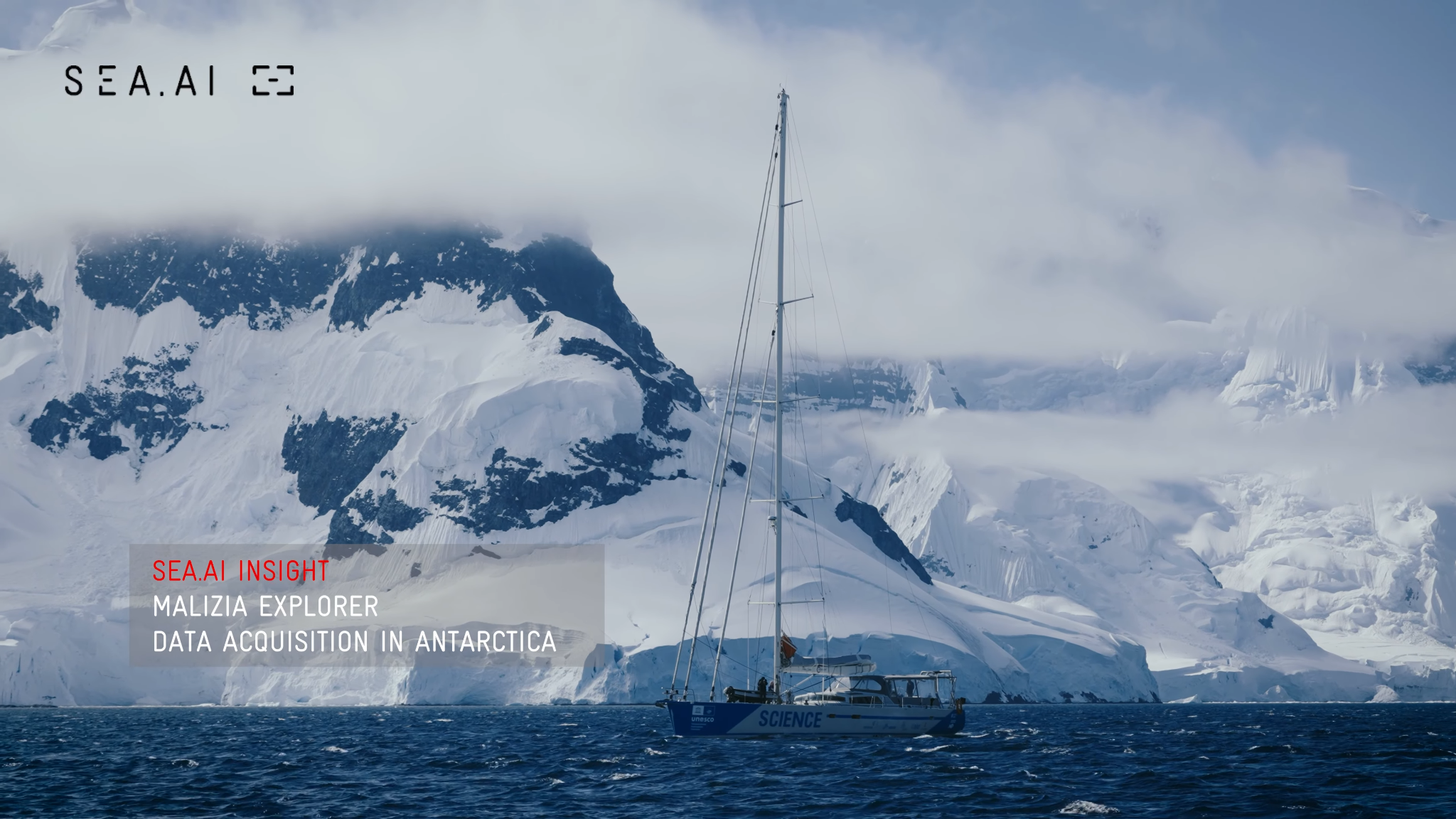
SEA.AI Insight – Malizia Explorer – Data acquisition in Antarctica © SEA.AI
Materials: value measured over time
Weight reduction has long been a driver of innovation in yacht construction.
Composites and advanced materials have delivered gains in performance and efficiency. Their wider lifecycle, however, raises a different set of questions: repairability, maintenance, reuse and end-of-life dismantling.
Refit introduces another dimension: extending the useful life of existing assets while incorporating new technologies and systems.
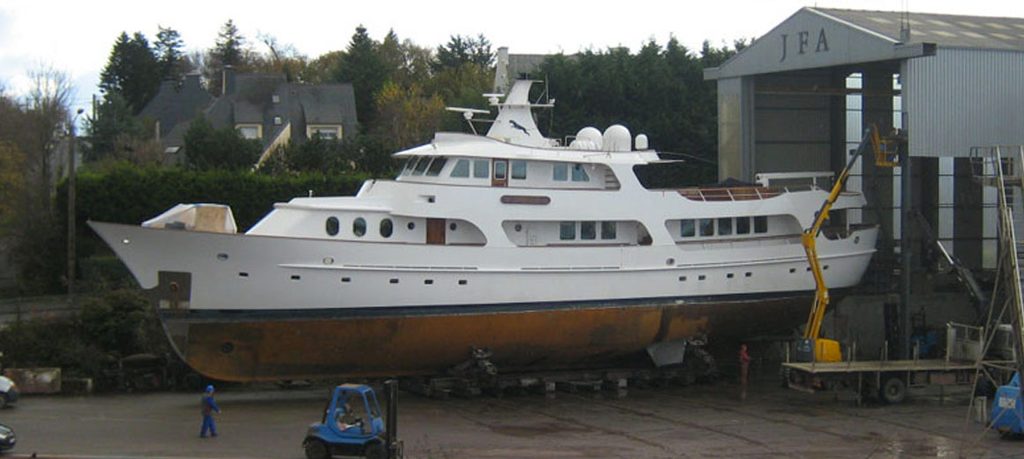
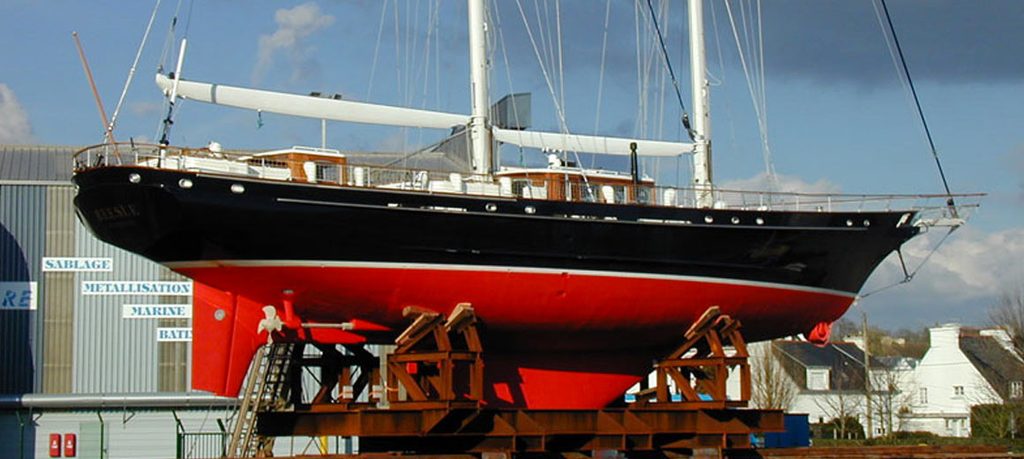
JFA Yachts builds and refits sailing and motor yachts from 18 to 65 metres, working with aluminium, steel and advanced composites, including carbon fibre.
The underlying principle extends well beyond yachting. Many high-value maritime assets are designed to operate for decades, making lifecycle performance increasingly relevant to both technology suppliers and asset owners.
Refit: extending yacht lifespans and integrating emerging technologies © JFA Yachts
Measuring the maritime footprint
Energy efficiency remains a central metric, but it is no longer the only one. Underwater noise, anchoring impacts, water quality, wastewater, solid waste, antifouling and interactions with marine ecosystems are increasingly becoming parameters to monitor and manage.
The shift reflects a broader transformation across the ocean economy. In The Ocean Economy to 2050, the OECD examines the economic, technological, environmental and regulatory changes reshaping ocean-related industries. For technology providers, this expands the field of application from monitoring and prevention to treatment, optimisation and resource efficiency.

The Ocean Economy to 2050 © OECD
Where ships meet infrastructure
Onboard technologies do not operate in isolation.
Electrification depends on shore-power capacity and grid infrastructure. Water treatment and waste management connect vessels to port facilities. Refits require specialised industrial capabilities. And onboard data becomes significantly more valuable when it can be aggregated across fleets, ports or wider maritime networks.
The vessel and its surrounding infrastructure therefore form a connected system. Technology performance depends not only on the onboard solution itself, but also on the infrastructure available to deploy, power, maintain and integrate it.
How the market evaluates innovation
This is what makes the Cannes Yachting Festival’s Innovation Route particularly useful as an indicator of where the market is looking.
The initiative identifies emerging solutions, organises them into defined categories and gives selected technologies visibility among marine-industry stakeholders. For 2026, four categories structure the Innovation Route Awards: navigation enhancement, sustainable products, innovative boats and CSR initiatives.
The judging panel brings together representatives of the Fédération des Industries Nautiques, maritime specialists, Yacht Carbon Offset media and industry stakeholders.
Beyond the awards themselves, the selection process offers a snapshot of the technologies the sector is prepared to recognise, test and bring closer to market.
From Cannes to the wider Blue Economy
The Cannes Yachting Festival does not represent the ocean economy as a whole. It does, however, provide a useful vantage point on a market where technology, demanding operating conditions and high-value assets intersect.
The technologies presented in Cannes address concrete maritime requirements: generating and managing energy, producing fresh water, sensing the environment, reducing environmental impacts and extending asset lifecycles.
Their broader significance will depend on what happens next.
That is where the transition from yachting to the Blue Economy becomes meaningful.
The yacht can be a demanding testbed.
The larger question is whether the technology can become maritime infrastructure.