

Why maritime energy innovation is becoming the new pivot of supply chain performance within Blue Economy 2.0
The financial imperative: from CSR risk to balance-sheet liability
By 2026, the energy transition has moved beyond the realm of communication to become an asset-liability management imperative, at the core of the economic logic shaping Blue Economy 2.0.
With the maritime sector’s full integration into the EU ETS (Emission Trading System), carbon is no longer an externality but a direct operational liability, placing maritime transport decarbonization at the center of financial and strategic decision-making.
For decision-makers, the challenge now lies in transforming this price signal into a lever for sustainable differentiation, resilience, and long-term value creation.
Carbon price trajectories confirm this structural shift:
– expected consolidation between €90 and €100 per tonne in the first half of the year,
– a likely break above the €100/t threshold,
– a projected move toward €150/t, accelerated by nearly two years compared to medium-term forecasts initially set for 2027–2028.
In this complex environment, guidance from expert organizations such as Hy-Plug has become a major competitive advantage. The goal is no longer simply choosing a fuel, but building a decision-making architecture capable of correlating regulatory compliance, European subsidies, and the optimization of long-term financial maneuverability.
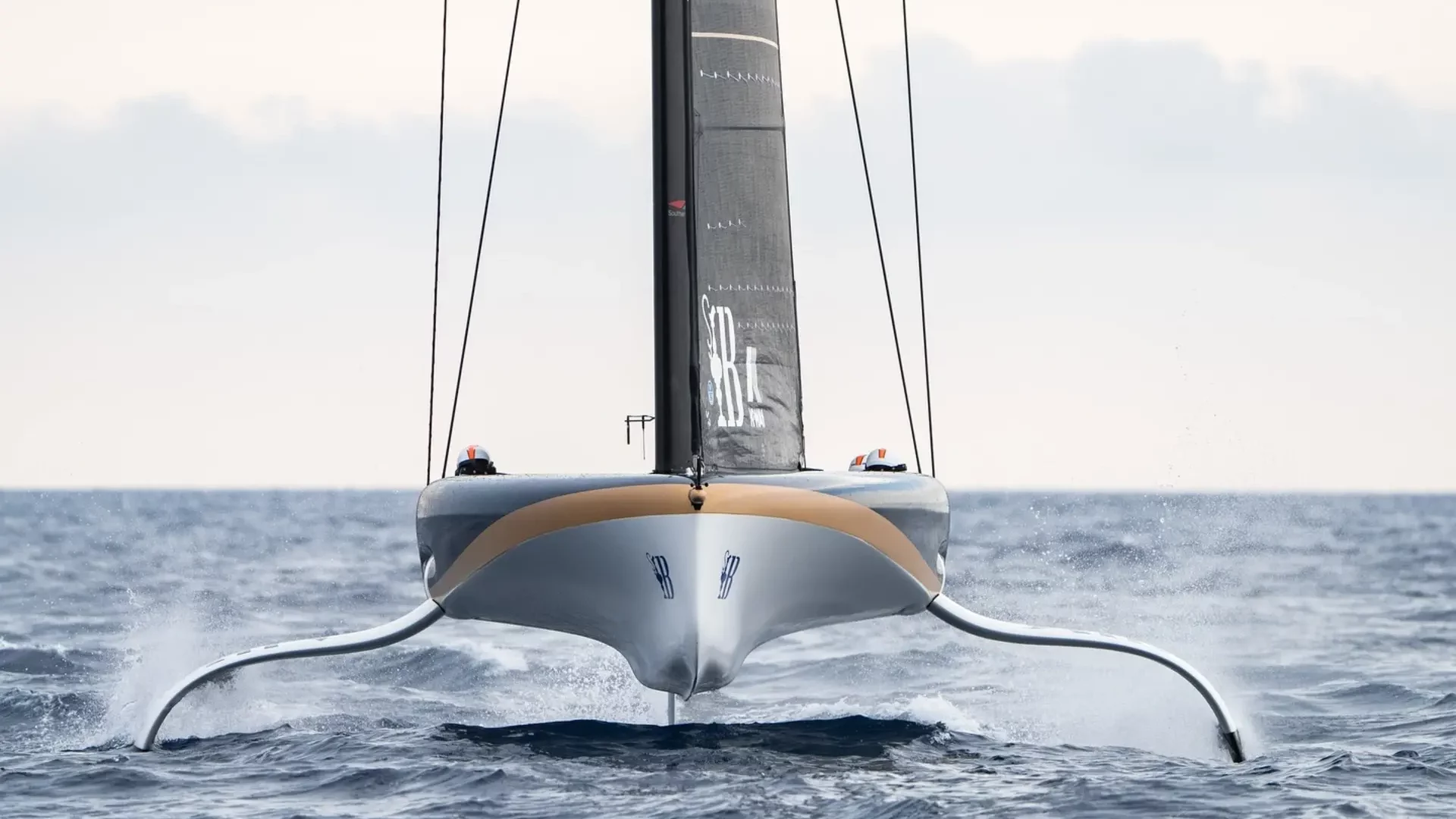
Wind-assisted propulsion technology supporting maritime decarbonation strategies. © K-Challenge
Wind-assisted propulsion: the ultimate energy hedge
Faced with the structural volatility of future e-fuels, whose projected costs remain three to five times higher than current heavy fuel oil, wind is emerging as the only energy asset with zero marginal cost. This shift embodies a structural approach to energy resilience specific to Blue Economy 2.0.
This breakthrough is driven by an unprecedented transfer of technology. High-performance engineering developed in offshore racing, notably through K-Challenge, is now being applied to the merchant fleet. Automated rigid sails are becoming genuine “profitability sensors”, directly impacting fuel consumption and operational margins.
This vision goes beyond mere assistance: disruptive concepts such as those from Farwind Energy, which aim to produce energy (e-hydrogen or e-methanol) directly at sea via autonomous wind-ship energy converters, are paving the way for a new era of energy independence. For a shipowner, investing in wind is akin to taking out a permanent insurance policy against global energy inflation.
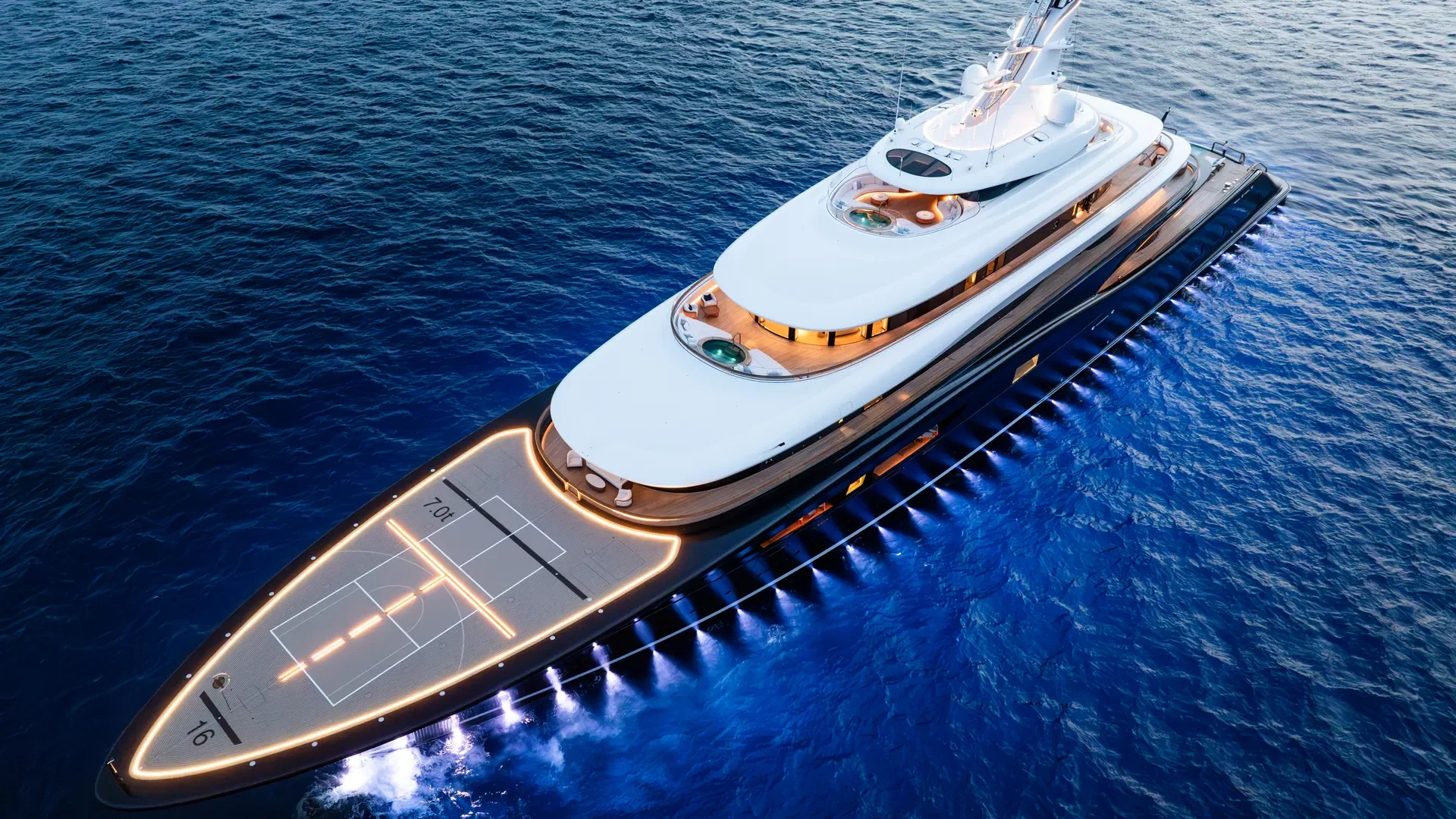
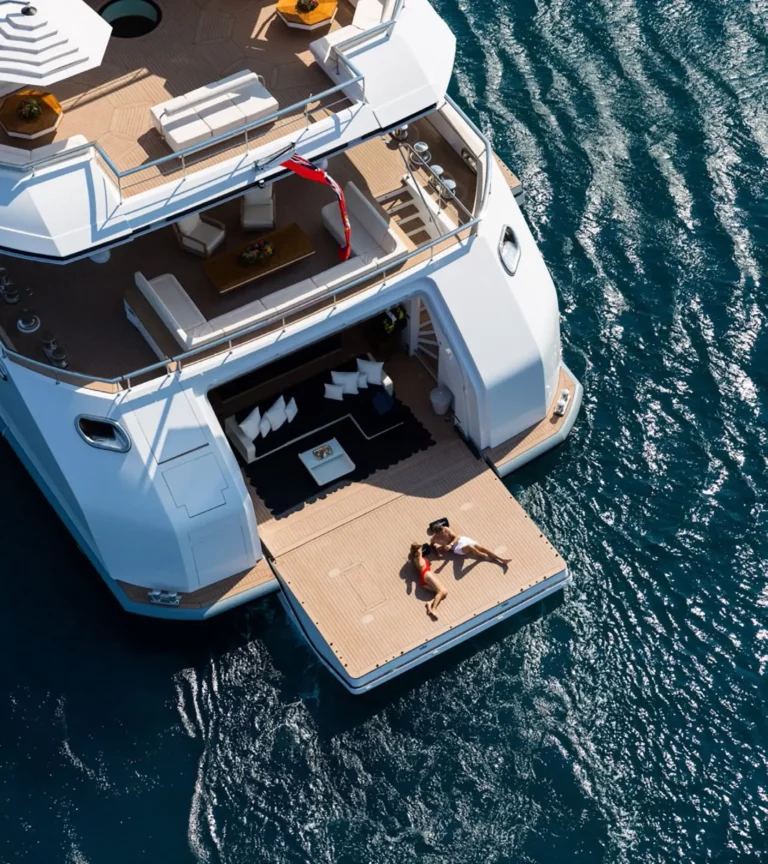
‘Breakthrough’ superyacht illustrating the ambitions of Blue Economy 2.0, where the decarbonization of maritime transport is a concrete lever for innovation. © Feadship
Yachting and high-speed vessels: the scale-up laboratories
The luxury and high-speed transport sectors are acting as catalysts for the technological learning curve, playing a key role in the operational emergence of Blue Economy 2.0. The record-breaking sale of hydrogen-powered superyachts, such as the Aqua project highlighted by H2-Mobile, illustrates the potential of maritime hydrogen as a high-end technological laboratory.
This dynamic confirms that the high-end market is willing to absorb the initial R&D costs associated with liquid hydrogen storage.
However, the proof of massive industrial viability now lies in passenger and light freight transport, where maritime hydrogen and electrification are beginning to demonstrate their economic relevance.
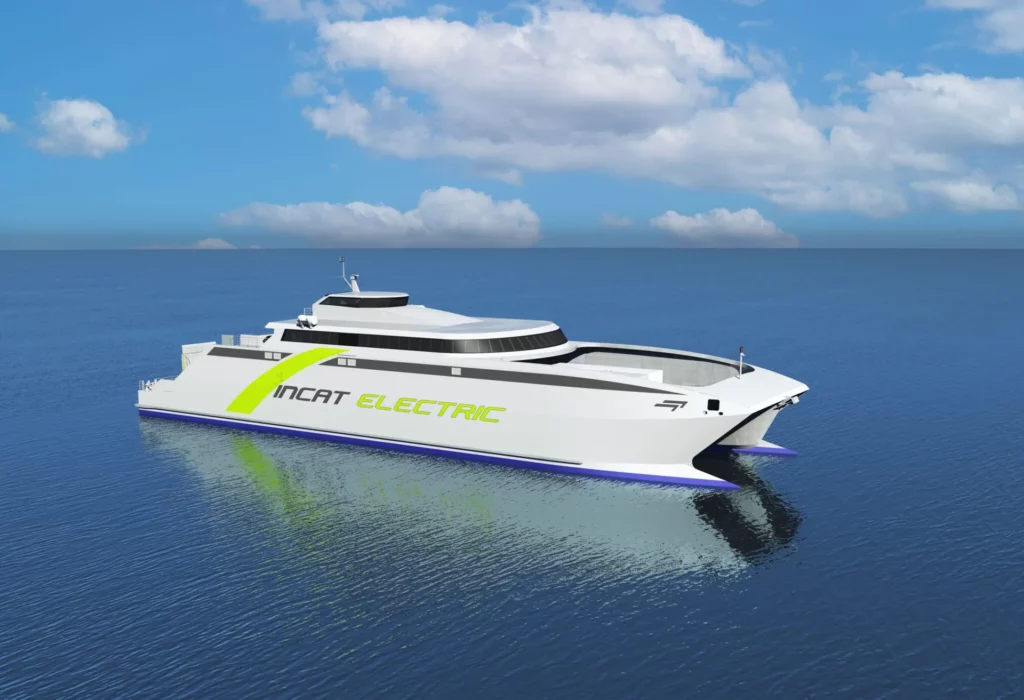
Vessels from giants like Incat, leaders in large-capacity 100% electric ferries, demonstrate that the TCO (Total Cost of Ownership) is already favorable for short and medium-distance routes. Here, electrification offers superior profitability through a drastic reduction in maintenance costs, transforming once-heavy assets into agile profit centers.
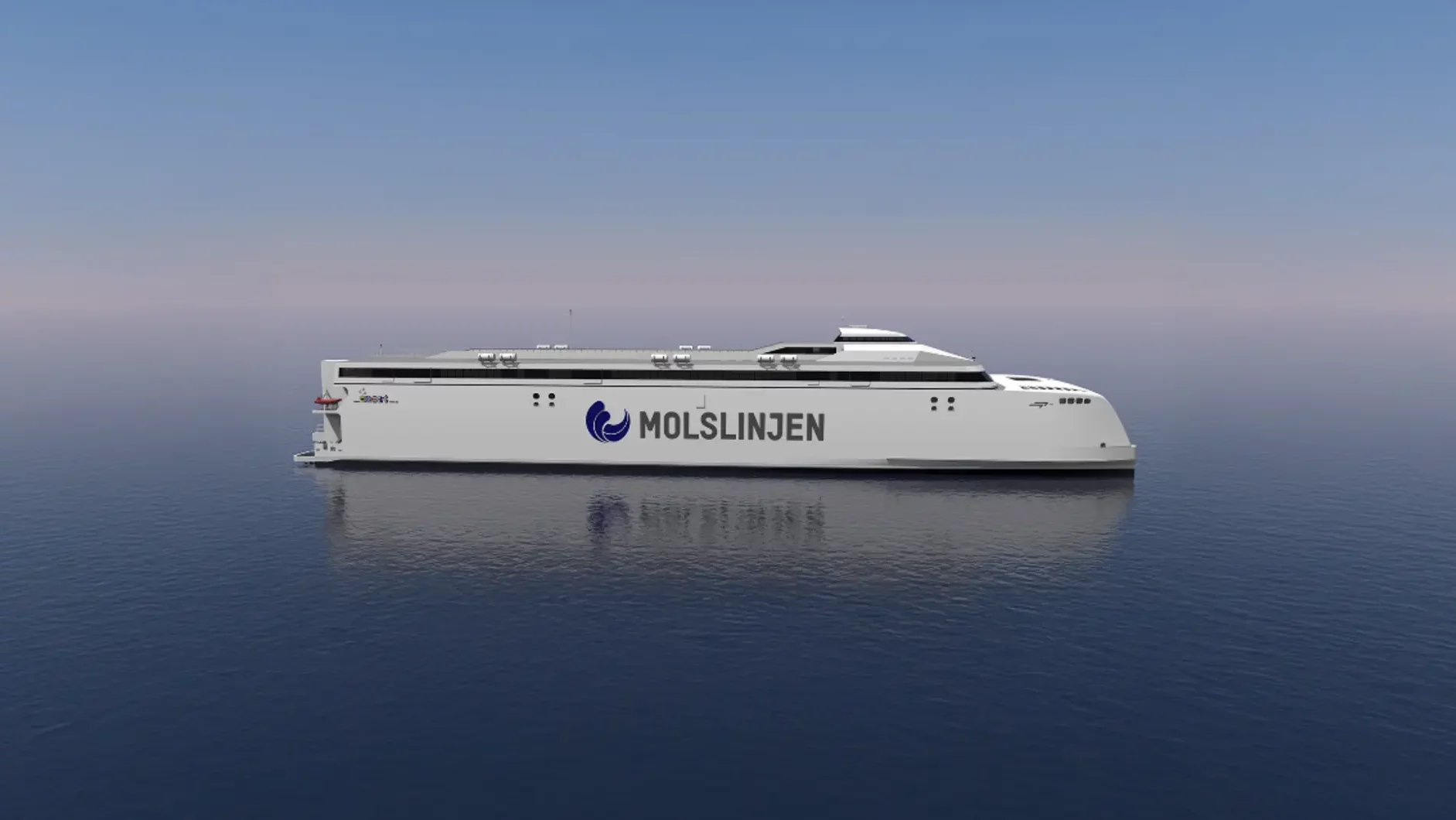
Electric ferry demonstrating large-scale maritime transport decarbonation and energy efficiency. © Incat Group
AI and data: software as a force multiplier
Decarbonization is a hybrid equation, both mechanical and algorithmic, characteristic of the performance models promoted by Blue Economy 2.0. AI-driven dynamic weather routing is no longer limited to safety optimization. It now orchestrates real-time energy consumption to maximize the contribution of intermittent energy sources.
This software layer delivers immediate OPEX gains of 5% to 15%, without heavy structural modifications. The digital twin thus becomes a critical negotiation tool when facing charterers and financiers who are increasingly demanding transparency on Scope 3 emissions and on maritime transport decarbonation.
This systemic reading of Blue Economy 2.0 is in line with Think.Green’s reflections on the role of design and innovation in the evolution of the nautical sector, notably through our analysis dedicated to design and innovation in sustainable yachting.
Executive checklist
✅ Carbon exposure audit : Assess the direct impact of carbon pricing on EBITDA between 2027 and 2030.
✅ Asset hybridization : Integrate wind-assisted propulsion as a de-risking lever against e-fuel volatility.
✅ Logistics security : Identify port hubs investing heavily in electric charging infrastructure and maritime hydrogen bunkering.