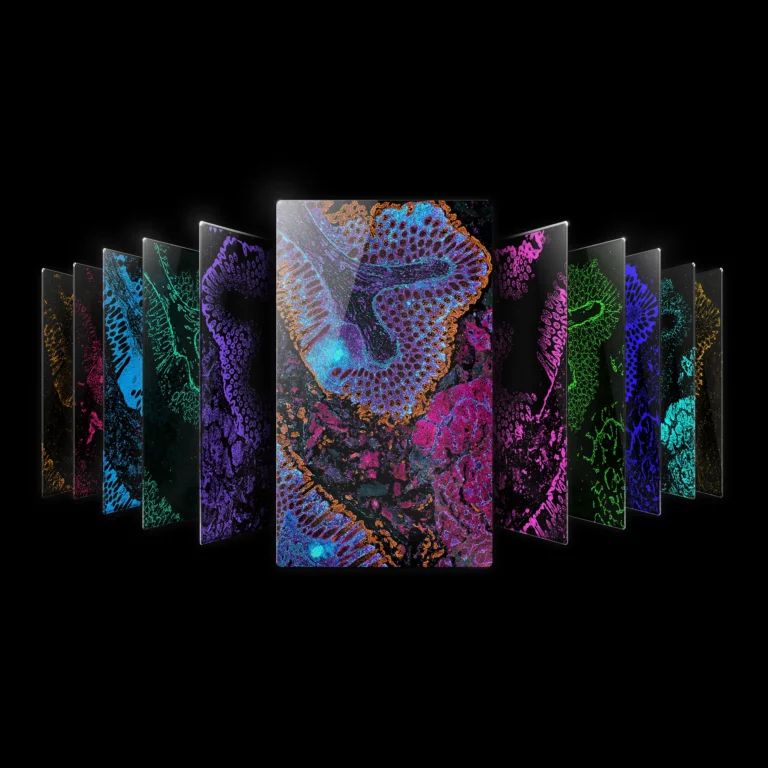



A silicon chip measuring just two millimetres across, implanted beneath the retina. Glasses that project near-infrared images. In July 2026, the PRIMA system received CE marking for a technology designed to restore a measure of central vision in people with geographic atrophy caused by age-related macular degeneration (AMD). Some patients can once again recognise letters and read words using the device.
Gene therapies, light-sensitive molecules, laboratory-grown retinal tissue, electronic implants and neural interfaces are opening up new ways to restore visual function or convey visual information through alternative sensory pathways.
In 2020, an estimated 43 million people worldwide were living with blindness, while 295 million had moderate to severe visual impairment, according to the International Agency for the Prevention of Blindness. The importance of eye health was also recognised in United Nations Resolution A/RES/75/310, adopted in July 2021.
Making retinal cells responsive to light
GenSight Biologics reactivates surviving retinal circuits
Retinitis pigmentosa is a group of inherited disorders that progressively destroy the retina’s photoreceptors. Yet even in some people with profound sight loss, nerve cells capable of transmitting signals to the brain can survive.
In Paris, GenSight Biologics, co-founded by Professors José-Alain Sahel and Botond Roska, is targeting these surviving circuits with GS030, an optogenetic therapy designed to make retinal ganglion cells responsive to light.
The treatment combines a gene therapy injection with specialised glasses that convert images into patterns of light tailored to the modified cells.
GS030 has not yet received marketing authorisation and is not commercially available.
GS030 optogenetic technology. © GenSight Biologics
On 8 October 2026, World Sight Day, results from the PIONEER trial showed that six of the ten participants had achieved a clinically meaningful improvement in light sensitivity. Of the eight who completed behavioural assessments, four performed better in tasks involving the detection, location or handling of objects.
These preliminary findings come from a trial primarily designed to assess safety. Further clinical studies will be needed to confirm them.
In Texas, Nanoscope Therapeutics is developing MOGENRY®, an optogenetic therapy based on a synthetic opsin. Delivered by injection into the eye, it aims to make certain retinal cells responsive to ambient light, regardless of the genetic mutation responsible for the disease.
Results from the RESTORE trial, involving 27 participants, supported regulatory applications submitted in the United States and Japan. In September and October 2026, regulators in both countries accepted the applications for review, with Japan granting priority review.
MOGENRY® remains an investigational treatment pending regulatory decisions.
Kiora Pharmaceuticals develops a molecular light switch
A light-sensitive molecule offers another way to influence the activity of retinal nerve cells.
US biotechnology company Kiora Pharmaceuticals is developing KIO-301, an injectable compound that changes its molecular structure when exposed to light. This change modulates electrical activity in surviving retinal ganglion cells without altering their genetic material.
In six people with advanced retinitis pigmentosa, initial treatment produced measurable responses to light in the visual cortex, with no serious adverse events reported. The findings remain exploratory and do not yet establish clinical efficacy.
Kiora is continuing to investigate the approach in its Phase II ABACUS-2 trial.


Comparison of a healthy retina (top) and one affected by retinitis pigmentosa (bottom), showing the degeneration of photoreceptors while retinal ganglion cells remain preserved. © Kiora Pharmaceuticals
Rebuilding retinal tissue and function
Sumitomo Pharma grows human retinal tissue in the laboratory
In Japan, Sumitomo Pharma is developing DSP-3077, a cell therapy involving the transplantation of retinal tissue grown in the laboratory.
Using induced pluripotent stem cells, researchers create three-dimensional structures that reproduce some of the characteristics of an immature retina. These organoids contain photoreceptor precursors intended to continue developing after transplantation.
The technology builds on research conducted in Japan into the ability of stem cells to organise themselves into retinal tissue.
On 12 August 2026, the first patient in the United States with retinitis pigmentosa received a DSP-3077 transplant.
The clinical programme is assessing whether the transplanted tissue can survive and integrate into the retina. Its ability to restore visual function in humans has yet to be established.
LambdaVision harnesses a protein found in microorganisms
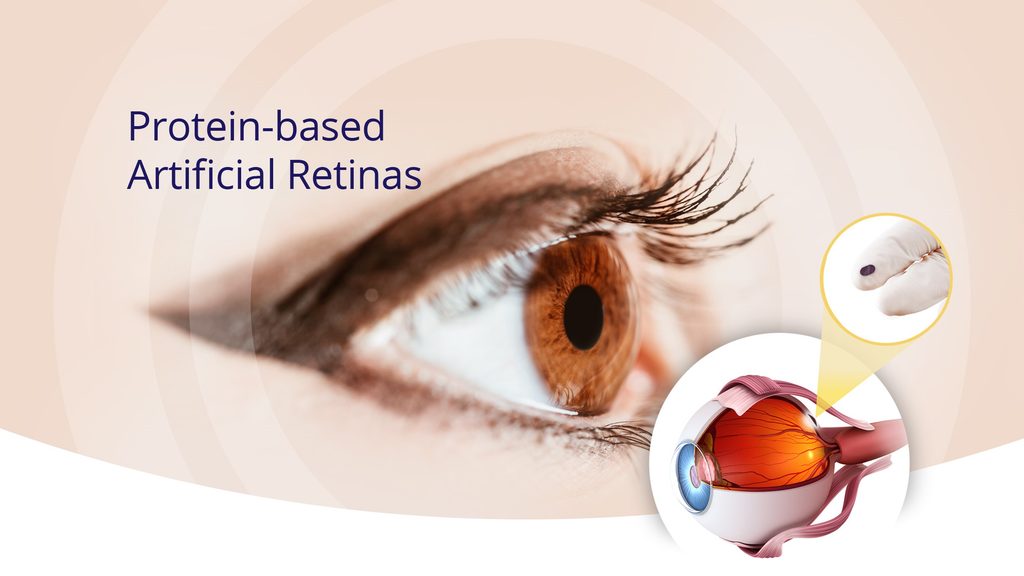
In hypersaline environments, certain microorganisms use bacteriorhodopsin, a protein that absorbs light and drives the movement of ions across their cell membranes.
Nicole Wagner, who holds a PhD in molecular and cell biology, studied this protein during her doctoral research at the University of Connecticut.
She now leads US biotechnology company LambdaVision, which is using it to develop an artificial retina made from ultrathin films of alternating light-sensitive proteins and polymers.
The arrangement of these layers is designed to mimic certain functions of photoreceptors and generate an electrical response capable of stimulating surviving retinal nerve circuits.
The next stage of development took LambdaVision into orbit.
Across nine missions to the International Space Station, LambdaVision has investigated how its protein membranes can be assembled in microgravity. By reducing sedimentation and convection, this environment can improve the uniformity and stability of the films, according to the company’s research.
On 24 June 2026, LambdaVision signed an agreement with Vast to continue its research aboard future commercial space stations.
The protein-based artificial retina remains at the preclinical stage.
Nicole Wagner, CEO of LambdaVision, reflects on her experience with the MassChallenge.accelerator © LambdaVision
PRIMA: a silicon implant that helps patients read again
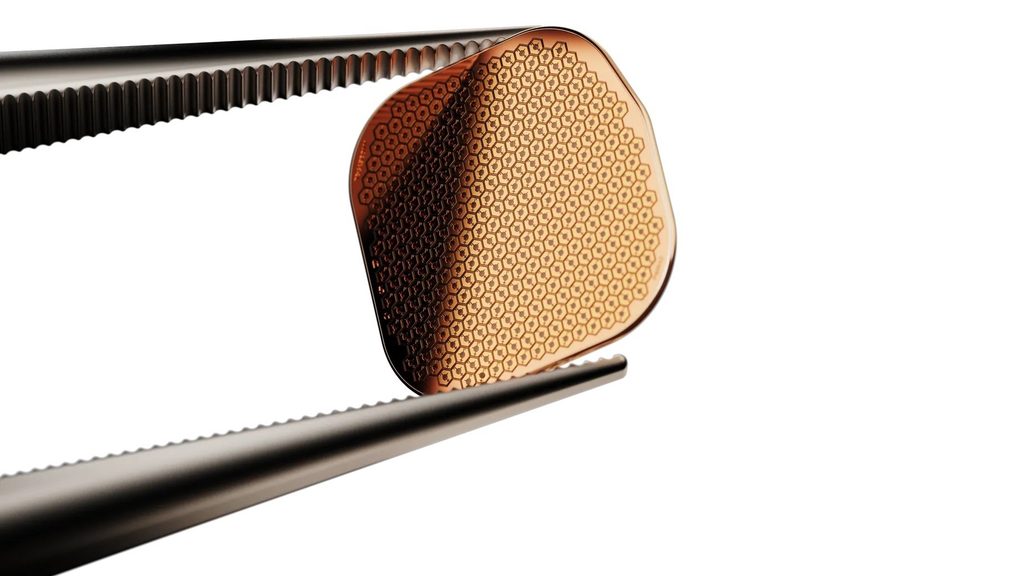
Developed from research involving physicist Daniel Palanker at Stanford and ophthalmologist José-Alain Sahel at the Institut de la Vision, PRIMA has since been taken forward by Science Corporation. The system combines a photovoltaic implant placed beneath the retina with camera-equipped glasses.
Its 378 electrodes convert near-infrared light projected by the glasses into electrical impulses that stimulate surviving retinal nerve cells.
After twelve months, 26 of the 32 evaluable participants, or 81%, had achieved a clinically meaningful improvement in visual acuity. Some could recognise letters, numbers and words using the system. In total, 38 patients received the implant at 17 clinical centres across Europe.
The trial recorded 26 serious adverse events in 19 participants. Of the 21 events that occurred within two months of surgery, 20 resolved within two months of their onset. Mean natural peripheral visual acuity was preserved.
On 22 July 2026, Science Corporation announced PRIMA’s European commercial launch following CE marking. The authorisation covers 30 countries for the treatment of geographic atrophy associated with AMD. Efforts to secure reimbursement and establish specialist treatment centres are ongoing.
The visual perception it restores remains largely monochromatic and confined to a narrow field of view. Its most clearly documented functional benefit is the ability to recognise and read text.
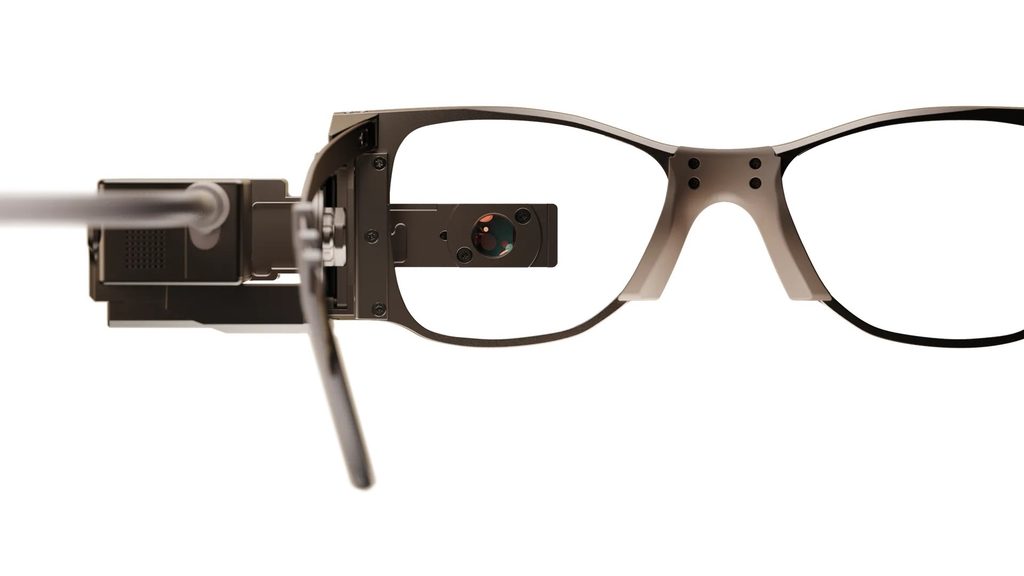
The PRIMA system: glasses equipped with a camera and projector, alongside the subretinal photovoltaic implant. © PRIMA
Finding alternative pathways for visual information
Cortigent stimulates the visual cortex directly
US company Cortigent™ is developing Orion®, an experimental visual prosthesis for people with profound sight loss.
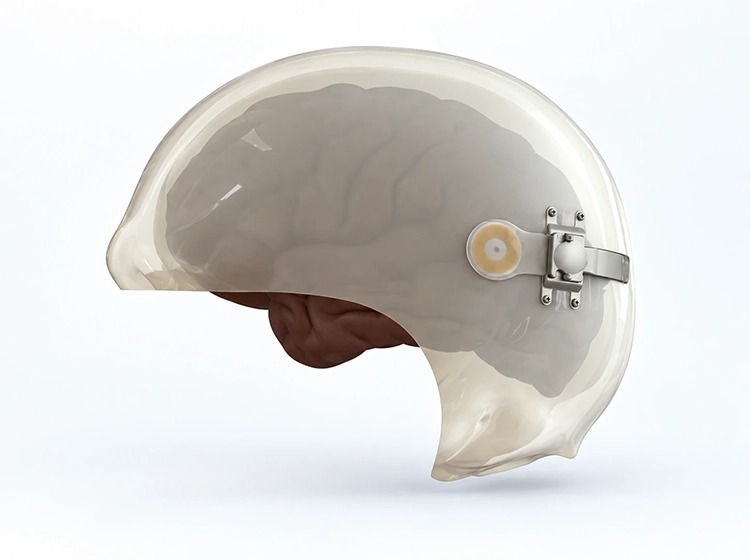
A camera mounted on glasses captures images and sends them to a processor connected to an implant containing 60 microelectrodes. Positioned on the surface of the visual cortex, the electrodes deliver electrical stimulation that produces perceptions of light known as phosphenes.
In six people implanted between 2018 and 2019, activating the system improved performance in tasks involving the detection of simple shapes and movement, following a period of training.
One seizure linked to electrical stimulation was reported during the programme. Adjustments to the stimulation settings allowed the study to continue without further serious events of this kind.
Clinical follow-up ended in March 2025, extending to six years for three participants. Cortigent is preparing a larger clinical evaluation.
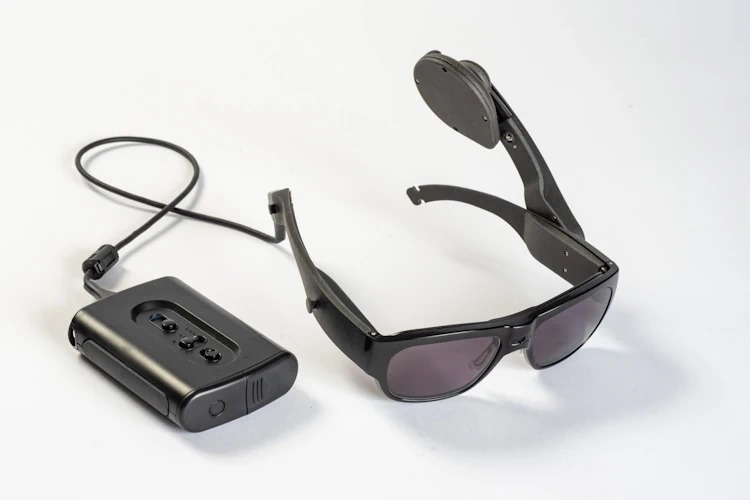
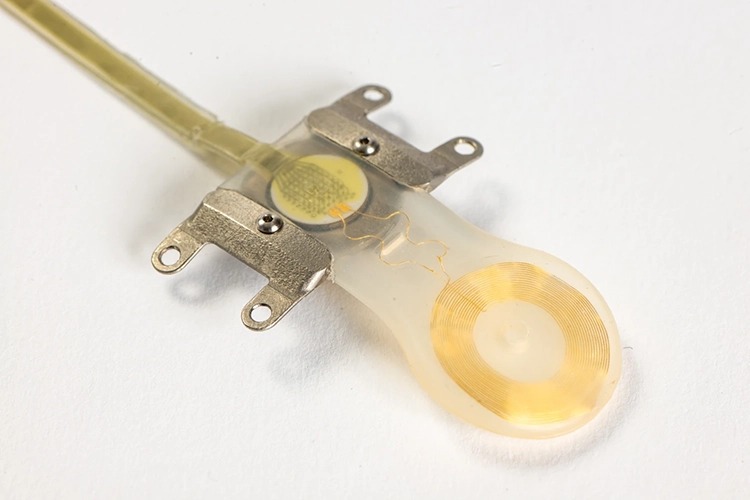
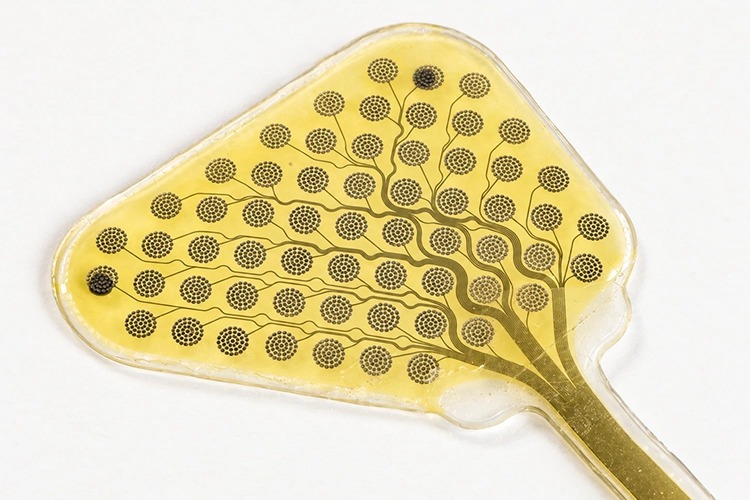
The Orion system: illustration showing the position of the implant, the glasses and external processor, the implanted electronics and the array of electrodes on the visual cortex. © Cortigent
BrainPort: sensing images through the tongue
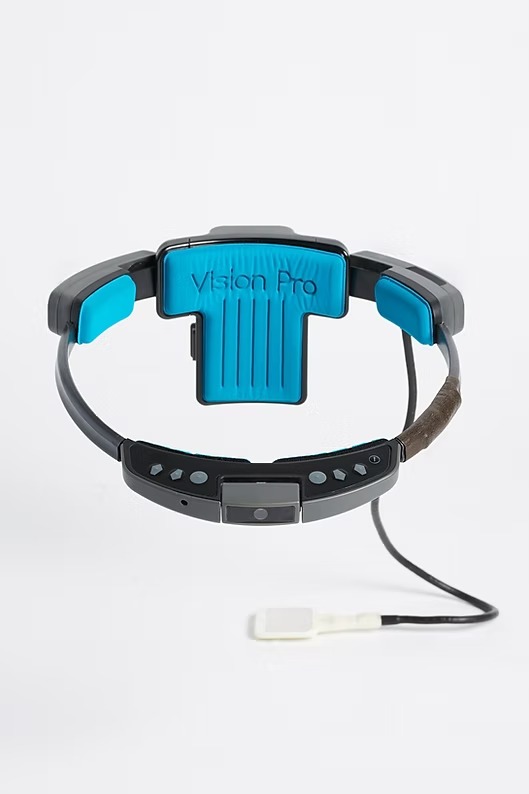
Founded in 1998 by physician and neuroscientist Paul Bach-y-Rita, a pioneer of sensory substitution, US company Wicab developed BrainPort Vision Pro, a device designed for people with profound sight loss.
A camera mounted on glasses converts images into electrical signals delivered through an array of 394 electrodes placed on the tongue. With practice, users learn to interpret these patterns of stimulation to identify shapes, objects and their positions in space.
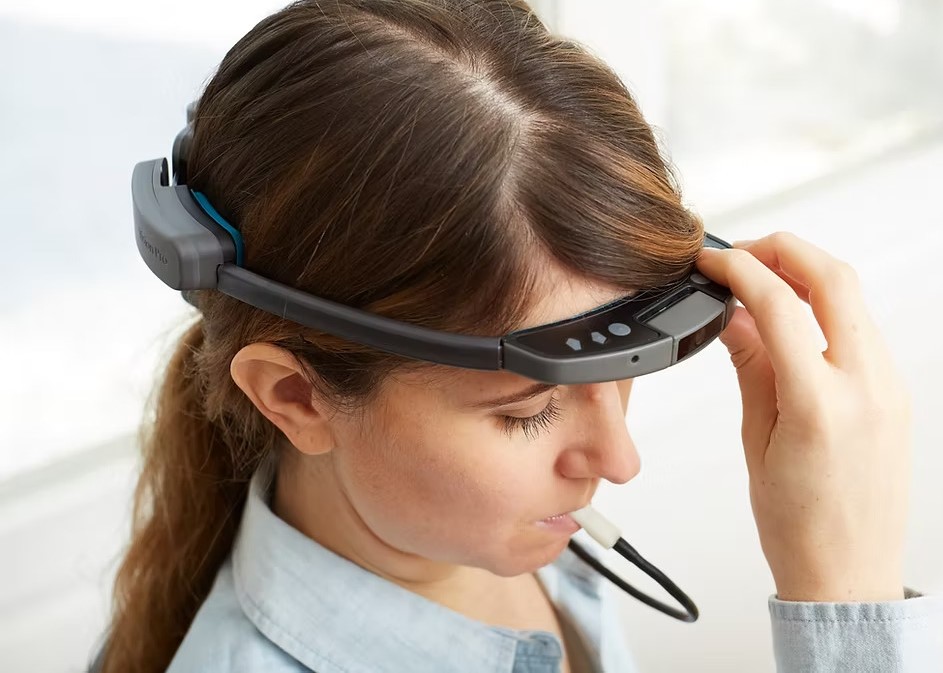
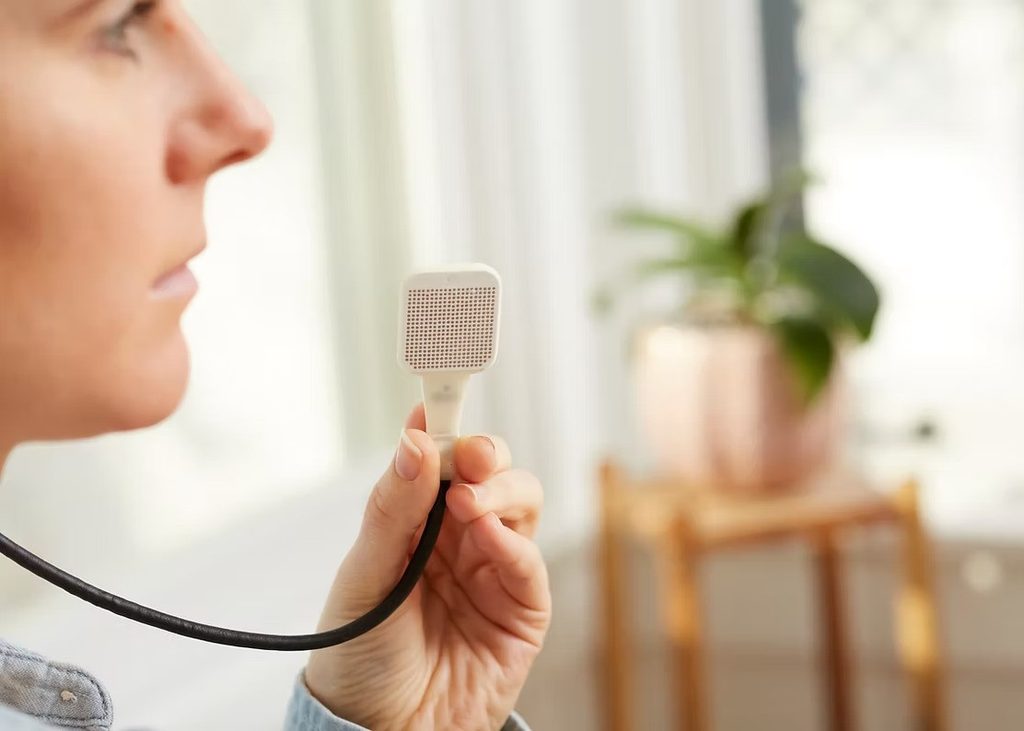
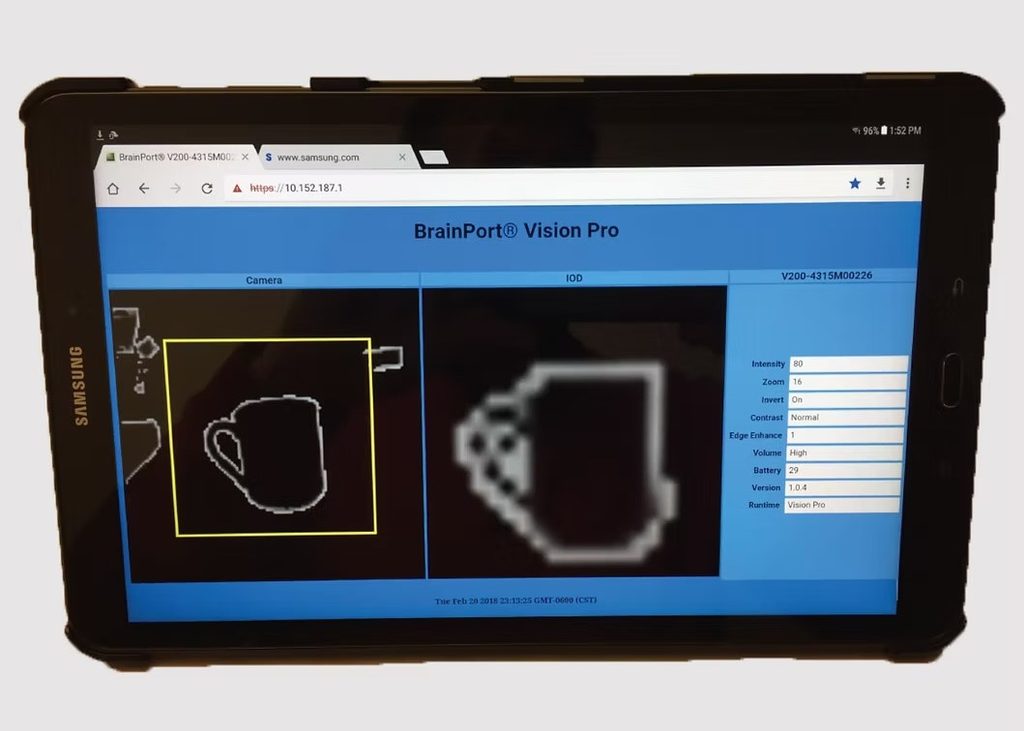
BrainPort Vision Pro: camera-equipped glasses, an external processor and an electrical stimulation interface placed on the tongue. © Wicab
In a study involving 17 adults with profound sight loss following traumatic injury, 94% were able to follow a line without veering off course, while 71% successfully avoided obstacles. These results were recorded after ten hours of training and one year of independent use of BrainPort Vision Pro.
A further study published in 2025, involving 24 people with profound visual impairment, also reported improvements in orientation and object-recognition tasks when using the device.
BrainPort requires no surgery and complements established mobility aids such as white canes and guide dogs.
SeeHaptic: mapping the world through touch
SeeHaptic, which won the Grand Prix at the 2024 Concours Lépine under its former name, Artha France, is developing a sensory substitution device that combines camera-equipped glasses with a haptic belt worn across the back.
Artificial intelligence analyses the images captured by the camera and translates them into patterns of gentle pressure felt through clothing. These patterns convey information about the outlines, distances and movement of surrounding objects.
According to SeeHaptic, more than 300 people have tested the technology. A voice assistant provides additional information, reading text aloud and describing selected features of the environment.

The SeeHaptic system combines camera-equipped glasses, a haptic belt and AI-powered text recognition. ©SeeHaptic
In March 2026, the Hôpital National des Quinze-Vingts and SeeHaptic announced a partnership to evaluate the device clinically. The Institut Saint-Louis is also involved in research into its use for mobility and rehabilitation among people with visual impairments.
Scheduled for commercial release by the end of 2026, SeeHaptic is expected to cost approximately US$6,750. Individual financial assistance may help towards the cost. Any future reimbursement through France’s statutory health insurance system would depend, among other factors, on sufficient clinical evidence.
From photoreceptors to retinal ganglion cells, from the retina to the visual cortex, and ultimately to the tongue and touch, these technologies are exploring different pathways for restoring or conveying visual information.
Not all aim to restore sight. Some seek to recover light perception, while others focus on reading, object recognition or navigating the surrounding environment. Their clinical maturity and demonstrated outcomes vary considerably.
Yet all are challenging the same boundary: the one between seeing and perceiving.