

When nations build their vision of the future
Cultural architecture goes beyond simply showcasing identity to assert itself as a laboratory for transmission and experimentation. In the arena of World Expos, pavilions are narrative vehicles: they perpetuate this tradition where space and content are spokespersons for a national branding.
Osaka 2025: The emergence of new influence standards
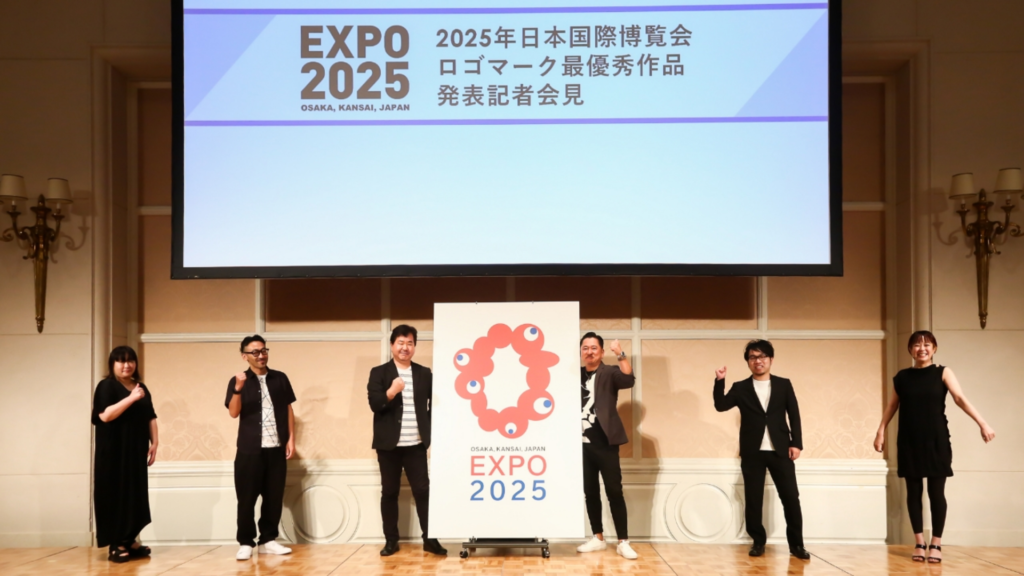
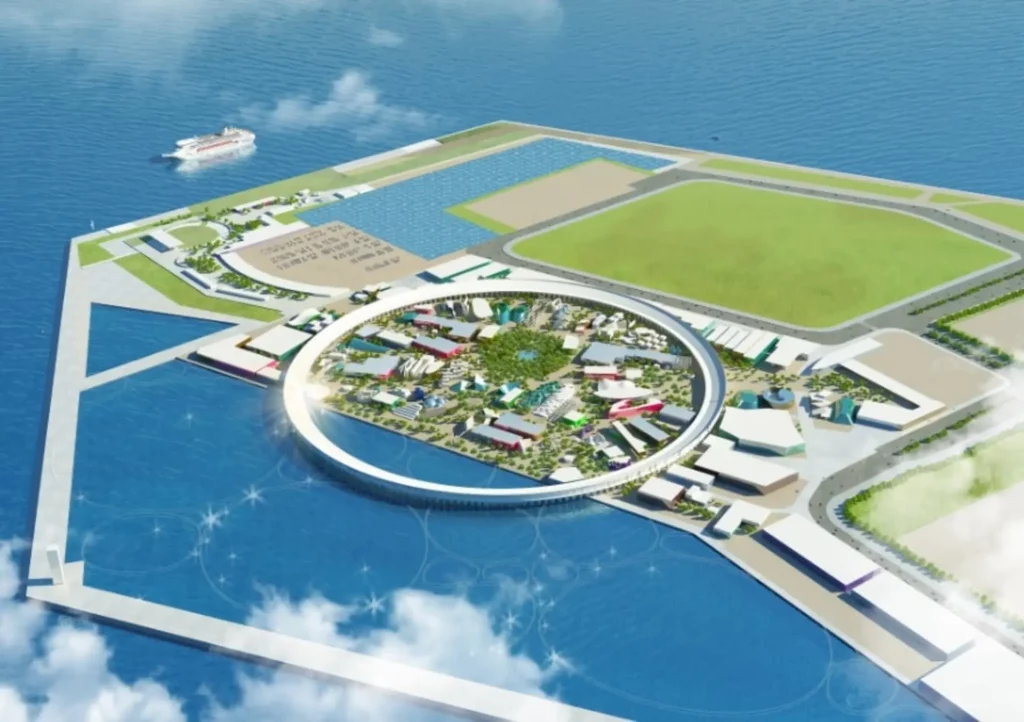
Official announcement of Expo 2025 Osaka. More than a global event, the World Expo becomes a strategic platform for national branding and territorial storytelling. © Expo 2025 Osaka
After a six-month exhibition on the artificial island of Yumeshima, this mutation finds its first field of application in Osaka. Here, excellence is no longer measured by excess, but by a precise narrative equation: the balance between architecture, scenography and sustainability.
This ambition has been realized through a major innovation: the creation of a new award, the Sustainability Award 2025. The Luxembourg Pavilion made a lasting impression by winning this award thanks to its design focused on total recycling. This success marks the beginning of an essential transition: the legacy of the exhibition is becoming a priority, placing people and the environment at the center of our thinking.
The pavilion is no longer a temporary space. Instead, it becomes an active engagement platform and a hub of experience, where innovation is discovered through emotion. In this context, architecture plays a decisive role in shaping territorial storytelling, thereby reinforcing the national branding’s coherence and credibility.
This role of “experience hub” redefines the function of the pavilion: it is no longer simply a place to pass through, but a space for active engagement, where innovation is discovered through emotion.
According to the BIE (Bureau International des Expositions) and Japan’s Ministry of Foreign Affairs, Osaka 2025 means :
- Official participation from 158 countries and territories
- 9 international organizations
- 28 millions de visiteurs
UIA 2026 Barcelona: From narrative to ethical responsibility
While Osaka sets new standards for narrative influence, the 2026 World Congress of Architects in Barcelona provides a rigorous ethical and structural framework for these ambitions. These two significant events work together in harmony. The creative momentum of Osaka and the systemic reflection of Barcelona converge towards a renewed sense of architectural responsibility.
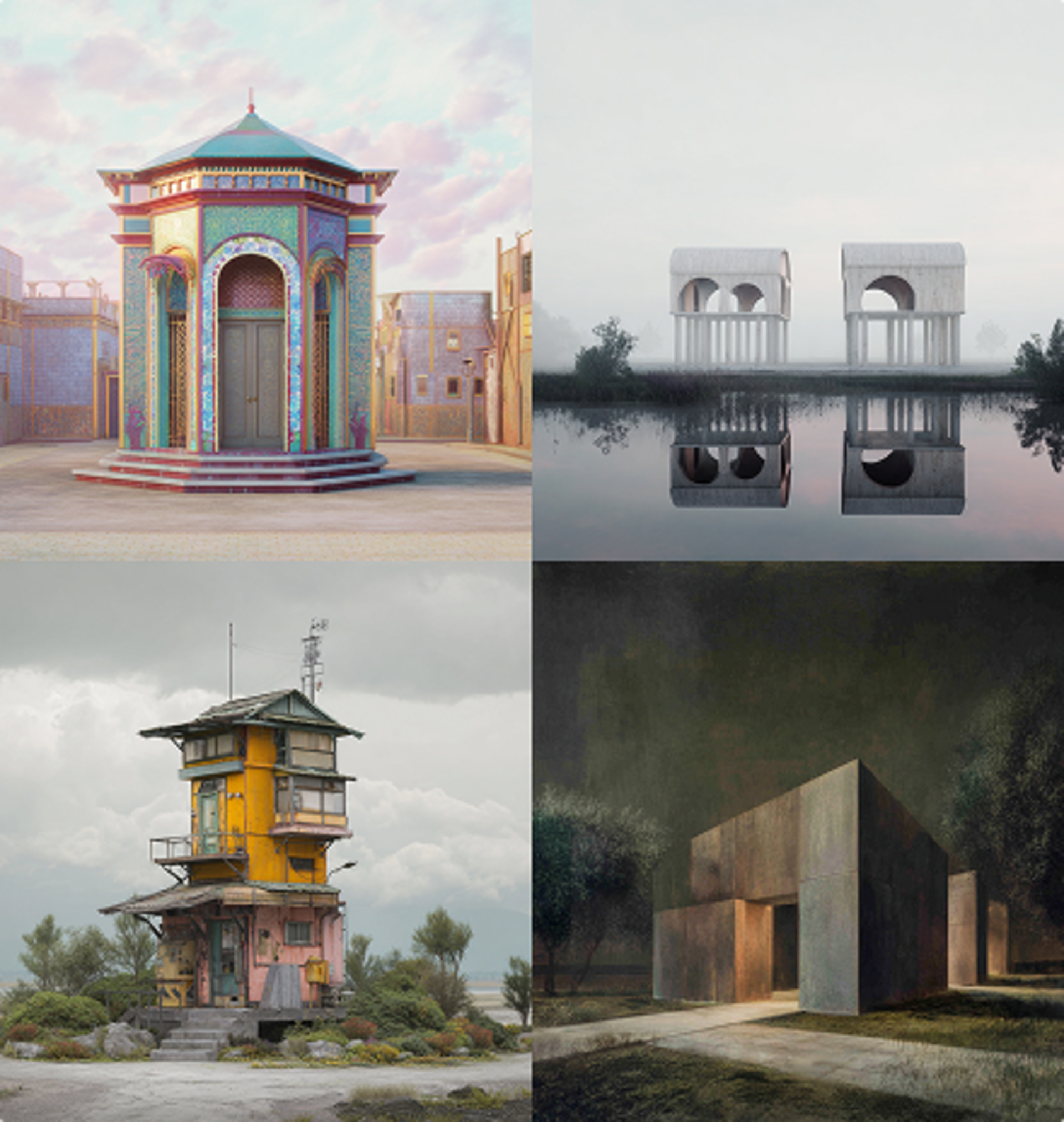
Pavilion Atlas concept. An architecture that redefines national branding standards through the life cycle of materials. © Buildner
Architecture is no longer confined to the aesthetic expression of sustainability. Through international dialogue, it becomes a regenerative act. With concepts such as the Pavilion Atlas 2026 project, buildings are conceived as part of the material life cycle. Dismantling strategies, material traceability and reuse are integrated from the outset. In this way, architecture becomes a universal language that serves the cause of transition, aligning national branding ambitions with long-term responsibility.
The Monaco Pavilion: Architecture as a relationship builder
Positioning itself at the intersection of narrative influence from Osaka and regenerative ethics from UIA, the Principality of Monaco presents Take Care of Wonder. Here, architecture becomes a relationship-building tool and a key element of Monaco’s national branding.
This approach takes concrete form in the Monaco Pavilion at the Osaka World Expo 2025, conceived as an architectural and narrative device serving national branding and the relationship between territories.
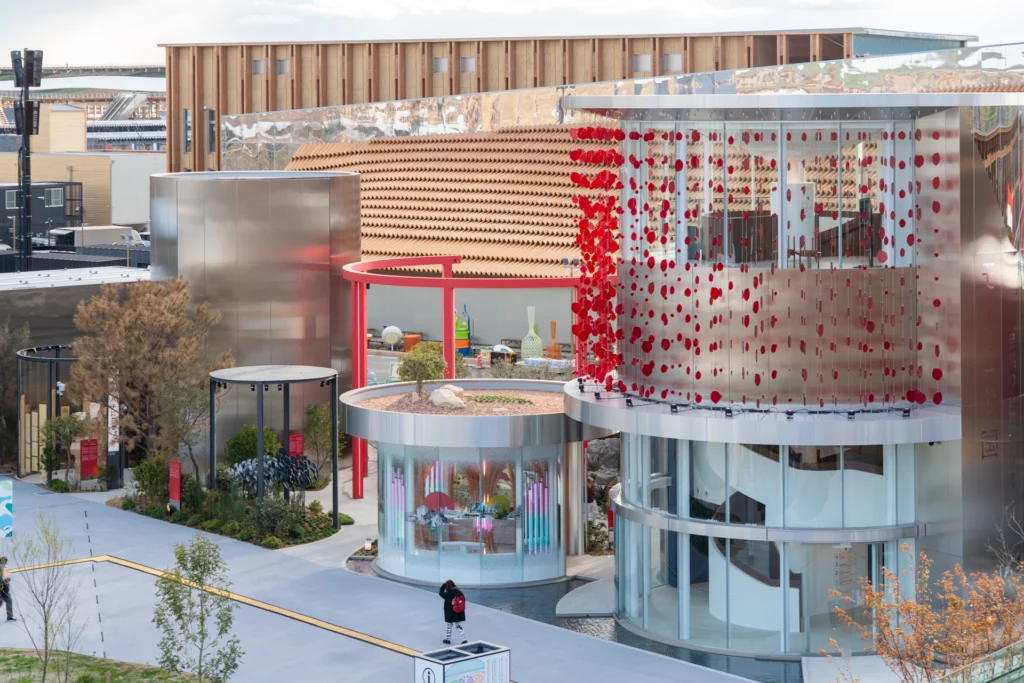
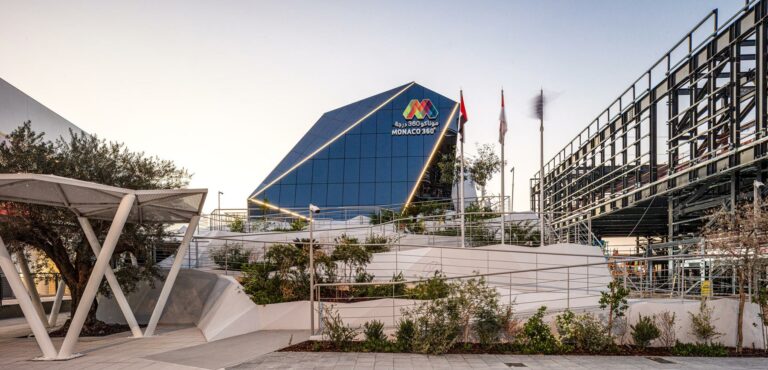
Monaco Pavilion at Expo 2025 Osaka. Cultural architecture designed as a lever for relationships, influence and national branding. © Rimond
The pavilion completes this vision by merging cultural space with the Principality’s strong commitments to urban planning, the oceans, and living well together. The latter becomes the beating heart of the project: an invitation to exchange, where Monegasque hospitality transforms the emotion of the visit into a lasting commitment between local actors and their global partners.
A vision echoed in the event
- Attendance: 1,470,000 visitors, capturing 5.25% of the global audience and surpassing the initial target of 5%.
- Operational agility: A core team of 20 Monaco-based experts piloting a local support force for high-precision execution.
- Conversion: A human synergy that transforms the flow of visitors into a lasting lever of commitment for the Principality.
Horizon 2026
Cultural architecture establishes itself as a key factor in the national branding construction as well as in territorial storytelling. Designed as tools for education, interaction and experience, pavilions bring future visions to life by making contemporary challenges understandable, tangible and shared.