

At the crossroads of World Expos, scientific research, and new models of tourism, this article reflects the areas of expertise developed at Think.Green and LuxuryBrands.Digital, where territorial strategy, sustainability, and luxury tourism meet, particularly within the yachting sector.
Using the example of the restoration of coral reefs in the Red Sea, highlighted at the Osaka World Expo 2025, this article analyzes how Saudi Arabia links marine research, ecosystem protection and the development of sustainable, high-value-added tourism and yachting.
I. Coral Reef Restoration in the Red Sea: An Ecological and Scientific Challenge
Why the Red Sea Is a Key Territory for Coral Reef Restoration
The Red Sea is recognized as one of the world’s most unique marine ecosystems. It hosts particularly rich coral reefs, which are also subject to extreme environmental conditions. The high temperatures and salinity of its waters make it a demanding environment, in which certain coral species have developed uncommon capacities for adaptation.
This singularity has been attracting the attention of the international scientific community for several years. In some cases, Red Sea reefs show greater tolerance to heat episodes than those found in other tropical regions. This relative resilience makes them an ideal field of study for understanding how corals can adapt to global warming and what conditions favor their long-term survival, particularly in the context of coral reef restoration programs in the Red Sea.
Beyond their scientific interest, these reefs play an essential ecological role. They shelter significant marine biodiversity and contribute to the balance of coastal ecosystems. In a region where human activity is set to increase, their preservation can no longer be based on passive protection measures alone. It requires in-depth knowledge of the environment, ongoing ecological monitoring and the use of
II. Corallium Marine Life Institute
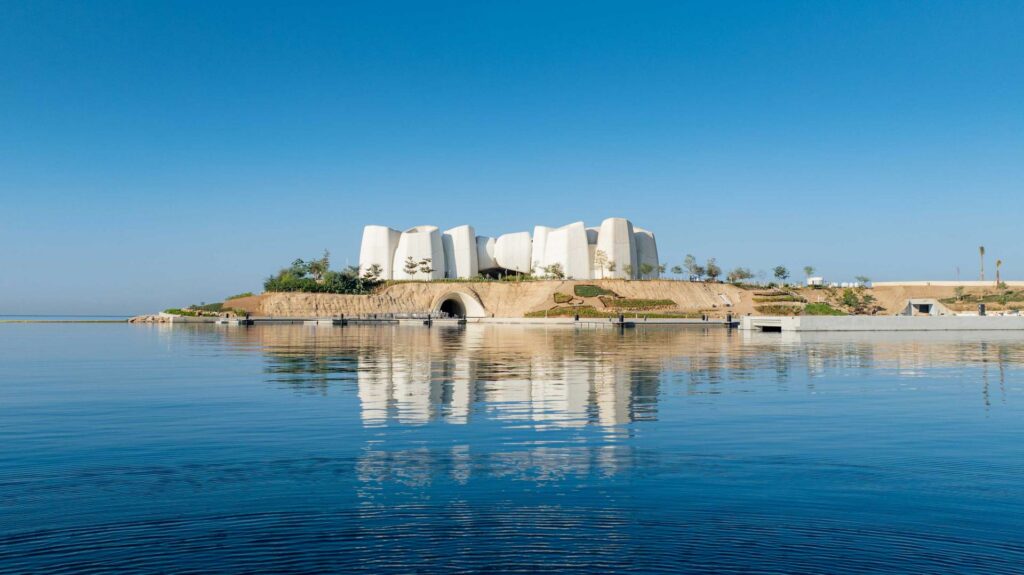
Render of the Corallium Marine Life Institute, a research center dedicated to the study and restoration of coral reefs in the Red Sea. © Red Sea Global
Research at the heart of tourism development
The Corallium Marine Life Institute, at the heart of the AMAALA project, was created to structure this research and restoration effort. The institute was designed as a scientific platform that promotes the study of Red Sea marine ecosystems, with a particular focus on the restoration of coral reefs in the Red Sea.
The Corallium Marine Life Institute has several complementary activities. It hosts fundamental research programs on coral biology, genetics and adaptation to environmental stresses. It also leads active restoration actions, in direct collaboration with natural sites, and ensures the long-term scientific monitoring of reefs in order to assess the effectiveness of the methods implemented.
The institute also plays an interface role. It links researchers with public decision-makers and coastal development stakeholders, so that planning choices are based on reliable scientific data. This approach aims to integrate reef conservation and restoration into project design from the start, rather than as corrective measures after the initial stages.
Finally, the Corallium Marine Life Institute is committed to share knowledge. In addition to its research activities, the Corallium Marine Life Institute aims to make marine issues understandable to a wider public. Science is not presented as an isolated field, but as a central tool for managing practices and supporting tourism development compatible with the preservation of ecosystems.
III. Coral reef restoration in the Red Sea at the heart of the Saudi pavilion at Osaka 2025
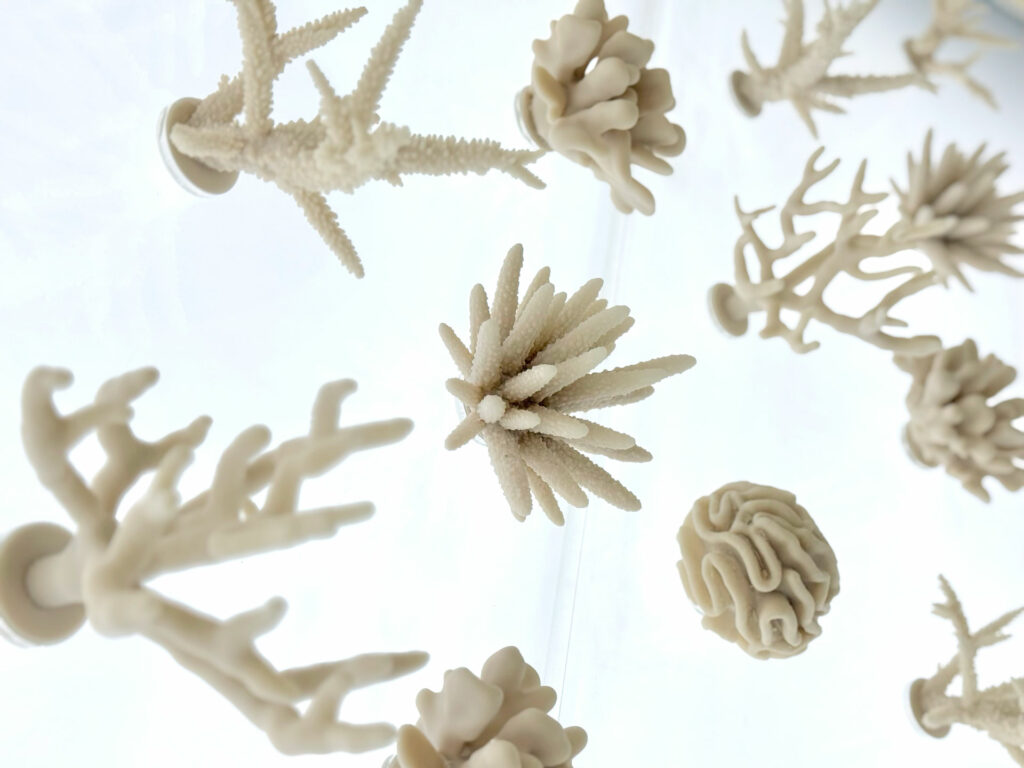
3D-printed coral reef structures on display at the Saudi Pavilion at the Osaka World Expo 2025. © Rémy POURTIER
Internationally renowned scientific work: how Saudi coral research was showcased at the World Expo
At the Osaka World Expo, Saudi Arabia chose to showcase scientific research into the protection and restoration of coral reefs in the Red Sea. The presentation was based mainly on research conducted by KAUST (King Abdullah University of Science and Technology), a leading research university in the field of marine and environmental sciences.
The pavilion presented several areas of research focusing on the state of coral reefs, their resilience in the face of global warming, and the methods developed to foster their regeneration. Among the devices exhibited, 3D-printed structures were used as experimental supports to improve coral settlement and growth in degraded environments. These tools were presented within their scientific framework, integrated into research, ecological monitoring and long-term evaluation protocols.
This work has received international praise. The program received the Bureau International des Expositions (BIE) Innovation Award, which recognizes initiatives that combine scientific innovation, environmental impact and practical application. This recognition has helped to raise the visibility of Saudi Arabia’s role in coral reef protection and restoration research.
IV. Saudi Arabia, a pioneer in marine protection
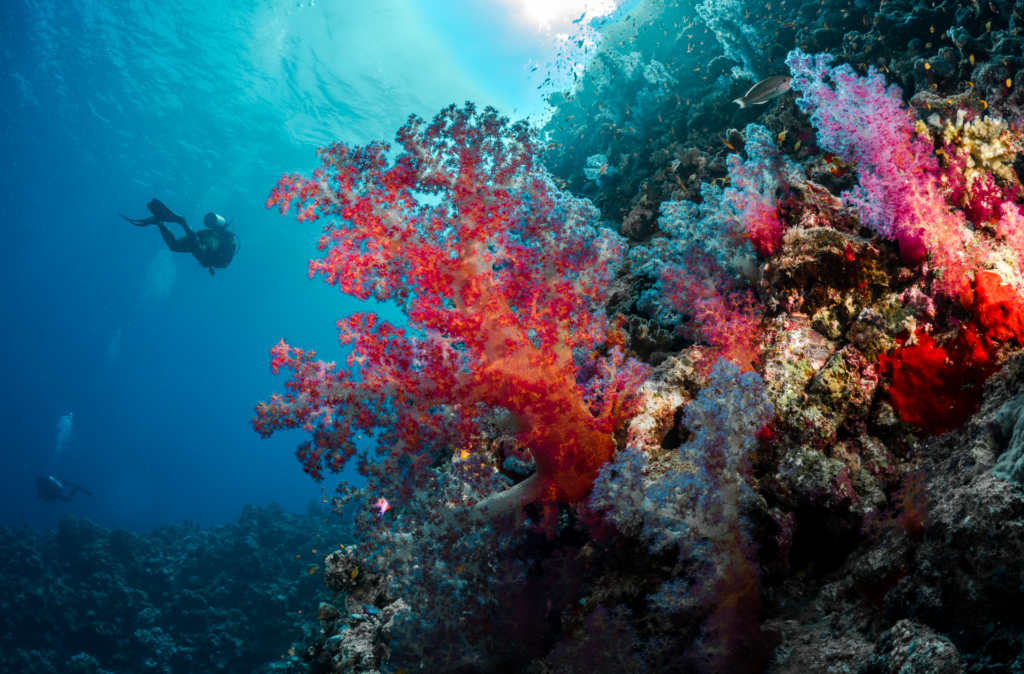
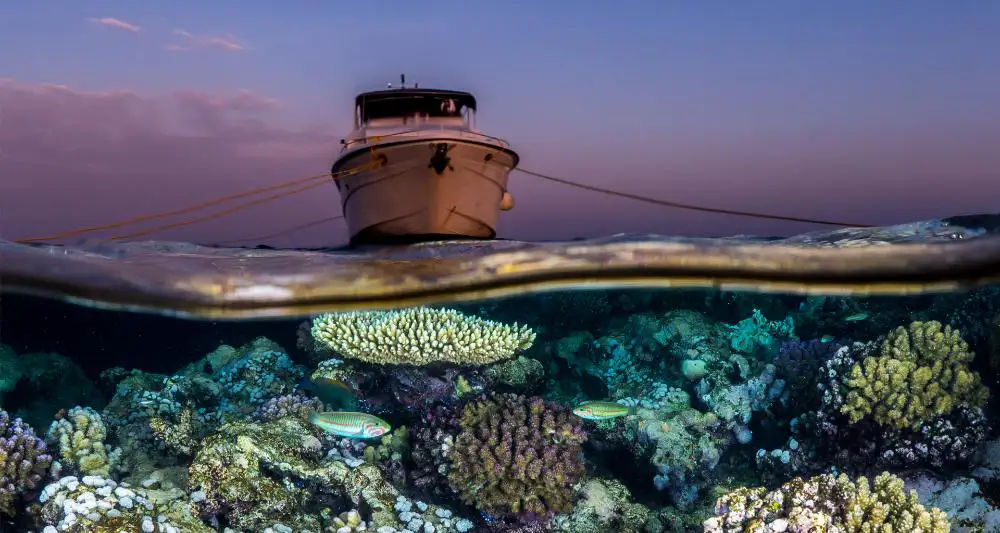
Underwater diving in the heart of the coral reefs of the Red Sea, image from the “Beneath the Surface” series produced by Red Sea Global. © Red Sea Global
The role of marine protected areas in Saudi Arabia in marine conservation
For several years now, Saudi Arabia has been structuring an innovative scientific effort around the protection of marine ecosystems, with a particular focus on the Red Sea. The research led by KAUST has improved our understanding of coral resilience mechanisms and contributed to structured coral reef restoration programs in the Red Sea.
At the same time, this scientific production has resulted in concrete actions. The creation of marine protected areas in Saudi Arabia, the reinforcement of environmental monitoring systems and the supervision of coastal uses all demonstrate an approach that goes beyond academic research. The aim is to preserve marine ecosystems while anticipating the impact of human activities, in a region that is set to become increasingly visited.
This approach is now integrated into the Kingdom’s major coastal development projects. Companies such as Red Sea Global use available scientific data to guide infrastructure design and operating regulations. As part of the Saudi Vision 2030 guidelines, this strategy is positioning Saudi Arabia as a pioneering territory in the development of new models integrating marine protection, scientific research and sustainable use management.
V. Towards responsible yachting in the Red Sea
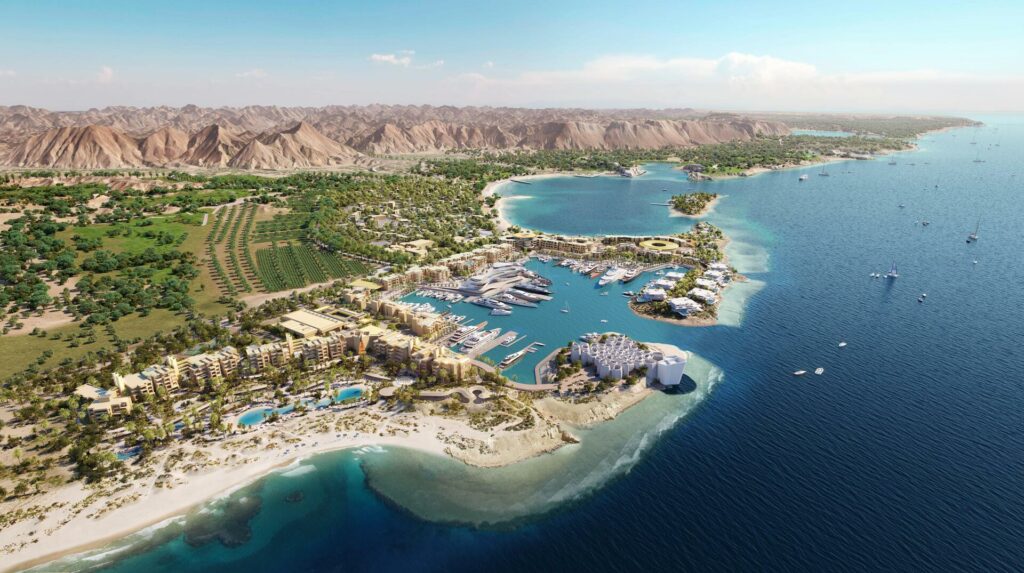
Render of the AMAALA project marina, designed to integrate responsible yachting into a sensitive marine environment. © Red Sea Global
Harmonizing luxury tourism and the protection of marine ecosystems
In the Red Sea, Saudi Arabia has chosen to anticipate the impacts of responsible yachting by integrating environmental measures into the design of its tourist destinations. The objective is clear: to enable the development of luxury tourism while limiting pressure on coral reefs and sensitive environments. This approach is based on a combination of regulations, adapted infrastructures and scientific support.
Among the structuring measures are the delimitation of marine protected areas, the identification of zones strictly prohibited for anchoring in Saudi Arabia, and the introduction of ecological anchoring systems designed to avoid direct anchoring on reefs. Sailing routes are designed according to available environmental data, to reduce the risk of degradation in the most fragile areas. These rules are accompanied by monitoring and control systems based on up-to-date scientific data.
Projects such as AMAALA illustrate this desire for conciliation. The development of responsible yachting is framed by high environmental standards, defined in collaboration with research programs and regulatory authorities. Marinas, port services and nautical operations are designed to limit their ecological footprint, while meeting the requirements of top-of-the-range yachting. This approach, supported in particular by Red Sea Global, aims to make yachting a compatible activity with reef preservation, rather than a factor of degradation.
Through a more structured approach to maritime activities, Saudi Arabia is shaping a model where luxury tourism is built on active protection of marine ecosystems. The Red Sea is emerging as a testing ground for responsible yachting, where experience quality is directly linked to the sustainable preservation of the natural environment.
VI. Conclusion
The example of the Red Sea illustrates a strategic evolution in the way the Kingdom approaches the restoration of coral reefs in the Red Sea, marine protection and the development of responsible yachting. Based on scientific research, infrastructures such as the Corallium Marine Life Institute, and the creation of marine protected areas in Saudi Arabia, the Kingdom is building the foundations of a model in which the protection of marine ecosystems becomes a condition for the development of tourism.