

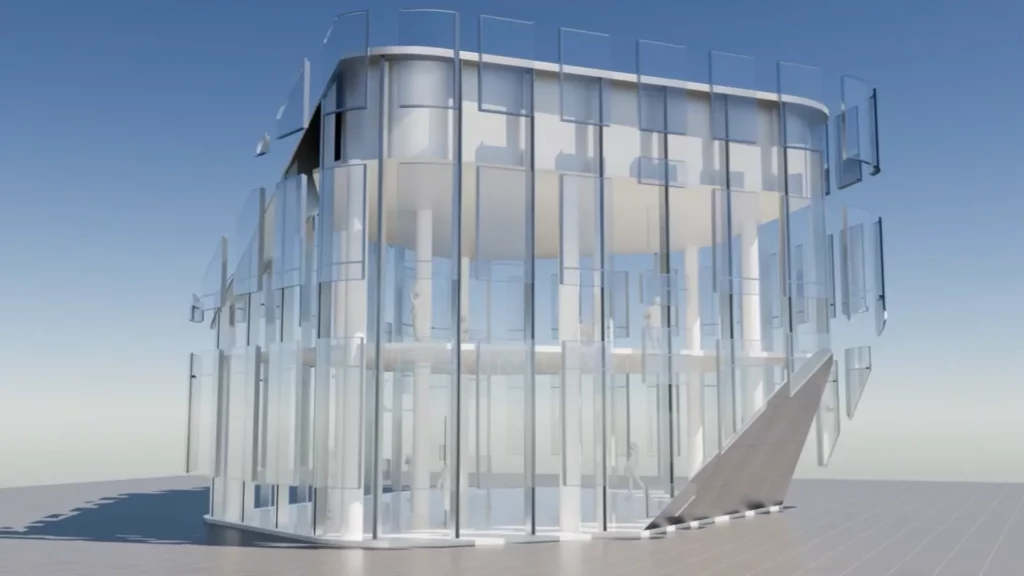
In 2026, the glass industry reached a historic milestone. This transformation marked the emergence of glasstech as a strategic pillar of sustainable construction. Driven by the RE 2020 regulations and ESG (Environmental, Social, and Governance) criteria, the building envelope has evolved into a major asset with both technological and societal significance. These innovations are directly aligned with the UN’s Sustainable Development Goals (SDGs) and ensure compliance with the European taxonomy, thereby securing access to green financing.
By transforming passive walls into active systems, glass has emerged as a key driver of decarbonization, energy efficiency, and the enhancement of real estate assets, just like other material innovations such as woodtech. This evolution positions glasstech as a key driver in addressing the energy and ESG challenges facing the real estate sector.
Glasstech: Electrochromic glass and PDLC films for smart buildings
At the heart of glasstech innovations, electrochromic glass has emerged as a key technology for optimizing the energy performance of buildings. ConverLight® technologies, developed by ChromoGenics, and Smart Touch PDLC films are not merely technical solutions.
They embody a twofold promise: a reduction in heat load of up to 35%, with annual savings on air conditioning of up to 40% (source: CSTB).
CSR (Corporate Social Responsibility):
- Reducing CO2 emissions (SDG 13).
- Improving occupants’ well-being (SDG 3) through optimal thermal comfort.

In the medical field, hygiene is optimal: PDLC films replace curtains that can trap dust and bacteria. Patient privacy is ensured instantly. © Smart Touch
Focus: Renovation of the Ticon historic building, Drammen, Norway
This project demonstrates the effectiveness of the ConverLight® solution, reducing energy consumption by 80% without altering the original architecture. It maximizes the return on investment by eliminating the need for maintenance on mechanical blinds, while ensuring consistent thermal comfort and an unobstructed view for occupants.
Vacuum insulated glass (VIG): energy efficiency and heritage
As part of glasstech’s overall approach, vacuum insulating glass represents a major breakthrough in energy efficiency. Fineo’s vacuum insulating glass (VIG), with a thermal transmittance of 0.7 W/m²K, combines energy efficiency with the preservation of architectural heritage:
Up to a 60% reduction in energy bills, depending on the insulation of the rest of the building.
CSR:
- Energy efficiency (SDG 7).
- Preservation of historic buildings (SDG 11), without altering their appearance.
Focus: Renovation at Koningslaan 26 A, Amsterdam, Netherlands
To modernize this iconic building, 192 glass panels were installed directly into the original wooden frames. This solution, as slim as single-pane glass but as insulating as triple-pane glass, has increased the property’s value and improved its thermal comfort while preserving its unique historical aesthetic.
Transparent photovoltaic glass: clean energy and CSR visibility
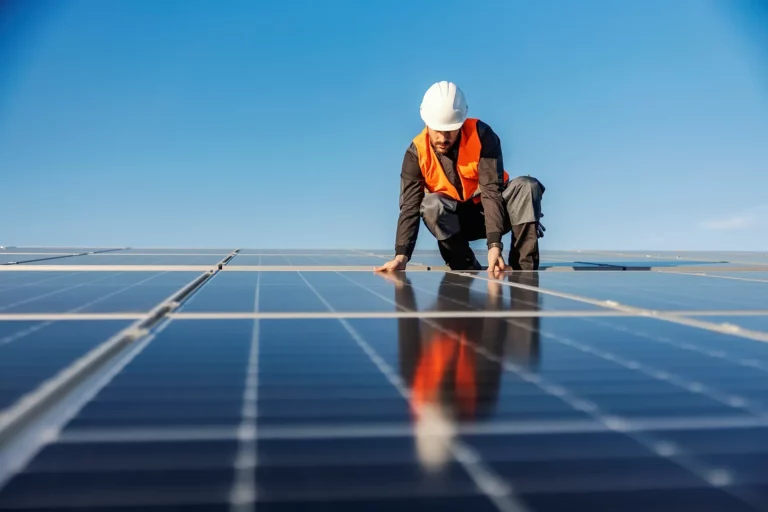
Transparent luminescent solar concentrator (TLSC) technology, developed by Professor Richard Lunt at Michigan State University, transforms building facades into invisible solar power plants, combining energy production with architectural integrity.
An estimated ROI (Return on Investment) of between 7 and 10 years, depending on sunlight exposure and local incentive programs, within the context of widespread industrial adoption that includes thermal energy savings. This innovation is fully aligned with Glasstech’s solutions for building-integrated power generation.
CSR :
- Clean energy (SDG 7) : Local production of carbon-free electricity by capturing only invisible wavelengths (ultraviolet and near-infrared).
- Sustainable infrastructure (SDG 9) : Transforming the building envelope from a passive component into a productive asset without affecting the transmission of visible light.
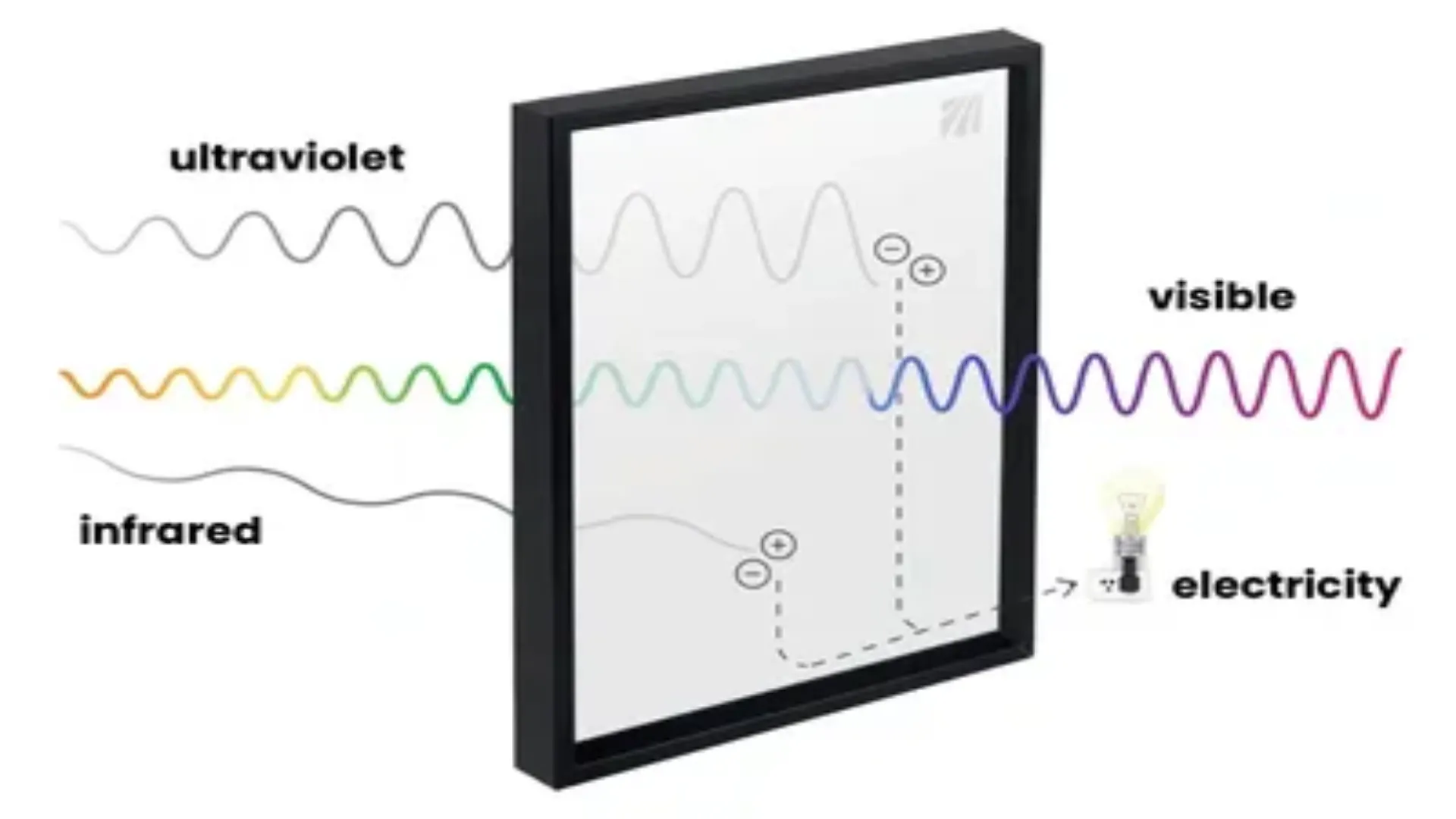
UE Power™ harvests energy from infrared and ultraviolet light, while visible light passes through. © Ubiquitous Energy
Focus : Biomedical and Physical Sciences Building(MSU) East Lansing – USA
Transparent solar glass panels have been installed above the building’s entrance. This technology, which is visually indistinguishable from standard glass, generates the electricity needed to power the atrium’s lighting.
Multimedia glass: responsible communication and innovation
Glasstech goes beyond energy efficiency; it also redefines the uses of urban facades. Nexnovo’s transparent LED screens, with a brightness of 5,000 nits, redefine the urban facade as a medium for communication:
enhancing the value of real estate assets by creating a dynamic, high-visibility communication medium.
CSR:
- Innovation and industry (SDG 9) : digitisation of spaces without compromising natural light or visual comfort.
- Sustainable cities (SDG 11) : seamless integration of digital signage into the urban landscape.
Focus : flagship store Xiaomi, Yibin – Chine
A technical feat was achieved by installing a 340-square-meter façade made of NovoGlass curved glass. This custom-built structure, comprising 56 different types of panels, seamlessly integrates high-brightness LED displays within curved insulated glass units. The technology made it possible to unify the visual aesthetic while preserving the building’s critical functions,
such as ventilation and smoke exhaust windows, without any interruption in the digital signage.
Various technical challenges were overcome to precisely integrate the curved LED screen with the curved glass, achieving flawless installation accuracy. By merging material innovation with advanced manufacturing, this technology enlightens cities. © Nexnovo
Self-cleaning glass and low-emissivity glass: health, sustainability, and cost savings
The Activ™ range from Pilkington, part of the NSG Group, reduces cleaning cycles by 30 to 40% thanks to a dual photocatalytic and hydrophilic action. This technology, based on a titanium dioxide coating, ensures increased durability of the glazing while minimizing risks to maintenance staff. These advancements demonstrate glasstech’s ability to sustainably reduce building operating costs: up to 40% savings on maintenance over 10 years.
Up to 40% savings on maintenance costs over 10 years.
CSR :
- Responsible consumption (SDG 12) : Significant reduction in chemical use and water.
- Health and well-being (SDG 3) : Improved visual clarity and indoor air quality.
Focus: Low-carbon glazing for the geodesic greenhouse at the Saline Royale, Arc-et-Senans, France
This bioclimatic project, a three-time award winner (Green Solutions Awards 2024, Geste d’Or 2023, Prix Eiffel 2025), features a glass façade combining Pilkington Mirai™ and Pilkington K Glass™. The carbon footprint is reduced by 52% without compromising aesthetics, making this steel-and-glass structure a model of heritage sustainability.
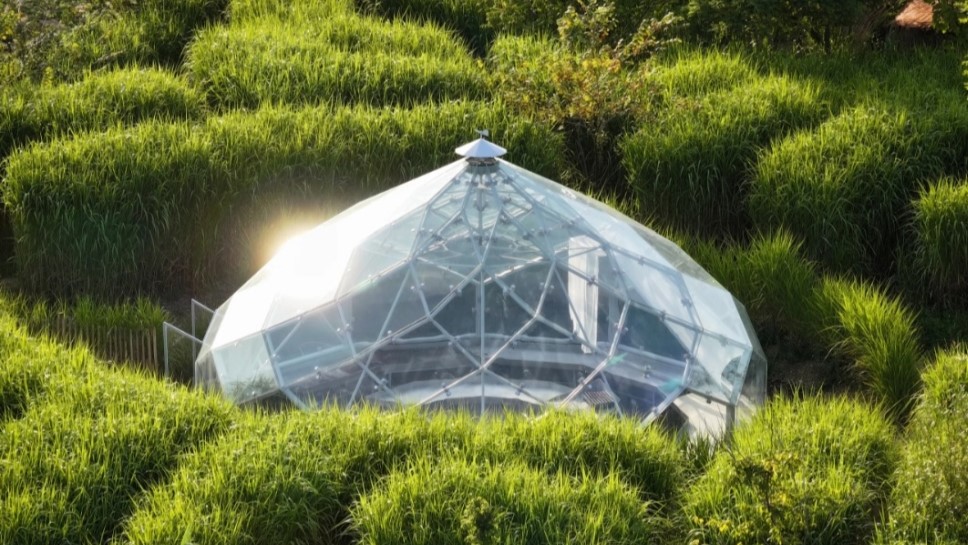
The greenhouse is designed as a completely transparent dome. This shape draws direct inspiration from nature, specifically the pinecone, resembling a geode in a lightweight construction. © Saline Royale
Glass: a catalyst for sustainable real estate value
Through glasstech, glass becomes a strategic asset at the heart of performance, sustainability, and property value enhancement. The glass envelope breaks free from its passive role to become a driver of overall performance.
By integrating technologies, buildings are entering a high-tech era designed to serve people. As a result, glasstech and electrochromic glass are emerging as essential technologies for designing the sustainable buildings of tomorrow.
Who Cares Wins : these innovations meet the most stringent ESG reporting requirements by addressing several key pillars of sustainable development.
- SDG 3 Ensure healthy lives and promote well-being for all at all ages.
Guarantee optimal thermal comfort and superior visual clarity for occupants. - SDG 7 Ensure access to affordable, reliable, sustainable and modern energy.
Drastic energy conservation and local production of carbon-free electricity. - SDG 9 Build resilient infrastructure, promote sustainable industrialization and foster.
Innovation: Transforming the passive building envelope into a productive, digitalised asset. - SDG 11 Make cities inclusive, safe, resilient and sustainable.
Preservation of historical heritage and the harmonious integration of urban signage. - SDG 12 Ensure sustainable consumption and production patterns.
Adoption of low-carbon materials and a drastic reduction in the maintenance footprint. - SDG 13 Take urgent action to combat climate change and its impacts. Significant reduction in CO2 emissions throughout the asset’s entire lifecycle.